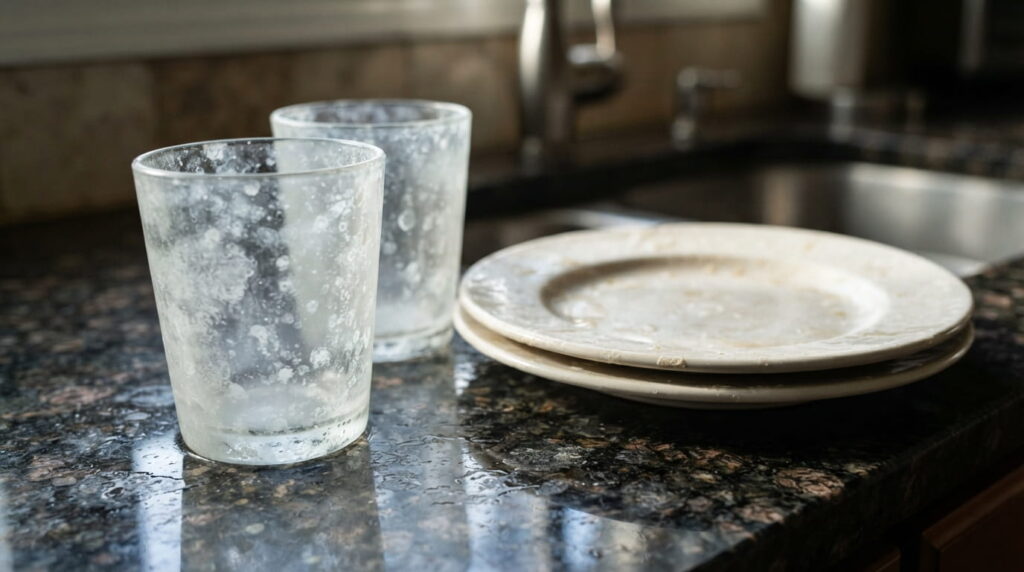
You run the dishwasher, open the door, and there it is again. A chalky white haze on your glasses. Spots on your silverware. A dull coating on plates that should look clean.
It is frustrating, especially when you have already tried a new detergent. If you searched “white film dishes hard water” to find out why this keeps happening, you are on the right track. In most Tucson homes, hard water is the real cause.
This guide explains what that film is, how to tell it apart from permanent damage, which quick fixes help, and why water softener installation Tucson homeowners choose is the only long-term solution.
What Is That White Film on Your Dishes?
The white residue is usually mineral scale. Hard water carries dissolved calcium and magnesium. When water dries on a surface, the water evaporates but the minerals stay behind.
Inside a dishwasher, this happens over and over. Hot water, heated drying cycles, and minerals combine to leave a thin, cloudy layer on everything. Over time, it builds into a crust you can scrape with a fingernail.
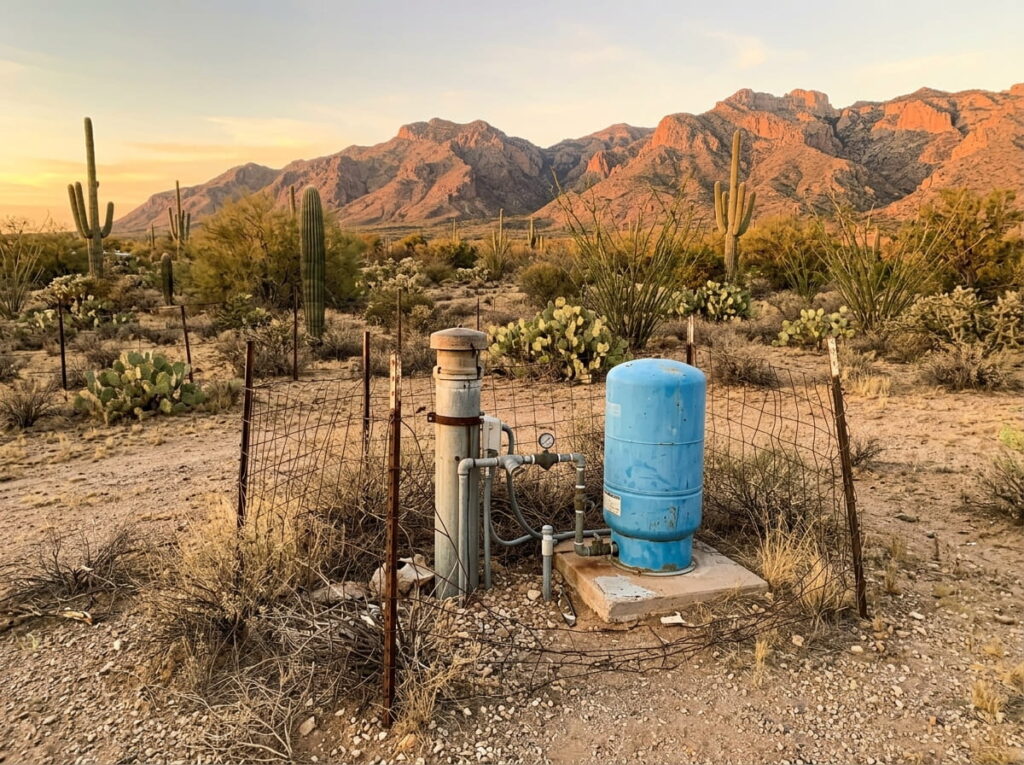
Tucson has some of the hardest water in the country. Many homes see 12 grains per gallon or more, and private wells can be even higher. So if you live here, the link between white film, dishes, hard water, and your dishwasher is almost guaranteed.
Mineral Film vs. Etching: A Quick Test
Not every cloudy glass has the same problem. There are two main causes, and they need very different fixes.
Mineral film sits on top of the glass. It comes from hard water and can be removed.
Etching is actual damage to the glass surface. It usually comes from soft water combined with too much detergent. Etching is permanent.
Here is how to tell the difference:
- Soak a cloudy glass in white vinegar for five minutes.
- Rinse and dry it.
- If the film disappears, it was mineral buildup from hard water.
- If the cloudiness stays, the glass is likely etched.
Most Tucson homeowners who try this test find the film wipes right off. That confirms the white film dishes hard water issue, not glass damage.
Other Signs Hard Water Is the Problem
Hard water rarely shows up in just one place. If you see white film on dishes, check for these related clues:
- Crusty white buildup on faucets and showerheads
- Spots on shower doors that return days after cleaning
- Stiff, scratchy laundry
- Soap that will not lather well
- A dishwasher that seems to clean worse every year
That crust on your fixtures comes from the same minerals. Our article on why your faucets have white buildup and how to fix it explains it in more detail.
Why Your Detergent Is Not Fixing It
Many people assume their soap is the problem. However, even premium detergents struggle against very hard water.
Here is why. Calcium and magnesium bind with cleaning agents and reduce how well they work. Many modern detergents also no longer contain phosphates, which once helped soften water during the wash. The result is weaker cleaning and more leftover minerals.
Using more detergent does not always help. In fact, too much soap can leave its own residue.
The Hidden Cost: What Hard Water Does Inside Your Dishwasher
The film on your plates is only what you can see. Inside the machine, the same minerals coat spray arms, clog tiny nozzle holes, and crust over the heating element. As scale builds, water pressure drops and the element works harder to reach temperature.
That means longer cycles, higher energy use, and dishes that come out a little worse each month. Over time, that extra strain can shorten the life of the machine. Fixing the white film dishes hard water problem at the source protects the appliance itself, not just your glassware.
Quick Fixes for White Film on Dishes
These tips can reduce the white film dishes hard water leaves behind while you plan a permanent solution.
1. Use a Rinse Aid
Rinse aid helps water sheet off dishes instead of forming droplets. Fewer droplets means fewer mineral spots.
2. Run a Vinegar Cycle
Place a cup of white vinegar upright on the top rack and run a hot cycle with no detergent. This dissolves mineral buildup inside the machine and on dishes.
3. Clean the Dishwasher Filter
A clogged filter recirculates dirty, mineral-heavy water. Check and rinse it monthly.
4. Try a Detergent Booster
Some boosters are designed for hard water. They help keep minerals suspended so they rinse away.
5. Skip the Heated Dry
Heat bakes minerals onto surfaces. Air drying or opening the door after the cycle can reduce spotting.
6. Check Your Water Heater Temperature
Water that is too cool may not dissolve detergent well. Most dishwashers work best with water around 120°F.
These steps help, but they only treat the symptoms. The minerals are still in your water, and they are still building up in your pipes, water heater, and appliances.
The Real Fix: Remove the Hardness
To stop white film for good, you need to remove the minerals before water reaches your dishwasher. The most proven way to do that is a water softener.
How a Water Softener Works
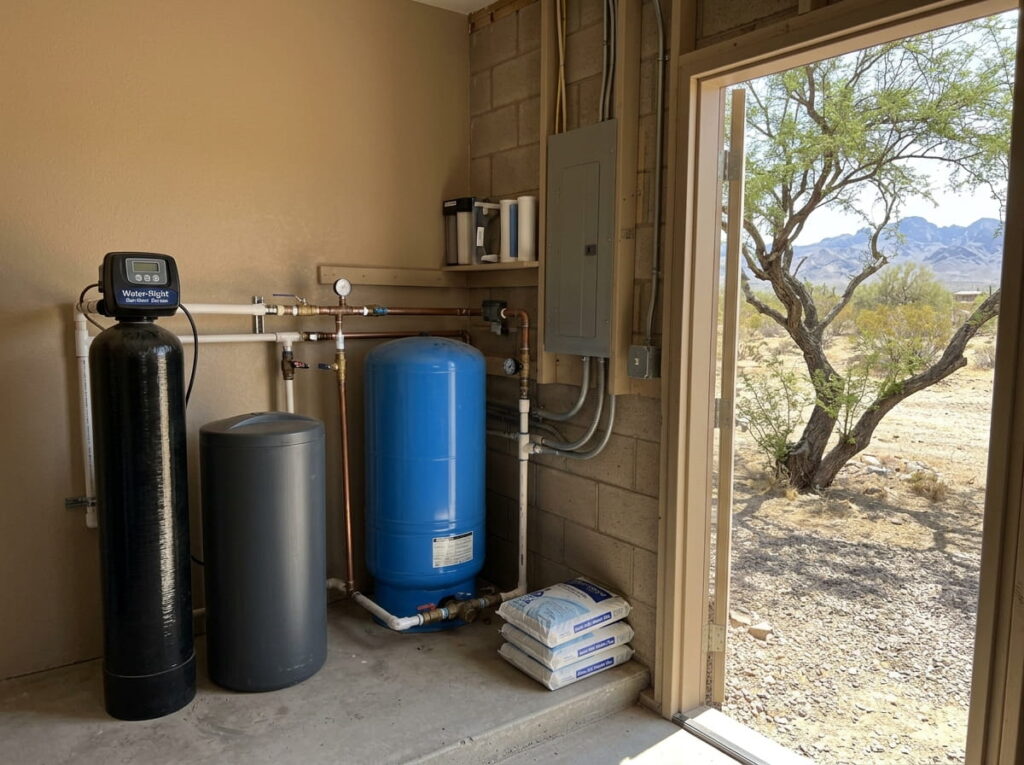
A softener uses a process called ion exchange. Water passes through a tank of resin beads. The beads grab calcium and magnesium and replace them with a small amount of sodium or potassium. When the resin fills up, the system rinses itself with salt water and starts fresh.
The result is soft water at every tap in your home. Dishes come out clear. Glasses sparkle. Fixtures stay clean.
Softener vs. Conditioner
Salt-free conditioners are another option. They change how minerals behave but do not remove them. That means they reduce scale in pipes but may not fully stop spots on dishes. To understand the trade-offs, read our comparison of a water softener vs. water conditioner.
Benefits of Water Softener Installation Tucson Homeowners Notice
Once you have soft water, the change is hard to miss. Here is what most families report:
- Spotless dishes and glassware without extra rinse aid
- Less scrubbing of showers, sinks, and faucets
- Softer laundry that lasts longer
- Less soap and detergent needed for every task
- Longer-lasting appliances, including dishwashers and water heaters
- Better water heater efficiency thanks to less scale
Professional water softener installation Tucson families invest in often pays for itself through lower soap costs and fewer appliance repairs.
What to Expect From Professional Installation
Getting a softener installed is simpler than most people expect. A typical process looks like this:
- Free water test to measure hardness and other factors
- System sizing based on your hardness level and household size
- Installation at your main water line, with a bypass valve
- Programming the system for your water and usage
- Walkthrough so you know how to add salt and spot issues
Most installs are finished in a single visit. For a step-by-step look, read water softener installation in Tucson: what to expect on install day.
How Much Does It Cost?
The price of water softener installation Tucson homeowners pay depends on system type, capacity, and plumbing layout. Many typical homes fall in the range of $800 to $3,300 installed, with larger homes costing more.
For a detailed local breakdown, see how much a water softener costs in Tucson, AZ.
Why DIY Softeners Often Fall Short
Store-bought softeners can look like a bargain. But an undersized unit will run out of soft water, and a poor install can cause leaks or drain problems. Hard water in Tucson demands correct sizing. Professional water softener installation Tucson experts provide ensures your system matches your actual water.
Frequently Asked Questions
Will a water softener get rid of white film on dishes?
Yes, in most cases. When hardness minerals are removed, there is nothing left to dry into a white film. Most homeowners notice clearer dishes within days.
Can I remove existing white film from glasses?
Yes. Soak glasses in white vinegar, then wash normally. If the haze stays after soaking, the glass is likely etched and cannot be restored.
Does a whole-house filter remove hardness?
Not usually. Carbon filters reduce chlorine, taste, and odor, but they do not remove calcium and magnesium. For hardness, you need a softener. Many homeowners pair both during water softener installation Tucson projects for complete coverage.
Is the white film on dishes harmful?
No. The minerals are not dangerous to eat. However, they are a clear sign that scale is also building up in your appliances and plumbing.
How long does water softener installation Tucson take?
Most residential installs take a few hours. Your technician will test, install, program, and explain the system in one visit.
Say Goodbye to Cloudy Dishes
That frustrating white film dishes hard water creates does not have to be part of your routine. Quick fixes can help today, but a properly sized softener solves the problem at its source.
Desert Water Services offers free in-home water testing and expert water softener installation Tucson homeowners trust. Call (520) 327-8426 to book your Free Water Test and enjoy spotless dishes again.