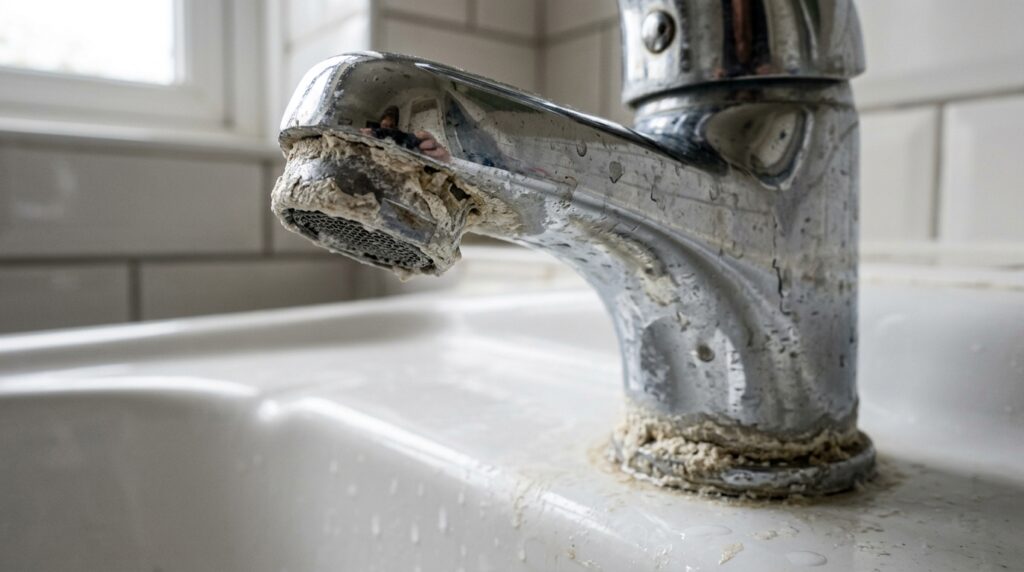
If you’ve noticed a chalky, white crust forming around your faucets or showerheads, you’re not imagining things. In fact, hard water in Tucson is one of the most common household issues residents face. And that stubborn white buildup is just the beginning.
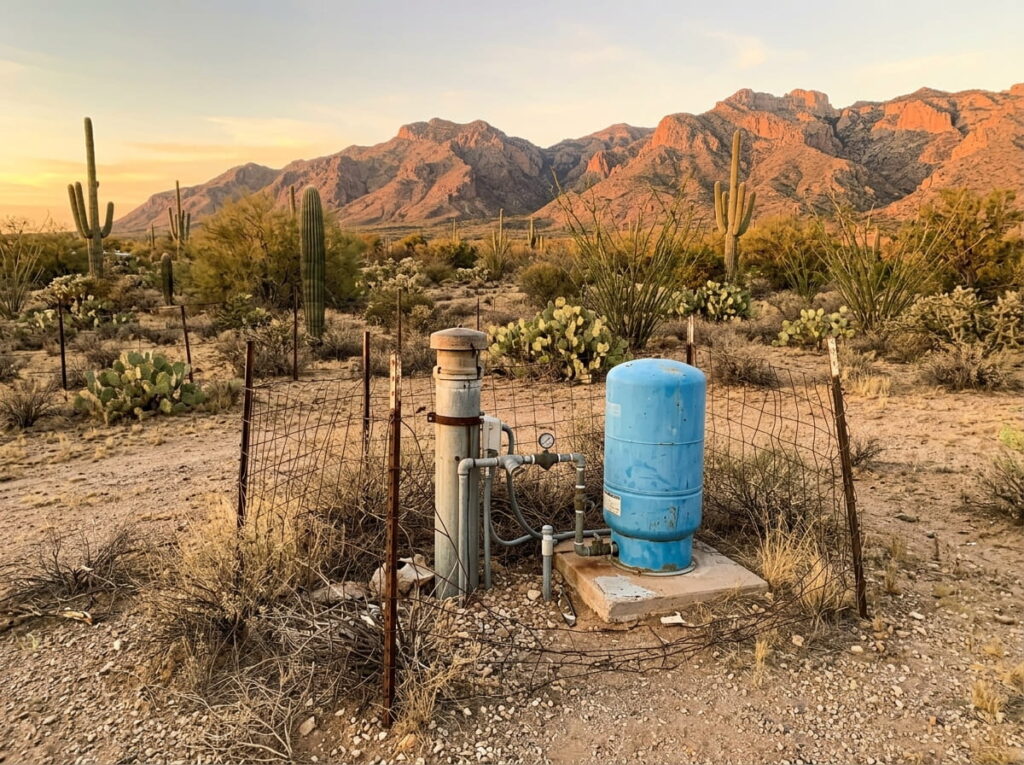
Tucson draws its water supply primarily from underground aquifers. As a result, the water travels through layers of mineral-rich desert rock. Along the way, it picks up high concentrations of calcium and magnesium. So by the time it reaches your tap, those dissolved minerals are ready to leave their mark on every surface.
But what does that actually mean for your home, your appliances, and your wallet? Let’s break it down.
What Causes Hard Water in Tucson?
Tucson sits in the Sonoran Desert. Consequently, the local geology is dominated by limestone and calcium-carbonate deposits. The city’s groundwater absorbs these minerals naturally. As a result, water hardness levels regularly measure between 10 and 25 grains per gallon.
To put that in perspective, anything above 7 grains per gallon qualifies as “hard.” Moreover, anything above 10.5 falls into the “very hard” category. That means most Tucson households deal with extremely hard water every single day.
The White Buildup on Your Faucets Is Just the Surface
That white, crusty residue on your fixtures is called limescale. Essentially, it’s a visible deposit of calcium carbonate that forms when hard water evaporates. While it might seem like a cosmetic nuisance, it actually signals deeper issues throughout your plumbing system.
Here’s what hard water in Tucson is quietly doing behind the scenes:
Scaling inside your pipes. Over time, mineral deposits build up on the interior walls of your plumbing. This narrows the pipes and reduces water pressure. In severe cases, it can lead to costly pipe replacements.
Shortening appliance lifespan. Your water heater, dishwasher, and washing machine all suffer from hard water. Specifically, mineral buildup coats heating elements and forces these appliances to work harder. As a result, your energy bills climb and breakdowns happen sooner. In fact, hard water can reduce a water heater’s efficiency by up to 48 percent.
Drying out your skin and hair. If your skin feels tight after a shower, hard water is likely the reason. Similarly, flat and dull hair often points to the same cause. The mineral residue blocks soap lather and leaves a film that clogs pores.
Leaving spots and film on everything. For example, glasses come out of the dishwasher cloudy. Shower doors stay streaky no matter how often you clean them. Additionally, laundry feels stiff and fades faster. These are all classic hard water symptoms.
DIY Fixes: Do They Actually Work?
You’ll find plenty of advice recommending vinegar soaks and citric acid scrubs. And yes, these methods can help temporarily with surface-level buildup.
However, the problem is that DIY cleaning only tackles what you can see. It does nothing to stop minerals from building up inside your pipes. Furthermore, your appliances continue to take damage every day. You end up stuck in an endless cycle of scrubbing and replacing fixtures.
Therefore, for a real and lasting solution, you need to treat the water before it enters your home.
The Real Fix: Water Softener Installation in Tucson
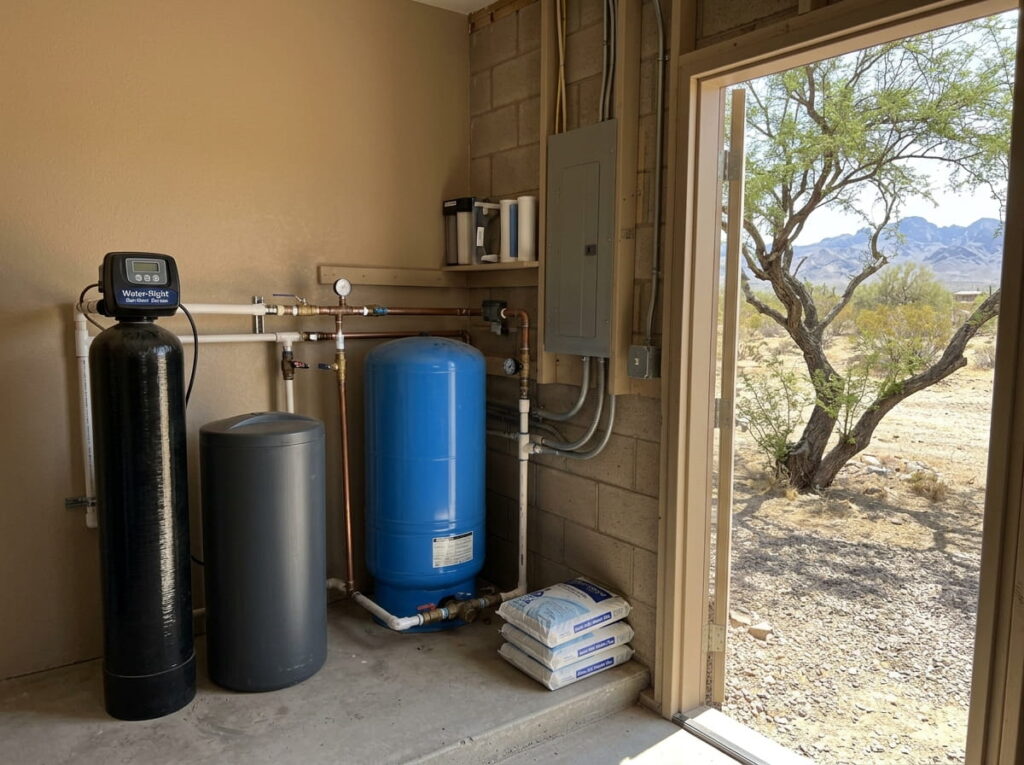
A whole-home water softener eliminates hard water problems at the source. These systems use a process called ion exchange. During this process, calcium and magnesium ions swap out for sodium or potassium ions inside a resin tank. As a result, soft water flows through every tap, shower, and appliance in your home.
Here’s what Tucson homeowners typically notice after water softener installation:
No more limescale. First, faucets and showerheads stay clean without constant scrubbing. That white buildup becomes a thing of the past.
Lower energy bills. Additionally, your water heater runs more efficiently without mineral scaling. Many homeowners notice savings within the first few months.
Softer skin and healthier hair. Also, soap lathers more easily and rinses cleanly. Your skin and hair retain their natural moisture. Many people describe the difference as dramatic.
Longer-lasting appliances. Moreover, dishwashers, washing machines, and water heaters all perform better. They also last longer without fighting mineral deposits.
Brighter, softer laundry. Finally, clothes feel softer and colors stay vibrant. You can often use less detergent per load too.
Choosing the Right Water Softener for Tucson’s Water
Not every water softener can handle Tucson’s hardness levels. A system built for moderate hardness may fall short here. That’s why you should start with a professional water test. This test measures your home’s exact hardness level. It also checks other factors like TDS (total dissolved solids), iron content, and pH.
Based on those results, a qualified technician can then recommend the right system size and grain capacity. They will also set the regeneration cycle to match your household’s water usage.
What to Expect During Installation
Professional water softener installation in Tucson typically takes just a few hours. The system connects to your main water line near where it enters your home. Because of this, every faucet and appliance benefits from softened water. In addition, a good installer will walk you through basic maintenance. This includes how and when to add salt to the brine tank.
Stop Scrubbing and Start Solving
That white buildup on your faucets is trying to tell you something. Hard water in Tucson isn’t just a cleaning headache. It also drains your plumbing, your appliances, your comfort, and your budget. Furthermore, the longer it goes untreated, the more it costs you.
A water softener doesn’t just remove the symptoms. It removes the cause.
Ready to find out exactly what’s in your water? Schedule your free water test today and get a personalized recommendation for your home.
Frequently Asked Questions
How hard is the water in Tucson?
Tucson’s water hardness typically ranges between 10 and 25 grains per gallon. This depends on your location within the city. For reference, anything above 7 grains per gallon qualifies as hard. Moreover, anything above 10.5 falls into the very hard category. As a result, most Tucson homes deal with very hard water daily.
Do I need a water softener in Tucson?
If you see white crusty buildup on your faucets, then you likely need one. Similarly, spotty dishes, stiff laundry, and dry skin all point to hard water damage. Because Tucson’s mineral content is so high, most homes in the area benefit significantly from a whole-home water softener.
How much does water softener installation cost in Tucson?
The cost varies depending on the system size and plumbing complexity. It also depends on the specific water conditions in your home. On average, homeowners invest anywhere from $1,500 to $4,000 for a quality system with professional installation. However, a free water test is the best first step toward getting an accurate quote.
Can I just use a filter instead of a water softener?
Standard water filters like pitcher filters improve taste and remove chlorine. However, they do not remove calcium and magnesium. These are the minerals that cause hard water problems. Only a water softener using ion exchange technology can effectively reduce hardness. As a result, it’s the only option that prevents limescale throughout your entire home.
How long does a water softener last?
A well-maintained water softener can last between 10 and 20 years. The key to longevity is proper care. For instance, you should keep the brine tank filled with the right salt. You should also schedule regular maintenance checks. Above all, make sure a professional sizes the system correctly for your home.
Is soft water safe to drink?
Yes, soft water is completely safe to drink. The ion exchange process replaces calcium and magnesium with a small amount of sodium. For most people, this amount is negligible. However, if you follow a strict low-sodium diet, you can add a reverse osmosis filter at your kitchen sink. This complements your water softener and gives you mineral-free drinking water.