You have signed off on the quote and the install date is on the calendar. Now what? Most homeowners have never watched a softener go in and have no idea whether to expect a two hour visit or an all day project with the water shut off.
Here is exactly how the day unfolds, based on how Desert Water Services, LLC runs installations across Tucson and the surrounding valley.
Before the Truck Arrives
A few small preparations make the day go faster.
Clear a working area around the planned location, usually the garage wall near the main line, a utility closet, or an exterior alcove. The technician needs roughly three feet of clearance in front of the equipment. Move stored boxes, bikes, and shelving out of the way.
Fill a pitcher or two of drinking water. Supply gets shut off for part of the process, typically between one and three hours.
Confirm pet arrangements if the crew needs the garage door open, and make sure vehicles are moved out of the way. Small things, but they consistently separate a smooth job from a slow one.
Step One: Walkthrough and Final Placement
The technician starts by confirming the location chosen during the estimate. Conditions sometimes look different once equipment is on site, so this is the moment to ask questions or request a shift of a few feet.
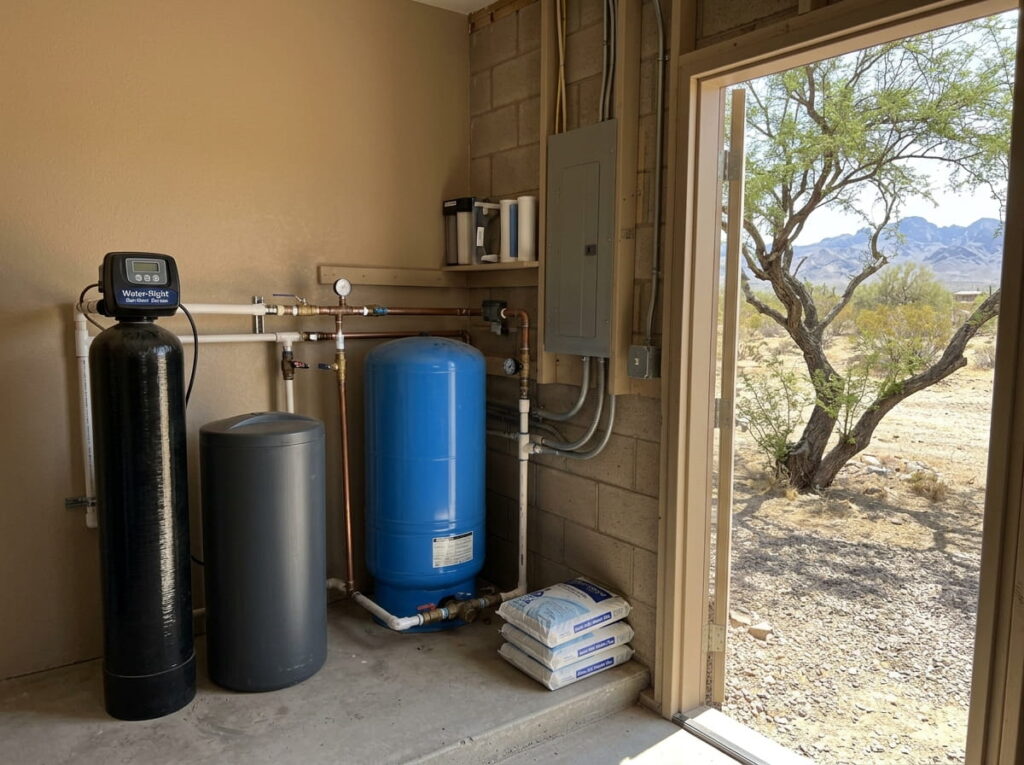
Placement follows a few rules. The softener installs after the main shutoff and pressure regulator, before the water heater, and after any outdoor irrigation branch so you are not softening landscape water. It needs a drain within reach, a nearby outlet, and protection from direct afternoon sun. Getting these details right is a large part of what separates the best water softener installation in Tucson, AZ from a rushed job that causes problems two summers later.
Step Two: Shutting Down and Draining
Main water gets shut off at the meter or the house valve. The technician opens the lowest fixture in the home to drain standing pressure from the lines, which prevents a mess when the pipe is cut.
If a water heater sits downstream, its supply is isolated as well. On gas units the burner is set to pilot or vacation mode as a precaution.
Step Three: Plumbing the Loop
This is the core of the job. If your home has a pre plumbed softener loop, common in newer Tucson construction, the work is mostly connection and takes well under an hour. Older homes need the main line cut and a loop built from scratch.
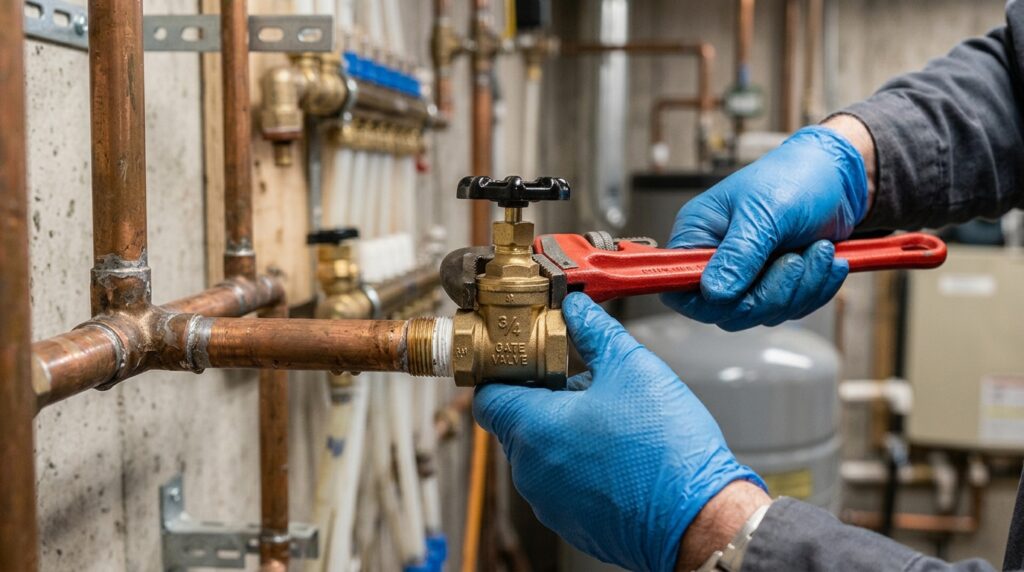
A proper installation includes a three valve bypass. Two valves isolate the softener and a third routes water around it. That bypass lets you service or replace the unit later without shutting off the entire house, and it lets you send unsoftened water through during maintenance. Any contractor claiming to deliver the best water softener installation in Tucson, AZ should include a bypass as standard rather than an upsell.
Connections are made in copper, PEX, or CPVC depending on your existing plumbing. Dielectric unions go in wherever dissimilar metals meet, which prevents galvanic corrosion at the joint.
Step Four: Drain and Overflow Lines
The softener discharges brine during regeneration and needs a drain path. Acceptable options include a standpipe, a laundry sink, a floor drain, or a properly configured connection at the utility sink.
Code requires an air gap between the drain line and the receiving drain. This prevents wastewater from siphoning back into the softener if a drain backs up. It is a small detail with real consequences, and it is one of the most frequently skipped items on cut rate installs.
The brine tank also gets an overflow line routed to the same drain area, so a float failure spills safely instead of onto your garage floor.
Step Five: Electrical
Softener control valves run on low voltage through a transformer plugged into a standard outlet. If no outlet exists nearby, the technician either adds one or coordinates with an electrician. The transformer should plug into a location where it will not be unplugged accidentally, since a softener that loses power stops regenerating and hardness returns within days.
Step Six: Startup, Sanitizing, and Programming
With plumbing complete, water is restored slowly. Opening the valve gradually prevents a pressure surge from disturbing the resin bed.
The technician purges air from the system, checks every joint for leaks under full pressure, and sanitizes the resin bed before the unit goes into service.
Then comes programming, which is where experience shows. The control valve needs your measured hardness, iron level, household size, and a regeneration schedule matched to actual usage. A unit programmed on generic defaults either wastes salt and water or runs out of capacity between cycles. Correct programming is quietly the biggest differentiator in the best water softener installation in Tucson, AZ, because two identical units can perform very differently based on these settings alone.
The first regeneration usually runs manually before the crew leaves, confirming the whole cycle works end to end.
Step Seven: Salt and Handover
The brine tank gets loaded with salt, generally to about one third full to start. The technician walks you through which salt type suits your unit, how to check levels, and how to spot a salt bridge.
You will also get a demonstration of the bypass valve. Knowing how to engage it takes thirty seconds to learn and saves a service call the day you need to shut the unit down.
How Long the Whole Thing Takes
A pre plumbed loop replacement typically runs two to three hours. A new installation in an older home with no loop runs four to six hours. Add time if an outlet, drain line, or exterior enclosure is needed.
Water is off for only part of that window, usually one to three hours in the middle.
Your First Week With Soft Water
Expect a few adjustments.
Water feels slippery in the shower. That is soap rinsing completely instead of leaving residue on your skin, and most people adapt within a week.
Use noticeably less soap, shampoo, and detergent. Roughly half of what you used before is a reasonable starting point.
You may see loosened scale flake off inside older pipes and appliances for a week or two, showing up as small white particles at aerators. Clean the aerators once and it settles down.
Frequently Asked Questions
Do I need a permit for a water softener in Tucson?
Requirements vary between the City of Tucson and unincorporated Pima County, and they depend on the extent of plumbing work. A licensed contractor confirms and pulls permits as part of the job.
Can I install a softener myself?
Legally, homeowners can perform work on their own residence in most cases. Practically, the drain air gap, bypass configuration, and programming are where DIY installs go wrong, and manufacturer warranties frequently require professional installation.
Where should the softener go if my main line enters outdoors?
An insulated exterior enclosure with shade protection works, and it is common in Tucson. Garage placement is preferred where the layout allows because it protects electronics from heat.
Will a softener reduce my water pressure?
A correctly sized unit costs only a few PSI. Noticeable pressure loss almost always indicates undersizing or a resin bed issue rather than normal operation.
How much salt will I use?
Most Tucson households use between one and three forty pound bags per month, depending on hardness, iron content, and water consumption.
How soon can I use the water?
Immediately after startup and sanitizing are complete. Run a cold tap for several minutes first to clear any remaining sanitizer.