Water softener installation in Tucson is often the missing piece for homeowners dealing with clogged patio misters and underperforming evaporative coolers. If you have ever watched your misting system sputter, drip, or leave a white haze on your patio furniture, hard water is likely the culprit.
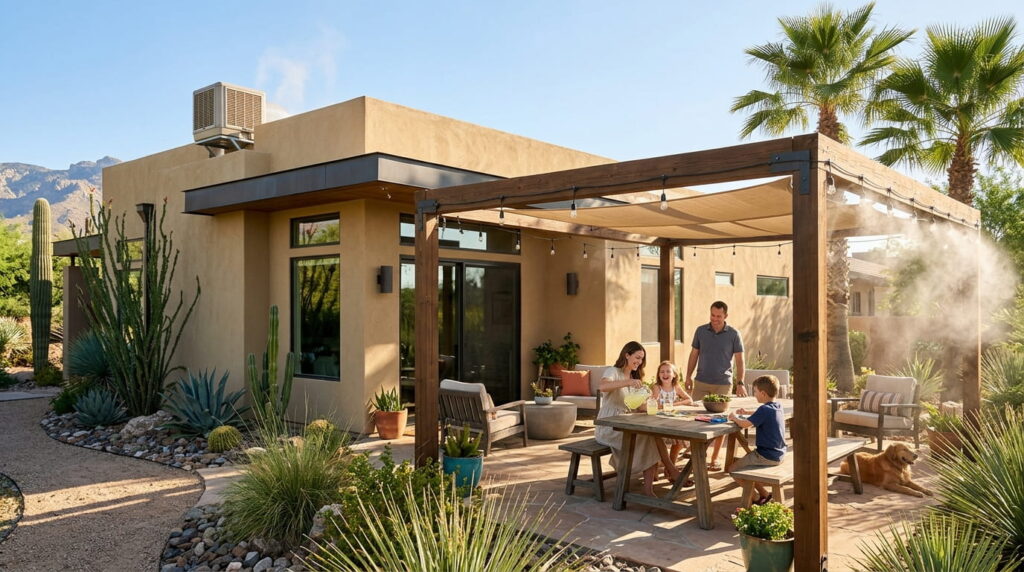
Dealing with hard water outdoor misters Tucson homeowners rely on for summer relief can become a seasonal headache. The problem starts with the mineral heavy water flowing through your system. This article explains how hard water damages misters and cooling systems, what it can cost you, and how treating your water can protect the equipment that keeps your outdoor spaces comfortable through a desert summer.
Why Tucson Misters and Coolers Struggle
Outdoor misters and evaporative coolers work by pushing water through tiny nozzles or over cooling pads. The water then evaporates, which pulls heat out of the surrounding air. Evaporation is what makes these systems effective, but it also creates a problem when the water is hard.
When hard water evaporates, the calcium and magnesium minerals it contains do not disappear. Instead, they remain behind as solid scale around the areas where water exits or evaporates.
In Tucson, where water is naturally hard and summers require almost constant cooling, this buildup can happen quickly. Equipment designed to handle extreme heat can become restricted by mineral deposits. That is why hard water outdoor misters Tucson residents depend on can experience performance problems unless the water is properly treated.
How Scale Clogs Misting Nozzles
Misting nozzles are designed with extremely small openings because a fine mist evaporates quickly and provides effective cooling. Unfortunately, those tiny openings are also highly vulnerable to mineral scale.
As hard water evaporates around the nozzle tip, calcium and magnesium deposits begin to accumulate on and inside the opening.
Over time, the spray pattern becomes less consistent. You may first notice uneven misting, followed by dripping instead of a fine mist. Eventually, some nozzles may stop producing mist altogether.
A clogged nozzle does more than reduce cooling. It can waste water and place additional strain on the pump as pressure builds behind the blockage. Many homeowners respond by constantly cleaning or replacing nozzles, but that can become expensive and frustrating.
Treating the water at the source is a more effective long term solution. Instead of repeatedly dealing with the symptoms, softened water helps prevent the mineral buildup that causes hard water outdoor misters Tucson homeowners rely on to clog in the first place.
The Damage to Evaporative Coolers
Evaporative coolers, sometimes called swamp coolers, can experience the same mineral problems on a larger scale.
Water is distributed over cooling pads, and as the water evaporates, minerals are left behind on the pads, inside the reservoir, and on internal components. Over time, scale can stiffen and clog the cooling pads, which reduces airflow and cooling performance.
Mineral buildup can also affect water distribution lines and the float valve. This may contribute to overflows, leaks, and uneven water flow.
Throughout a Tucson cooling season, this buildup can lead to more frequent pad replacement, additional cleaning, and earlier component failure. A cooler that could otherwise provide reliable service for years may require major service much sooner.
Softened water can significantly slow this process by reducing the minerals available to form scale. This helps keep cooling pads cleaner and allows the system to operate more efficiently.
The same hard water that affects outdoor cooling equipment can also appear inside your home. If you notice white buildup on your faucets, your outdoor equipment may be dealing with the same mineral problem.
The Hidden Costs of Ignoring the Problem
Hard water damage is not just an inconvenience. It can become expensive over time.
Constant nozzle replacement, frequent pad changes, pump strain, and reduced cooling efficiency can all add to your maintenance costs. A misting or cooling system that should operate smoothly can turn into a recurring maintenance project every summer.
There is also a comfort cost to consider. When nozzles become clogged and cooling pads accumulate scale, your system may not cool your outdoor space as effectively as it should. You paid for outdoor comfort, but hard water can gradually reduce that performance.
Recognizing the warning signs of hard water in your Tucson home early can help you address the problem before it affects more of your equipment.
How a Water Softener Protects Outdoor Systems
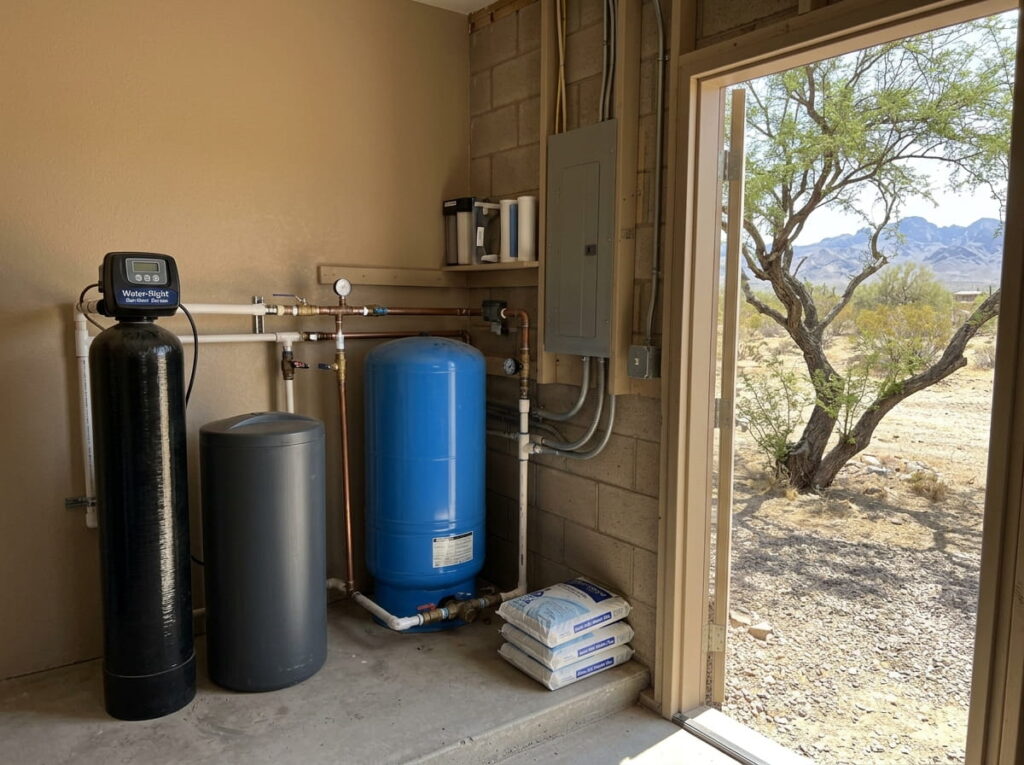
A whole home water softener removes calcium and magnesium before the water reaches your misters or evaporative cooler. When softened water flows through your outdoor equipment, there are far fewer hardness minerals available to form scale as the water evaporates.
This helps keep misting nozzles clear, spray patterns consistent, cooling pads cleaner, and pumps operating under normal conditions.
That is why water softener installation can be an effective long term solution for hard water outdoor misters Tucson homeowners depend on. Rather than constantly cleaning and replacing components, you address the source of the problem.
If you want to understand what the installation process involves, read about water softener installation in Tucson and what to expect on install day.
Choosing the Right Approach for Your Home
Some homeowners consider treating only the outdoor water line. However, a whole home water softener can make more sense because it protects more than just your misters and evaporative cooler.
A properly installed system can also help protect your water heater, appliances, plumbing, and other fixtures from the effects of hard water. This allows the benefits of water treatment to extend throughout your home.
System sizing is also important. Outdoor misters and evaporative coolers can increase water demand during the summer, so your softener should be capable of handling periods of higher usage without allowing excessive hardness to pass through.
A professional assessment can help determine the right system for your home and seasonal water usage. If you are considering the investment, it also helps to understand how much a water softener costs in Tucson so you can plan with realistic expectations.
Additional Steps to Protect Your Equipment
Even with softened water, regular seasonal maintenance can help keep outdoor cooling systems operating properly.
At the beginning of the cooling season, inspect the nozzles and cooling pads. Clean the reservoir and check for any mineral buildup that may have remained from previous seasons.
During periods of heavy use, pay attention to spray quality and airflow. Changes in performance can help you identify potential problems before they become larger repairs.
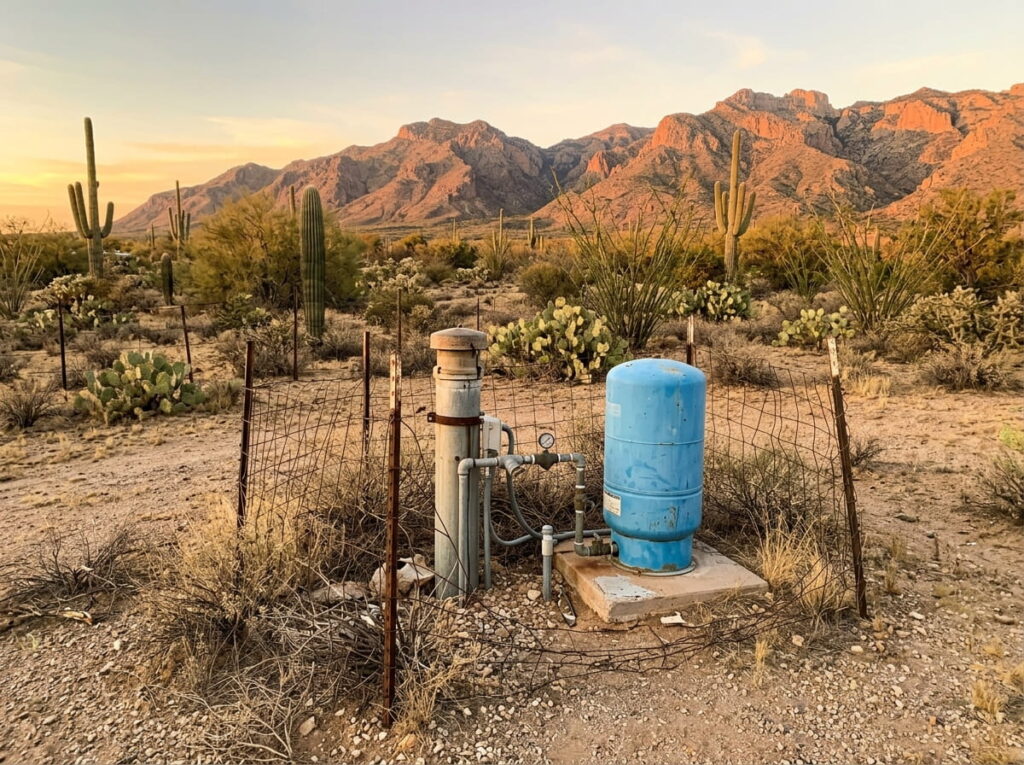
If you use a private well or your outdoor system draws water from a separate source, testing the water first can help identify exactly what you are dealing with.
Combining effective water treatment with routine seasonal maintenance gives your misters and evaporative coolers the best opportunity for reliable performance in the desert climate.
Frequently Asked Questions
Why do my misting nozzles clog so quickly in Tucson?
Tucson water is hard, meaning it contains dissolved calcium and magnesium. When this water evaporates around the tiny openings in your misting nozzles, the minerals remain behind as scale. Over time, that buildup can restrict or completely block the nozzle.
Softening the water removes the hardness minerals that cause this buildup, helping your nozzles stay cleaner for longer.
Will a water softener really stop my misters from clogging?
A water softener removes the hardness minerals that contribute to scale formation before the water reaches your misters. With fewer minerals available to remain behind after evaporation, the risk of mineral buildup is significantly reduced.
This addresses the source of the problem instead of relying only on repeated nozzle cleaning.
Does hard water damage evaporative coolers too?
Yes. Hard water can leave mineral scale on cooling pads, inside the reservoir, and on components such as the float valve.
This buildup can reduce airflow, affect water flow, contribute to leaks and overflows, and shorten the useful life of components. Using softened water helps reduce the amount of mineral scale that accumulates inside the system.
Should I soften just my outdoor line or my whole home?
A whole home water softener is often the better choice because it can protect your outdoor equipment as well as your water heater, appliances, fixtures, and plumbing.
Treating the entire home also avoids the added complexity of managing a separate treatment system for only one outdoor water line.
How do I know if hard water is the problem or something else?
Common signs include white mineral crust around nozzles and cooling pads, dripping instead of fine misting, reduced cooling performance, and white buildup on nearby surfaces.
If you notice these problems along with other signs of hard water inside your home, mineral scale is a likely cause. A water test can help confirm the hardness level and identify other water quality issues.
Can I just clean the nozzles instead of softening the water?
You can clean or replace clogged nozzles, but if the underlying water remains hard, mineral buildup can return as the water continues to evaporate.
This can turn nozzle cleaning and replacement into an ongoing task. Softening the water addresses the source of the mineral buildup and can reduce the need for repeated maintenance.
Will my softener need to be bigger because of summer misting?
Outdoor misters and evaporative coolers can increase water demand during the summer. Because of this, your water softener should be properly sized for your home’s peak water usage.
A professional assessment can help determine the appropriate system size and ensure the system can keep up during periods of heavy summer use.
Does softened water affect how well misters cool?
Softened water can help misters maintain better performance by reducing the mineral buildup that affects nozzle openings and spray patterns.
When nozzles remain cleaner, they can continue producing the fine, even mist needed for effective evaporative cooling. Hard water buildup can gradually interfere with that performance.
Get a Mister Water Solution That Lasts
If clogged nozzles and scaled cooling pads have turned your outdoor comfort into a summer chore, treating the water can be a better approach than constantly fighting the symptoms.
A properly sized softener can help protect your misters, evaporative cooler, and other parts of your home from hard water damage.
Desert Water Services offers professional water softener installation in Tucson designed for desert conditions. Contact us for a mister water solution that helps keep your outdoor spaces cool and your equipment running clean throughout the season.