Few things ruin a morning like turning on the tap and smelling rotten eggs. If you’re on a private well, that odor is common, and it’s fixable. Finding the right well water sulfur smell solution starts with understanding where the smell comes from, because the cause decides the fix. Some sulfur odors can be solved for a few dollars. Others need a dedicated treatment system.
Let’s find out which one you’re dealing with.
What Causes the Rotten Egg Smell?
The smell comes from hydrogen sulfide gas. It usually forms in wells where sulfate reducing bacteria live in low oxygen conditions. These bacteria are generally not harmful to health, but they produce the gas as they break down sulfur compounds. Most people can detect hydrogen sulfide at very low levels.
Hydrogen sulfide can also make water corrosive, which can damage pipes and fixtures and tarnish silverware. Because it’s a gas, levels can shift over time, which makes testing tricky.
Step One: Hot Water or Cold Water?
This one question saves a lot of time and money.
Run the cold tap and smell it. Then run the hot tap and smell it.
Only the hot water smells: The source is likely your water heater. Many water heaters have a magnesium anode rod that protects the tank from corrosion. In some water, the rod reacts with sulfates and bacteria to create hydrogen sulfide. The solution may be replacing the magnesium rod with an aluminum or zinc alloy rod, or disinfecting the tank. Check your water heater warranty before removing the anode rod.
Both hot and cold smell: The hydrogen sulfide is likely coming from the well itself. That’s when you need a treatment system.
Only one faucet smells: The problem may be in the drain, not the water. Fill a glass, step away from the sink, and smell it.
Step Two: Test the Water
A well water test tells you how much hydrogen sulfide is present, along with iron, manganese, hardness, and pH. These all matter, because sulfur rarely shows up alone. Iron and manganese often come with it, and the right well water sulfur smell solution needs to handle the whole picture.
Testing should also check for bacteria. Private wells are not regulated like city water, so owners are responsible for testing their own supply.
Treatment Options That Work
Shock Chlorination
If sulfur reducing bacteria are living in the well, shock chlorinating the well can reduce them. This is often a starting point, but the smell may return because bacteria can regrow over time.
Oxidation and Filtration
This is the most common long term approach. An oxidizer turns hydrogen sulfide into a form that can be filtered out. Common options include air injection, chlorine injection, and hydrogen peroxide injection, followed by a filter tank. The right method depends on how much hydrogen sulfide is in your water.
Activated Carbon
Carbon filters can help with very low sulfur levels at a single tap, but they fill up quickly with hydrogen sulfide and are not a whole house fix for strong odors.
Water Softeners
A standard softener alone won’t remove sulfur odor. It can help as part of a larger system, especially if you also have hard water, iron, or manganese.
Where the Sanitizer Plus Well Water System Fits
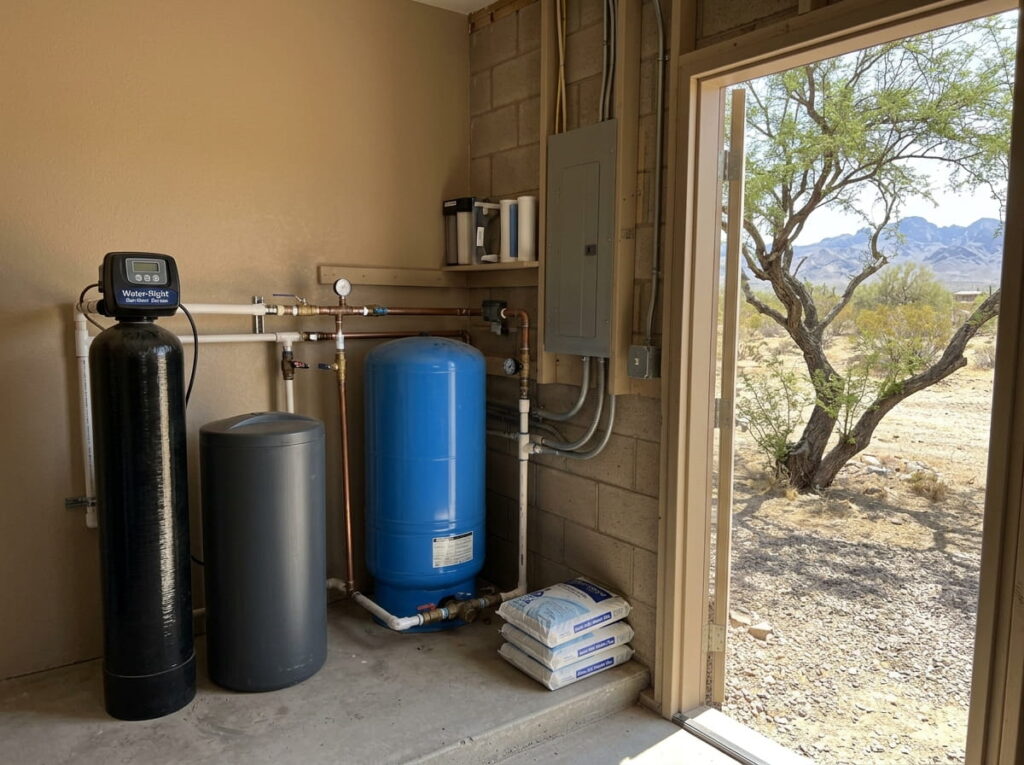
The Sanitizer Plus well water system from Water-Right is built for wells with several problems at once. It combines softening, iron and manganese removal, and pH correction in a single unit. It uses a built-in chlorine generator that produces chlorine during regeneration to sanitize the media bed, which helps control iron bacteria and the odors that come with them.
Here’s the important part: it’s designed for nuisance bacteria odors and minor sulfur conditions, around 1.0 ppm of hydrogen sulfide or less. For wells with low level sulfur plus hardness and iron, it can be an excellent all in one well water sulfur smell solution. For stronger sulfur levels, a dedicated oxidation and filtration system is usually needed, sometimes paired with a softener.
That’s why testing comes first. A good provider will match the system to your actual levels.
Why the Smell Keeps Coming Back
If you’ve treated the smell before and it returned, a few things could be going on. The well was shock chlorinated, but bacteria regrew. The treatment system was too small for your sulfur level. A filter or carbon stage wasn’t maintained. The water heater was never addressed. Sulfur levels increased over time.
A lasting well water sulfur smell solution treats the true source and includes maintenance.
Is Sulfur Water Safe?
At levels commonly found in household water, hydrogen sulfide is usually a nuisance rather than a health risk. Still, the smell and corrosion are real problems. And since private wells can contain other contaminants, regular testing is the only way to know your water is safe.
Tired of the rotten egg smell? Free Well Water Test and find out exactly what’s in your well and which system will fix it for good.
Frequently Asked Questions
1. Why does my well water smell like rotten eggs?
The smell comes from hydrogen sulfide gas, usually produced by sulfate reducing bacteria in low oxygen conditions in the well or water heater.
2. Is sulfur smelling water safe to drink?
At typical household levels, hydrogen sulfide is usually a nuisance rather than a health risk. Test your well to rule out other contaminants.
3. Why does only my hot water smell like sulfur?
The magnesium anode rod in your water heater can react with sulfates and bacteria to create hydrogen sulfide. Replacing the rod or disinfecting the tank often helps.
4. What is the best well water sulfur smell solution?
It depends on your sulfur level. Low levels may be handled by systems like the Sanitizer Plus, while higher levels usually need oxidation and filtration.
5. Can a water softener remove sulfur smell?
A standard softener alone won’t remove hydrogen sulfide. It can help as part of a system that also treats iron and hardness.
6. What does the Sanitizer Plus system do?
It softens water, removes iron and manganese, raises low pH, and uses a built-in chlorine generator to sanitize the media and control odors from nuisance bacteria and minor sulfur.
7. How much sulfur can the Sanitizer Plus handle?
It’s designed for minor sulfur conditions, about 1.0 ppm hydrogen sulfide or less. Higher levels typically need dedicated sulfur treatment.
8. Does shock chlorination fix sulfur smell permanently?
Not always. It can reduce bacteria in the well, but the smell may return as bacteria regrow. Ongoing treatment is often needed.
9. Can a carbon filter remove sulfur smell?
Carbon can reduce very low sulfur levels at one tap, but it fills up quickly and isn’t a whole house solution for strong odors.
10. How often should I test my well water?
Many experts recommend testing private wells at least once a year, and anytime you notice a change in smell, taste, or color.