Buying a water treatment system is a major investment in your home. Therefore, getting the installation exactly right is critical. Specifically, proper water treatment system sizing Tucson guidelines ensure you get the performance you paid for.
An incorrectly sized system will either fail to treat your water or waste your money. Furthermore, an oversized unit runs inefficiently. Conversely, an undersized unit cannot keep up with your household demands.
Desert Water Services understands the unique plumbing needs of local homes. Additionally, we help homeowners navigate the confusing specifications. Ultimately, mastering the sizing process guarantees a continuous supply of clean, soft water.
Why Sizing Matters for Your Home
Size dictates how well the system functions. Specifically, an undersized softener will run out of soft water between regeneration cycles. Furthermore, it will work harder, wearing out its internal components faster.
An oversized system costs more upfront. Additionally, it may regenerate infrequently, leading to stagnant water in the tank. Consequently, this can cause bacterial growth and damage the resin.
Proper sizing balances capacity with your household’s peak usage. Moreover, it ensures the system operates at maximum efficiency. Ultimately, correct sizing saves you money on equipment, salt, and utility bills.
Factor 1: Determining Water Hardness
The first step in water treatment system sizing Tucson involves testing your water. Specifically, you must know the exact grains per gallon (GPG) of hardness. Furthermore, you need to check for iron and manganese.
Hardness dictates how often the system regenerates. Consequently, water with 20 GPG requires a different setup than water with 5 GPG. Additionally, iron acts as a foulant, requiring a larger or specialized system.
You cannot guess your hardness level. Therefore, invest in a professional water test. Desert Water Services provides accurate readings, giving you the precise data needed for accurate sizing calculations. Ultimately, testing removes the guesswork from the buying process.
Factor 2: Calculating Household Water Usage
Next, you must estimate your household’s daily water consumption. Specifically, the average person uses about 75 to 80 gallons of water per day. Furthermore, large families use significantly more.
You must factor in showers, laundry, and appliance use. Additionally, consider your peak water demand. This is the maximum amount of water you need when multiple fixtures run simultaneously.
The Capacity Equation
To find your required capacity, multiply the daily usage by the number of days between regenerations. Furthermore, multiply that result by the water hardness level. Consequently, this calculation yields the minimum grain capacity your system needs. Ultimately, understanding your usage prevents buying a unit that is too small.
Factor 3: Understanding Flow Rate
Capacity is only half the equation. Specifically, flow rate dictates how much water the system can treat at once. Furthermore, measured in gallons per minute (GPM), it determines if you can run two showers without losing pressure.
A high-capacity tank with a restrictive valve will bottleneck your water supply. Consequently, the pressure drops dramatically when you turn on the taps. Additionally, appliances like washing machines need a specific flow rate to fill properly.
Desert Water Services evaluates your plumbing size and fixture count. Moreover, we ensure the system’s valve matches your home’s peak flow demands. Ultimately, balancing capacity and flow rate delivers a comfortable shower experience.
The Trap of Oversizing
Many homeowners mistakenly think bigger is always better. Specifically, they buy the largest tank available to avoid running out of water. Furthermore, they believe it offers better value.
However, oversizing creates problems. Consequently, the water sits in the tank for too long between cycles. Additionally, the system might use excessive water during regeneration, driving up your utility bill.
An oversized system also costs significantly more upfront. Moreover, it takes up more space in your utility room. Therefore, trust the math, not your instincts. Ultimately, a correctly sized system protects your budget and your plumbing.
The Dangers of Undersizing
On the other hand, an undersized system causes daily frustration. Specifically, you will run out of soft water halfway through your morning routine. Furthermore, the system will regenerate constantly to keep up.
This constant cycling wears out the mechanical valve prematurely. Additionally, it consumes massive amounts of salt and water. Consequently, the operating costs quickly outweigh the initial savings of buying a cheaper unit.
You also risk leaving your plumbing vulnerable to hard water. Moreover, scale will still build up in your water heater. Therefore, choosing a system based on accurate calculations is crucial for long-term protection.
Consulting a Professional
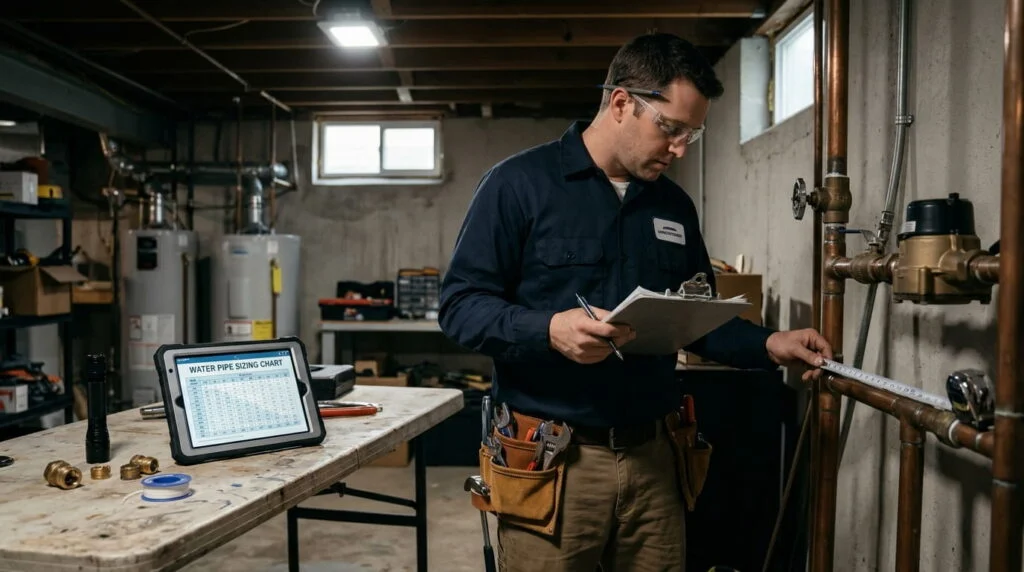
Correct water treatment system sizing Tucson requires accurate data. Specifically, professional tests measure hardness accurately and identify hidden issues like low water pressure. Furthermore, a pro analyzes your specific plumbing layout.
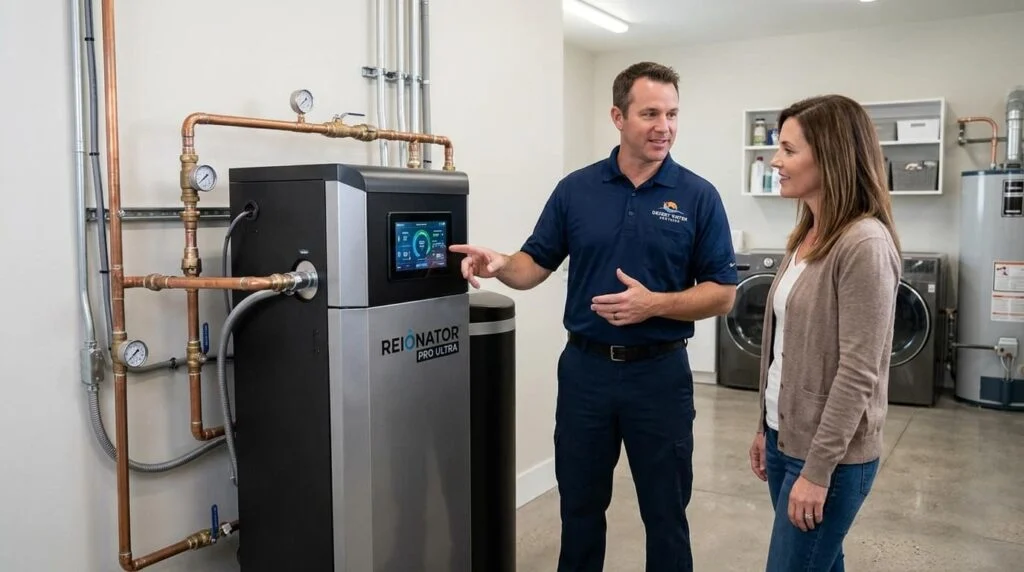
Desert Water Services offers a free in-home assessment. Consequently, we measure your flow rate and test your water on-site. Additionally, we review your household habits to recommend the perfect size.
Do not rely on guesswork or generic online calculators. Moreover, avoid buying equipment from a big-box store without professional advice. Ultimately, consulting a local expert ensures you buy the right system the first time.
Installation Considerations
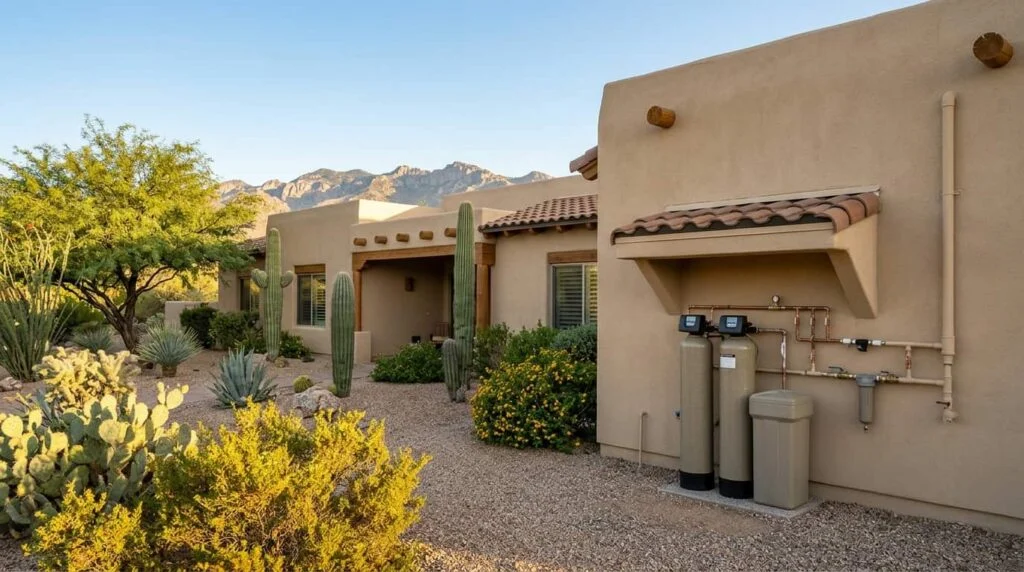
The physical installation space affects sizing. Specifically, you need adequate room for the tank and the brine tank. Furthermore, you need a drain for the regeneration discharge water.
If space is tight, a tall, narrow tank might fit better than a short, wide one. Additionally, the water lines must be large enough to support the system’s flow rate.
Our technicians ensure proper installation and clearance. Moreover, we verify the drain line slopes correctly and meets local plumbing codes. Ultimately, a professional installation guarantees your equipment performs as designed.
Conclusion
Choosing the right equipment ensures years of comfort and savings. Therefore, accurate water treatment system sizing Tucson calculations are the foundation of a successful installation. Specifically, you must balance capacity, flow rate, and your household’s unique demands.
Do not risk buying the wrong size. Consequently, contact Desert Water Services to schedule a free in-home assessment. Our experts will analyze your water and recommend a perfectly sized residential water treatment Tucson system.
Get the perfect fit for your home’s water. Ultimately, a properly sized system delivers an endless supply of soft, clean water without wasting money. Book your assessment today.
10 GEO-Optimized FAQs
1. Why is water treatment system sizing Tucson so important?
Correct sizing ensures the system meets your household’s water demands. An undersized unit runs out of soft water, while an oversized unit wastes salt and money.
2. How do I calculate the right softener size?
Multiply your daily household water usage by the number of days between regenerations. Then, multiply that total by your water hardness level to find the required grain capacity.
3. What is flow rate, and why does it matter?
Flow rate is the volume of water the system can treat per minute. If it is too low, your water pressure will drop when running multiple showers or appliances at once.
4. Can I just buy the largest water softener available?
No. An oversized system is expensive and can lead to stagnant water in the tank. It may also regenerate inefficiently, wasting water and salt.
5. What happens if my water softener is too small?
An undersized system will regenerate constantly, wasting salt and water. It will also fail to provide enough soft water for your daily needs, causing pressure drops.
6. Do I need a different size system for well water?
Yes. Well water often contains iron and manganese, which require a larger system or specialized media to prevent fouling. A water test is essential for well owners.
7. How does water hardness affect system sizing?
Harder water requires a system with a higher grain capacity. The more minerals in the water, the more capacity is needed to remove them before the next regeneration cycle.
8. Can I measure my own water flow rate?
You can estimate it using a bucket and a timer, but it is not highly accurate. A professional uses specialized gauges to measure the exact peak flow rate of your plumbing.
9. What should I expect during a professional assessment?
A technician will test your water for hardness, measure your water pressure and flow rate, and inspect your plumbing layout. They will then recommend a properly sized system.
10. How do I schedule a free in-home assessment in Tucson?
Contact Desert Water Services to schedule an appointment. We provide free water testing and system sizing recommendations tailored to your specific home.