You fill a glass from the tap and it looks fine. An hour later there is a faint orange tint at the bottom. Or rust colored streaks return in the toilet bowl days after scrubbing. Maybe a load of white laundry came out with a yellow cast that will not wash away.
If you are on a private well anywhere around Tucson, Marana, Vail, or Sahuarita, you are almost certainly looking at iron. It is one of the most common complaints Desert Water Services, LLC hears, and it is very fixable once you know which type of iron you have.
Where the Iron Comes From
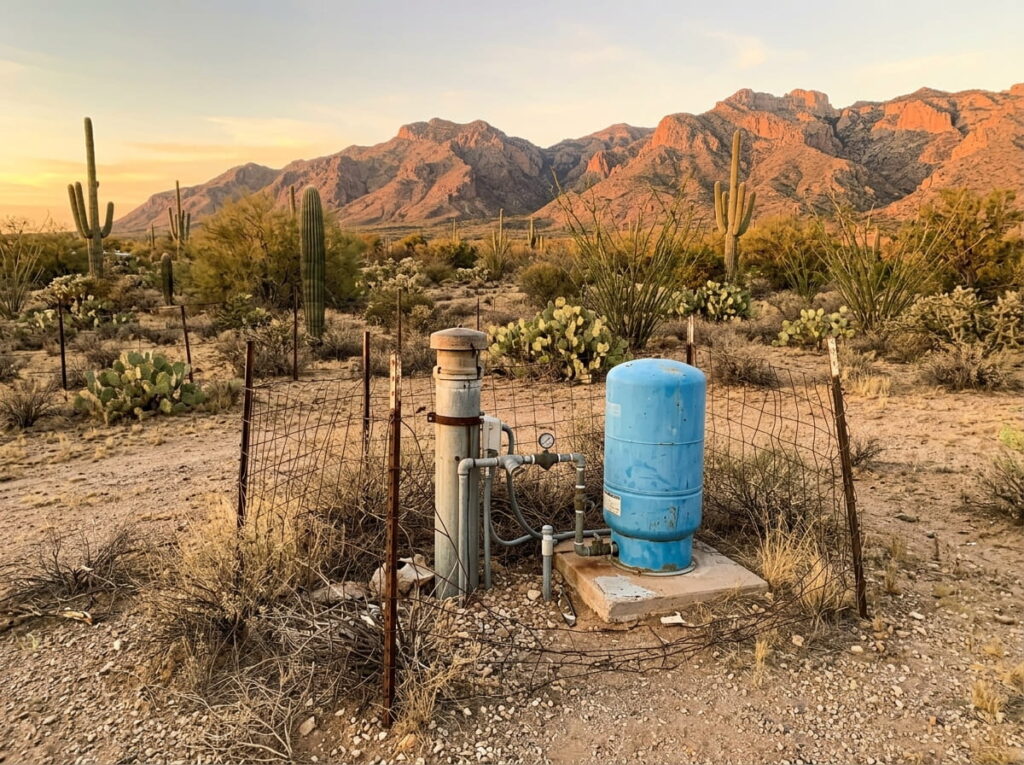
Iron is the fourth most abundant element in the earth’s crust, and southern Arizona geology has plenty of it. Groundwater moving through iron bearing rock dissolves small amounts along the way. By the time that water reaches your pressure tank it may carry anywhere from a trace to several parts per million.
The EPA sets a secondary standard of 0.3 parts per million for iron. Secondary means it is an aesthetic guideline rather than a health limit. Iron will not make you sick at typical well concentrations. It will ruin fixtures, laundry, and appliances, which is why well water treatment in Tucson so often starts with an iron problem rather than a safety scare.
Two other sources deserve mention. Older steel well casings and galvanized plumbing corrode over time and shed iron directly into the water. If your staining appeared suddenly in a home that never had it, aging pipe is a real suspect.
The Three Types of Iron and Why It Matters
This is the part most homeowners never hear, and it is the reason so many off the shelf filters fail.
Ferrous iron, also called clear water iron. It is fully dissolved. Water comes out of the tap clear, then turns orange after sitting as oxygen converts it to a solid. This is the most common form in deep Tucson wells.
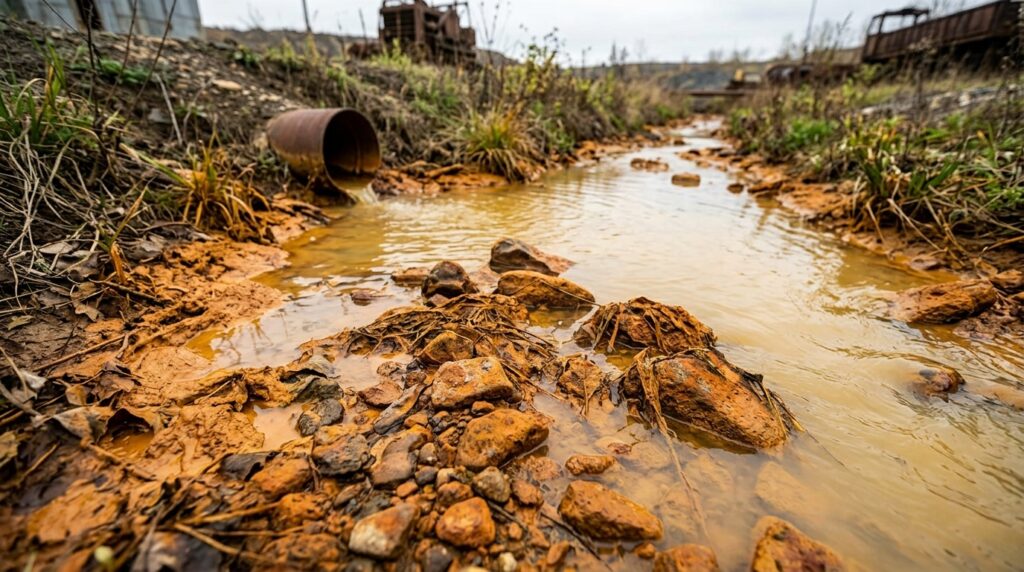
Ferric iron, also called red water iron. It is already oxidized into particles. Water looks orange or rusty the moment it leaves the tap. Simple filtration catches it because it is a physical particle.
Organic and bacterial iron. Iron bacteria feed on the mineral and produce a slimy reddish brown buildup inside toilet tanks, pressure tanks, and pipe interiors. It often smells swampy or metallic. This form resists standard filtration entirely and requires disinfection as part of the treatment train.
A single water test tells you which one you have. Guessing wrong is the number one reason people buy equipment twice, and it is why competent well water treatment in Tucson always begins in a lab rather than a showroom.
The Damage Iron Actually Does
Iron staining is not just cosmetic annoyance. Left untreated it costs real money.
Fixtures develop permanent orange rings that abrasive cleaners eventually etch. Laundry takes on a dull yellow tint, and chlorine bleach makes it worse because it oxidizes the iron directly into the fibers. Dishwashers leave a film on glassware.
Inside the plumbing, iron deposits accumulate on pipe walls and gradually narrow the interior diameter, which shows up as declining pressure over several years. Water heaters collect iron sludge at the bottom of the tank, reducing efficiency and shortening life. Well pumps and pressure switches foul.
Iron bacteria adds another layer. The slime it produces coats everything it touches, including the well screen itself, and can reduce a healthy well’s yield over time. That is a repair with a far bigger invoice than a filtration system.
How Iron Gets Removed
Treatment depends entirely on the type and concentration, which is why professional well water treatment in Tucson is built around test results rather than a catalog page.
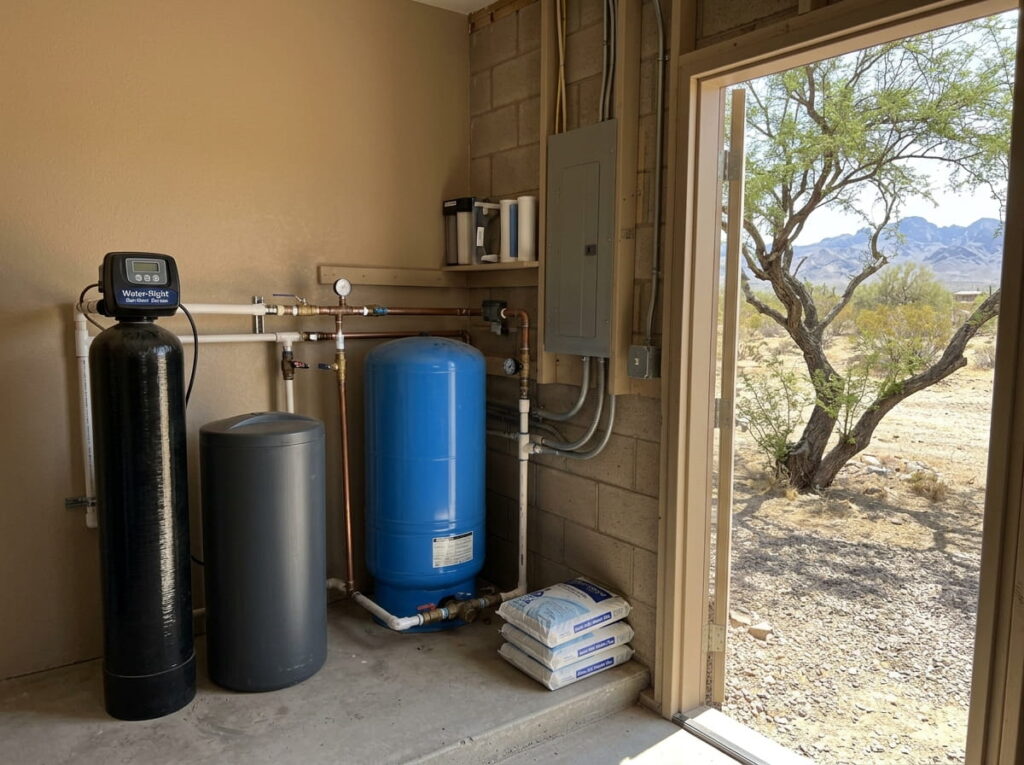
Oxidizing filtration is the workhorse for ferrous iron. Air injection, catalytic media, or a chemical oxidizer converts dissolved iron into particles, then a filter bed captures them. The system backwashes periodically to flush the accumulated iron to drain. This approach handles a broad concentration range and needs no chemicals in most configurations.
Water softeners can remove modest iron levels through ion exchange, generally up to two or three parts per million. Softeners are a good fit when you have hardness and light iron together. Push a softener beyond its capacity and the resin bed fouls, which is a common and avoidable service call.
Sediment filtration works for ferric iron that arrives already oxidized. It is simple and inexpensive but useless against dissolved iron.
Chlorination followed by filtration is the standard response to iron bacteria. Chlorine kills the bacteria and oxidizes the iron in one step, then a carbon or catalytic bed removes both the particles and the residual chlorine. Systems built for this purpose are the backbone of well water treatment in Tucson wherever bacterial iron shows up.
Shock chlorination of the well itself is sometimes needed before any of the above. It disinfects the casing and screen where bacteria colonize.
Why Store Bought Filters Usually Disappoint
Cartridge filters from a home center are designed for particles. Dissolved ferrous iron passes straight through the cartridge, oxidizes downstream, and stains everything anyway. Homeowners then buy a finer cartridge, which clogs in days.
The other issue is capacity. Well water flows at whole house volumes. A cartridge sized for a kitchen tap cannot process shower, laundry, and irrigation demand without pressure loss. Backwashing tank systems handle that volume by design, which is why properly specified well water treatment in Tucson uses tanks rather than cartridges for the primary iron stage.
What Testing Should Cover
A useful well test measures more than iron. Ask for total iron, ferrous versus ferric breakdown, manganese, hardness, pH, hydrogen sulfide, total dissolved solids, nitrates, and coliform bacteria.
The pH reading matters more than people expect. Oxidation slows dramatically below about pH 6.8, so a system that works beautifully at pH 7.5 underperforms on acidic water unless a pH correction stage is added ahead of it.
Manganese frequently travels with iron and produces black or dark brown staining. It requires a higher pH to oxidize than iron does, so systems designed for iron alone often leave manganese behind. Desert Water Services, LLC includes both in standard well analysis for this reason.
Frequently Asked Questions
Is orange well water safe to drink?
Iron itself is regulated as an aesthetic concern rather than a health contaminant, so typical levels are not dangerous. The concern is that iron often accompanies other issues such as bacteria or manganese, so a full panel is worth running before drawing conclusions.
Why does my water look clear but stain everything?
That is dissolved ferrous iron. It stays invisible under pressure and oxidizes into visible particles once exposed to air. Clear water that stains is the classic signature.
Will a water softener fix my iron problem?
Only at low concentrations, generally under two or three parts per million, and only for the dissolved form. Higher levels foul the resin. Effective well water treatment in Tucson pairs a dedicated iron filter ahead of the softener when levels exceed that range.
How do I know if I have iron bacteria?
Look for slimy reddish brown buildup inside the toilet tank, a musty or metallic odor, and staining that returns quickly after cleaning. Lab confirmation is straightforward.
Can I remove existing orange stains?
Yes, with an acid based rust remover such as oxalic acid. Avoid chlorine bleach, which sets iron stains permanently. Treat the water first or the stains simply return.
How long does an iron filter last?
Media life typically runs five to ten years depending on iron load and water volume. The control valve usually outlasts the media with routine service.