A Water Quality Testing Specialist in Tucson can help determine which treatment method is right for your home or business. There is no single water treatment system that works best for every property. The right solution depends on your water source and the contaminants found in the water.
Common residential treatment methods include activated carbon filtration, water softening, and reverse osmosis (RO). In Tucson, water softening is especially relevant because groundwater is naturally hard. Reverse osmosis is also popular for homeowners who want to reduce dissolved minerals and specific contaminants in drinking water.
The Arizona Cooperative Extension describes reverse osmosis as a common home treatment method for contaminated drinking water. It can reduce many dissolved minerals and contaminants when the system is properly designed and maintained.
What Is Water Treatment?
Water treatment is the process of improving water quality by removing, reducing, or controlling unwanted substances. The best treatment method depends on what is actually present in the water.
For example:
- Sediment filters remove dirt and suspended particles.
- Activated carbon can improve taste and odor and reduce certain chemicals.
- Water softeners reduce calcium and magnesium hardness.
- Reverse osmosis can reduce many dissolved substances.
- UV systems can help control certain microorganisms.
This is why water testing should usually come before purchasing a treatment system. A filter designed to reduce chlorine will not solve a hardness problem. Likewise, a water softener is not designed to remove every contaminant.
Tucson Water also explains that customers are responsible for water quality within the “customer zone.” This includes the plumbing between the water main and the tap. Internal plumbing can sometimes affect water taste and quality even when the supplied water meets regulatory requirements.
What Is the Most Common Water Treatment for Homes?
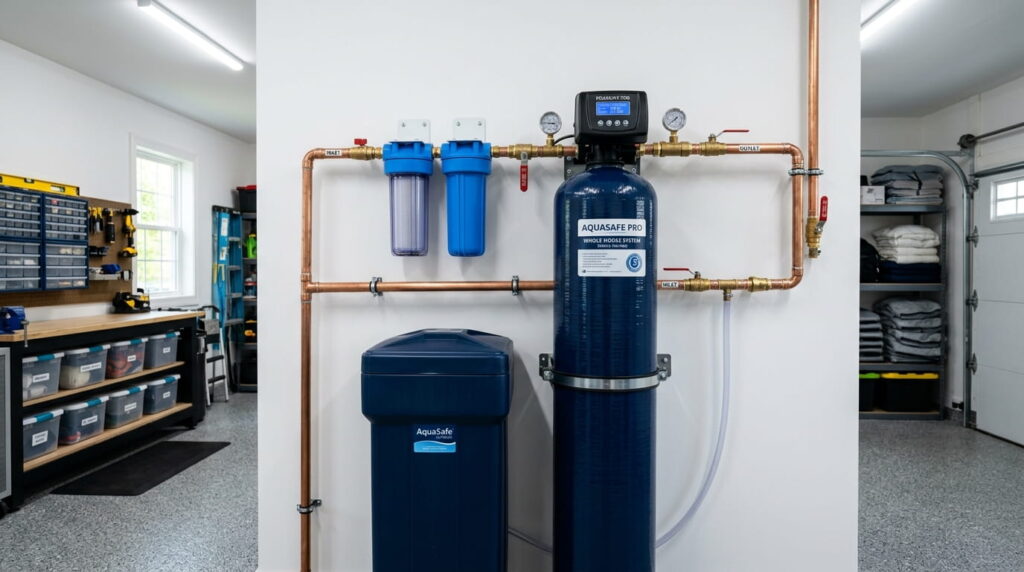
Several treatment methods are commonly used in homes. Activated carbon filtration is one of the most common basic options. Water softeners are also widely used in areas with hard water. Reverse osmosis is another popular option, especially for drinking and cooking water.
A published study involving 31 Arizona households found that home treatment systems included activated carbon, reverse osmosis, and water softeners. Among the homes using treatment, activated carbon was most common in municipal-water households. Reverse osmosis and water softeners appeared more frequently among private-well households.
This small study is not a statewide market survey. However, it shows an important point: treatment choices often depend on the water source and local water conditions.
Why Water Softeners Are Common in Tucson
Hard water is one of the main reasons Tucson homeowners consider water treatment. Tucson Water states that groundwater in the area is naturally hard because it contains dissolved calcium and magnesium.
Hard water is considered safe to drink. However, it can cause practical problems inside a home.
Common signs of hard water include:
- White mineral deposits around faucets
- Scale on showerheads and fixtures
- Spots on glassware
- Mineral buildup inside water heaters
- Reduced soap lather
- Scale buildup in appliances
A water softener uses ion exchange to reduce calcium and magnesium. It is designed specifically to address water hardness rather than remove every substance from the water.
For this reason, a properly sized softener may be a better solution for a hard-water problem than an expensive purification system.
How Does Reverse Osmosis Treat Water?
Reverse osmosis is another widely used residential treatment method. It uses pressure to push water through a semipermeable membrane.
The membrane can reduce many dissolved minerals and contaminants. According to the Arizona Cooperative Extension, RO can reduce common minerals, including hardness, by approximately 80% to 95% under suitable conditions.
Actual performance can vary. Factors such as membrane type, water pressure, contaminant concentration, and system maintenance can affect the results.
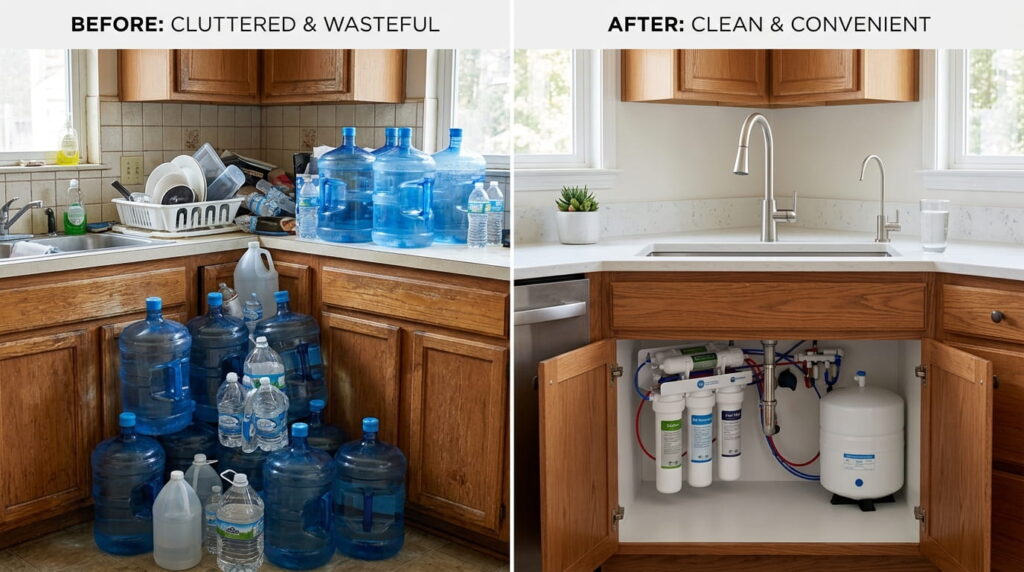
RO systems are often installed under the kitchen sink. This point-of-use approach provides treated water for drinking and cooking without treating every gallon used throughout the home.
However, reverse osmosis is not a universal solution. Pretreatment may be necessary when water contains sediment or high levels of hardness. Carbon filtration can also be useful for certain chemicals.
Activated Carbon Filtration: A Simple and Common Option
Activated carbon filtration is popular because it is relatively simple and can improve several aesthetic qualities of drinking water.
Carbon filters can reduce substances that cause unpleasant taste and odor. Properly certified products can also target specific contaminants.
These filters are available in several forms, including:
- Water filter pitchers
- Faucet-mounted filters
- Under-sink systems
- Refrigerator filters
- Whole-house filtration systems
However, not every carbon filter removes the same contaminants. Performance depends on the filter media, design, contact time, and certification.
Always check what a specific filter is certified to reduce. Do not choose a product simply because it contains activated carbon.
Common Water Treatment Methods Compared
| Treatment Method | Main Purpose | Common Application | Best For |
|---|---|---|---|
| Activated carbon | Reduces taste, odor, chlorine, and selected chemicals | Point-of-use or whole-house | Municipal water and aesthetic concerns |
| Water softener | Reduces calcium and magnesium hardness | Whole-house | Hard water and scale |
| Reverse osmosis | Reduces many dissolved substances | Point-of-use | Specific dissolved contaminants |
| Sediment filter | Removes suspended particles | Whole-house or point-of-use | Sand, dirt, and particles |
| UV disinfection | Inactivates certain microorganisms | Whole-house or point-of-entry | Certain microbial concerns |
| Iron filter | Reduces iron and sometimes manganese | Whole-house | Well-water problems |
| Distillation | Separates many dissolved substances through evaporation | Point-of-use | Specialty purification |
The right option depends on your water test results. In some cases, using more than one treatment system makes sense.
What Does Tucson Water Testing Show?
Tucson has an extensive public water monitoring program. Tucson Water states that its staff monitor drinking water at 170 wells, 60 reservoirs, 271 sampling stations, and 125 selected homes across its systems.
The city also reports that its professionals perform more than 400,000 individual tests each year on the drinking-water supply.
These numbers demonstrate the scale of Tucson’s water-quality monitoring program.
However, public water monitoring does not mean every property has exactly the same water conditions at the tap. Plumbing, building age, water source, and private wells can all affect water quality.
Tucson Water publishes annual water-quality reports and provides an online water-quality map. These resources can help residents learn more about water conditions in their area.
Why Water Testing Should Come Before Water Treatment
Buying a treatment system without testing your water can result in unnecessary costs.
For example, white scale around faucets may indicate hard water. However, it does not automatically mean that you need a whole-house reverse osmosis system.
Similarly, an unusual taste or odor does not identify one specific contaminant. Several different conditions can cause similar symptoms.
Water testing provides measurable information about your water. Those results can then guide your treatment decision.
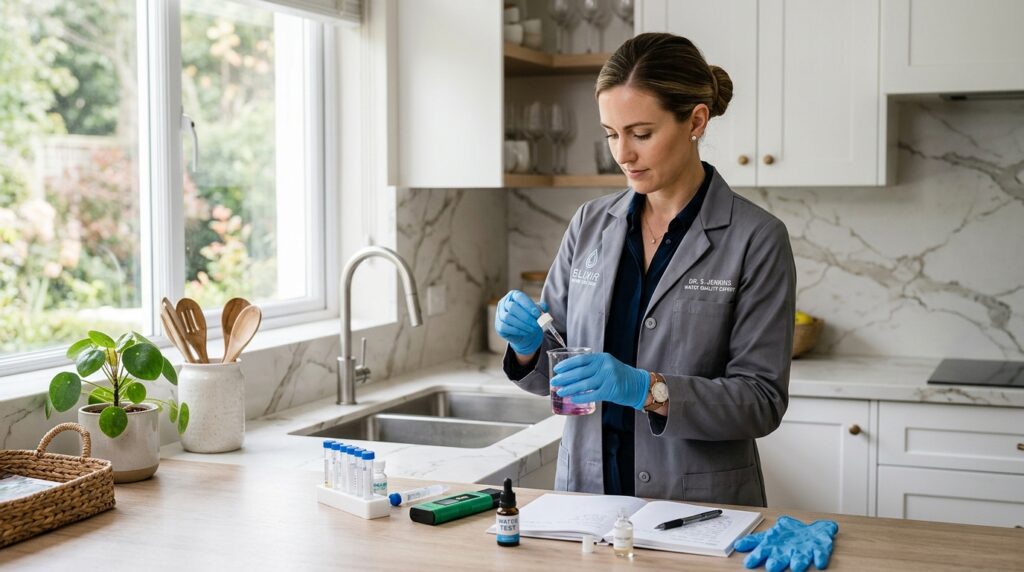
A Water Quality Testing Specialist in Tucson can help identify which water-quality parameters should be tested. A professional can also explain the results and recommend appropriate treatment options for residential, commercial, or well-water applications.
Water Treatment for Tucson Homes
Residential treatment needs can vary significantly from one property to another.
A home connected to municipal water might use:
- A carbon filter for taste and odor
- A water softener for hardness
- An under-sink RO system for drinking water
Private wells may require a more comprehensive treatment approach.
Depending on the test results, well-water treatment may include sediment filtration, iron or manganese treatment, water softening, carbon filtration, reverse osmosis, or disinfection.
The Arizona Cooperative Extension notes that RO is commonly used by Arizona well owners to reduce certain contaminants, including arsenic. Its effectiveness depends on system design, water conditions, and proper maintenance.
The key point is simple: well owners should test their water instead of assuming that every well needs the same treatment system.
Water Treatment for Tucson Businesses
Commercial properties can have different water-treatment requirements because they often use much more water than residential properties.
Restaurants, hotels, offices, medical facilities, manufacturing facilities, and other businesses may need treatment for several purposes.
These can include:
- Drinking water
- Equipment protection
- Process water
- Scale control
- Sediment removal
- Reduced dissolved solids
A commercial system may combine multiple technologies. For example, sediment filtration can protect downstream equipment. A softener can control hardness. Carbon filtration can improve water quality, while RO can provide lower-TDS water for specific applications.
Commercial systems should be properly sized according to water demand and designed around the property’s actual water-quality requirements.
Real-World Tucson Water Quality Considerations
| Tucson Water Fact | Reported Figure or Finding |
|---|---|
| Wells monitored | 170 |
| Reservoirs monitored | 60 |
| Sampling stations | 271 |
| Selected homes monitored | 125 |
| Annual drinking-water tests | More than 400,000 |
| Tucson groundwater | Naturally hard |
| RO mineral reduction | Approximately 80–95% for common minerals under suitable conditions |
The figures above come from Tucson Water and Arizona Cooperative Extension sources.
RO performance should not be viewed as a guaranteed percentage. Results depend on the membrane, water pressure, contaminant, water chemistry, and overall system design.
How to Choose the Right Water Treatment System
Choosing the right system becomes easier when you follow a simple process.
First, identify your water source. Determine whether your property uses municipal water or a private well.
Second, test your water. A basic test can provide information about hardness, pH, TDS, and other important parameters. More comprehensive testing can identify specific contaminants.
Third, identify the actual problem. Is your main concern scale, taste, odor, sediment, bacteria, metals, or dissolved contaminants?
Fourth, choose a treatment technology designed for that specific problem.
Finally, select a system with enough capacity for your property. Make sure you also understand its maintenance requirements.
A Water Quality Testing Specialist in Tucson can make this process easier by connecting your water-quality results with practical treatment recommendations.
Why the Most Expensive System Is Not Always the Best
A common misconception is that expensive treatment equipment automatically produces better water.
That is not always true.
If hardness is your primary problem, a properly sized water softener may provide more value than an expensive multi-stage purification system.
If you are concerned about a specific dissolved contaminant in drinking water, a point-of-use RO system may be more practical than treating every gallon used throughout the house.
Similarly, if sediment is damaging your appliances or equipment, a suitable sediment filter may solve the problem without requiring a complex purification system.
The goal should be targeted treatment rather than unnecessary treatment.
How Desert Water Services Can Help
Desert Water Services serves residential, commercial, household, and well-water treatment needs in Tucson, AZ.
The company can help property owners approach water treatment based on actual water conditions rather than assumptions.
If you are experiencing scale, unusual taste, unpleasant odors, sediment, or concerns about well water, testing is a sensible starting point.
Desert Water Services, LLC can help Tucson property owners understand their treatment options and determine which approach fits their application.
Working with a Water Quality Testing Specialist in Tucson can also help you avoid choosing equipment simply because it is marketed as a complete solution. Proper testing allows the treatment system to focus on the specific water-quality issue.
Frequently Asked Questions About Common Water Treatment
1. What is the most common water treatment for homes?
Activated carbon filtration, water softening, and reverse osmosis are among the most common residential treatment methods. The best option depends on the water source and the specific water-quality concerns.
2. What is the most common water treatment in Tucson?
There is no single treatment system used by every Tucson household. Water softening is particularly relevant because Tucson groundwater is naturally hard. Carbon filtration and RO are also common residential options.
3. Is reverse osmosis common in Tucson homes?
Yes. Reverse osmosis is commonly used to reduce dissolved substances in drinking water. Arizona Cooperative Extension identifies RO as a common home treatment method for reducing many dissolved minerals and selected contaminants.
4. Does Tucson have hard water?
Yes. Tucson Water states that groundwater in Tucson is naturally hard because it contains dissolved calcium and magnesium. The city also states that hard water is safe to drink and is not considered a health risk.
5. Do I need a water softener in Tucson?
Not every home needs a water softener. Testing your water can help determine the hardness level and whether softening could benefit your plumbing, fixtures, appliances, and daily water use.
6. What does a water quality testing specialist do?
A Water Quality Testing Specialist in Tucson helps evaluate water samples, identify potential water-quality concerns, interpret test results, and determine which treatment methods may be appropriate for a property.
7. Is water treatment necessary if Tucson tap water meets regulations?
Not necessarily. Tucson Water states that its supplied drinking water complies with applicable drinking-water regulations. Home treatment may still be considered for hardness, aesthetic concerns, specific water-quality issues, or problems within the property’s plumbing.
8. What is the best water treatment for well water in Tucson?
There is no universal well-water treatment system. The right solution depends on laboratory test results. Depending on the findings, well water may require sediment filtration, softening, iron treatment, carbon filtration, RO, disinfection, or a combination of technologies.
9. How often should I test my well water?
Testing frequency depends on your well, local conditions, previous test results, and potential contamination sources. Private well owners should follow recommendations from qualified water professionals and applicable local or state guidance.
10. Who provides water treatment services in Tucson, AZ?
Desert Water Services, LLC provides water-treatment solutions for residential, commercial, household, and well-water applications in Tucson. A professional water assessment can help determine which treatment approach is appropriate.
Final Thoughts
The most common water treatment depends on the water problem you are trying to solve. Activated carbon, water softening, and reverse osmosis are all widely used residential methods, but each has a different purpose.
In Tucson, naturally hard groundwater makes water softening particularly relevant. RO can also be useful when specific dissolved contaminants need to be reduced.
The best starting point is not choosing the most expensive filter. It is understanding your water.
A Water Quality Testing Specialist in Tucson can help identify what is actually present in your water and determine which treatment technology makes sense. For Tucson homeowners, well owners, and businesses, testing first can help produce better results while reducing unnecessary equipment and expenses.