A 7-stage water purification system is a multi-step filtration system designed to improve drinking water by using seven different treatment stages. Instead of relying on a single filter, it combines technologies that can target sediment, chlorine, unpleasant tastes and odors, dissolved contaminants, and microorganisms. A typical 7-stage system may include sediment filtration, activated carbon filters, reverse osmosis, post-carbon filtration, remineralization, and ultraviolet purification.
For homeowners looking for a Well Water Purification System in Tucson, understanding how these stages work is especially important. Private well water can have different treatment requirements than municipal water, so the right system should be selected based on water testing and the specific contaminants present.
The exact seven stages can vary between manufacturers. Some systems use UV purification as the final stage, while others may use an alkaline or deionization filter. Therefore, the number of stages alone does not determine how effective a system is. What matters most is what each stage is designed to remove and whether the system is appropriate for your water quality.
How Does a 7-Stage Water Purification System Work?
A 7-stage purification system treats water progressively. The first filters generally remove larger particles and protect the more advanced filtration components. Later stages provide deeper purification, improve taste, or add additional treatment.
A common 7-stage configuration includes:
- Sediment filtration
- Granular activated carbon filtration
- Carbon block filtration
- Reverse osmosis membrane
- Post-carbon filtration
- Remineralization
- UV purification
The exact configuration can vary. For example, some systems may use a deionization filter instead of remineralization, while others may combine different carbon filters.
The purpose of a multi-stage system is to address several water-quality concerns rather than relying on one technology.
Stage 1: Sediment Filtration
The first stage is usually a sediment filter. It removes larger physical particles from the incoming water before the water reaches the more advanced filters.
Common particles include:
- Sand
- Dirt
- Rust
- Silt
- Dust
- Suspended particles
Sediment filtration is particularly important for homes using private wells. Well water can contain particles that enter the water supply through the surrounding soil, groundwater system, or well infrastructure.
For homeowners considering a Well Water Purification System in Tucson, sediment filtration can provide an important first layer of protection and can help prevent larger particles from prematurely clogging later filters.
However, sediment filters do not remove dissolved salts, most chemicals, or microorganisms. Their primary purpose is physical filtration.
Stage 2: Granular Activated Carbon Filter
The second stage commonly uses granular activated carbon, also known as GAC.
Activated carbon contains a highly porous surface that can adsorb certain substances as water passes through it. This technology is particularly useful for improving taste and odor.
Depending on the filter, activated carbon can help reduce:
- Chlorine
- Unpleasant tastes
- Unwanted odors
- Certain organic compounds
- Some chemical contaminants
Carbon filtration is also commonly used before reverse osmosis because chlorine can damage certain RO membranes.
For municipal water, carbon filtration can make tap water taste better. For well water, it can be useful when testing identifies contaminants that the specific carbon filter is certified to reduce.
Stage 3: Carbon Block Filtration
The third stage is often a carbon block filter.
A carbon block provides another layer of carbon treatment before water reaches the reverse osmosis membrane. This additional stage can further reduce chlorine, taste, odor, and selected contaminants depending on the filter’s specifications.
Using multiple pre-filtration stages can help protect the RO membrane and improve the overall performance of the system.
However, homeowners should not assume that every carbon block filter removes the same contaminants. Filter performance depends on its design, capacity, certification, and the specific substances being targeted.
Stage 4: Reverse Osmosis Membrane
Reverse osmosis, commonly called RO, is often the primary purification stage in a 7-stage drinking-water system.
During reverse osmosis, pressure pushes water through a semi-permeable membrane. The membrane allows water to pass while rejecting many dissolved substances.
A high-quality RO membrane can significantly reduce total dissolved solids and many contaminants, depending on the system and its certification.
Potentially reduced contaminants can include:
- Dissolved salts
- Sodium
- Certain heavy metals
- Certain nitrates
- Some fluoride
- Certain minerals
- Selected chemical contaminants
Reverse osmosis is particularly useful when water testing identifies dissolved contaminants that basic sediment and carbon filters cannot adequately address.
For properties with private wells, RO may be included as part of a Well Water Purification System in Tucson when testing indicates that dissolved contaminants require additional treatment.
However, RO is not automatically the right solution for every well. Some well-water problems require pretreatment, water softening, iron removal, sediment control, or other specialized technologies.
Stage 5: Post-Carbon Filter
After passing through the RO membrane, water may move through a post-carbon filter.
This filter provides a final polishing stage before water reaches the drinking faucet. Its primary purpose is often to improve the taste and odor of the finished water.
Water stored inside a tank or passing through tubing can sometimes develop a slight taste. A post-carbon filter helps provide a cleaner-tasting final product.
This stage does not necessarily provide the same level of contaminant reduction as the RO membrane. Instead, it is generally considered a finishing stage.
Stage 6: Remineralization
Reverse osmosis can remove many dissolved minerals along with unwanted contaminants. Some systems therefore include a remineralization stage.
A remineralization filter adds selected minerals back into the water after RO treatment.
Common minerals associated with remineralization include:
- Calcium
- Magnesium
This stage can influence taste and mineral content. Some homeowners prefer the taste of water that has undergone remineralization compared with completely demineralized RO water.
However, remineralization should not be confused with purification. Its primary purpose is to adjust the final water composition rather than remove additional contaminants.
Some seven-stage systems use an alkaline filter at this stage, while others may use different mineral cartridges.
Stage 7: UV Water Purification
The seventh stage may use ultraviolet light.
UV purification is different from conventional filtration because it does not primarily trap contaminants. Instead, UV energy is used to control microorganisms.
UV treatment can be particularly valuable when microbial contamination is a concern.
This makes UV especially relevant for some private wells. A properly designed Well Water Purification System in Tucson may combine sediment filtration, carbon filtration, RO, and UV treatment when water testing indicates that multiple treatment barriers are appropriate.
However, UV does not remove dissolved minerals, hardness, salts, sediment, or most chemical contaminants. It is therefore usually used as part of a larger treatment system rather than as a standalone solution.
What Does a 7-Stage Water Purification System Remove?
The contaminants a 7-stage system can reduce depend on the exact filters installed.
Potential targets can include:
- Sediment
- Sand
- Rust
- Chlorine
- Unpleasant tastes
- Unpleasant odors
- Certain organic chemicals
- Dissolved solids
- Certain metals
- Certain minerals
- Selected microorganisms
It is important to understand that no standard definition requires every seven-stage system to remove exactly the same contaminants.
One manufacturer’s seven-stage system may contain UV and remineralization, while another may use deionization or an additional carbon filter.
Therefore, homeowners should look at the individual filter specifications rather than choosing a system simply because it has seven stages.
Real-World Water Purification Statistics
Real-world statistics help explain why different filtration technologies are used together.
Reverse osmosis membranes commonly used in residential systems can have filtration openings around 0.0001 micron. This extremely small membrane structure allows RO systems to reject many dissolved substances and microorganisms.
For comparison, common microfiltration systems typically operate at a much larger pore size, while ultrafiltration and nanofiltration use progressively smaller filtration levels.
Another important consideration is system capacity. Many residential RO systems are rated in gallons per day, with common systems designed to produce around 50 to 100 gallons of purified water per day under specified conditions. Actual production can vary based on water pressure, temperature, membrane condition, and incoming water quality.
Some seven-stage systems are also marketed with UV treatment capable of reducing microorganisms by up to 99.99%, but the actual performance depends on the UV equipment, flow rate, exposure time, maintenance, and system design.
These statistics demonstrate why homeowners should evaluate the technical specifications of a purification system instead of relying only on the phrase “7-stage.”
Is a 7-Stage System Better Than a 5-Stage System?
Not necessarily.
A five-stage system may already provide excellent drinking-water treatment when it includes appropriate sediment, carbon, RO, and post-filtration stages.
A seven-stage system typically adds additional treatment, such as remineralization and UV purification.
The additional stages may be valuable when:
- Well water has microbial concerns
- The homeowner wants remineralized water
- Multiple water-quality problems are present
- Additional polishing is desired
- The system is designed for a specific water-quality profile
However, more stages do not automatically mean better water.
A properly selected five-stage system can be more appropriate than a seven-stage system that does not match the property’s water conditions.
Is a 7-Stage System Good for Well Water?
A seven-stage system can be useful for well water, but the correct setup depends on testing.
Private well water can vary significantly from one property to another. One well may have high hardness, another may have iron or sediment, while another may have microbial concerns.
This is why water testing should come before purchasing a Well Water Purification System in Tucson.
Testing can identify issues such as:
- Hardness
- pH
- Total dissolved solids
- Iron
- Manganese
- Nitrates
- Bacteria
- Other minerals
- Specific chemical contaminants
Once the water has been tested, the treatment system can be designed around the actual problem.
7-Stage Water Purification for Tucson Homes
Tucson properties can have different water-treatment needs depending on whether the home receives municipal water or relies on a private well.
A municipal-water home may primarily want to improve taste, odor, or dissolved contaminants.
A well-water property may require additional treatment because the water source and groundwater conditions can create different challenges.
For this reason, a Well Water Purification System in Tucson may include multiple technologies rather than one universal filter.
A professional evaluation can help determine whether the property needs sediment filtration, carbon filtration, water softening, reverse osmosis, UV treatment, or a combination.
Whole-House vs. Point-of-Use 7-Stage Systems
Another important consideration is where purification should occur.
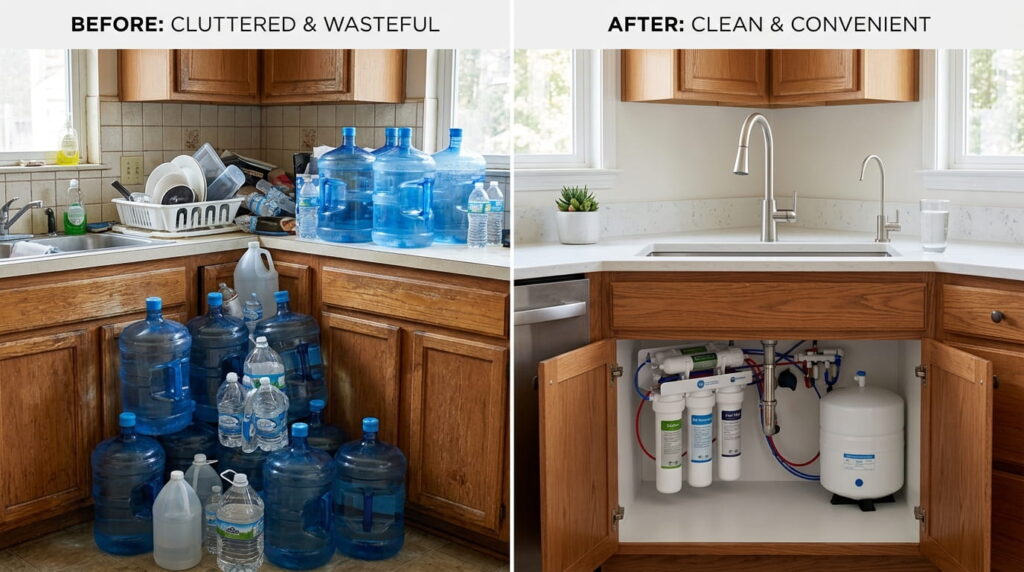
A point-of-use system generally treats water at one location, such as a kitchen faucet. This can be a practical option when the primary goal is purified drinking and cooking water.
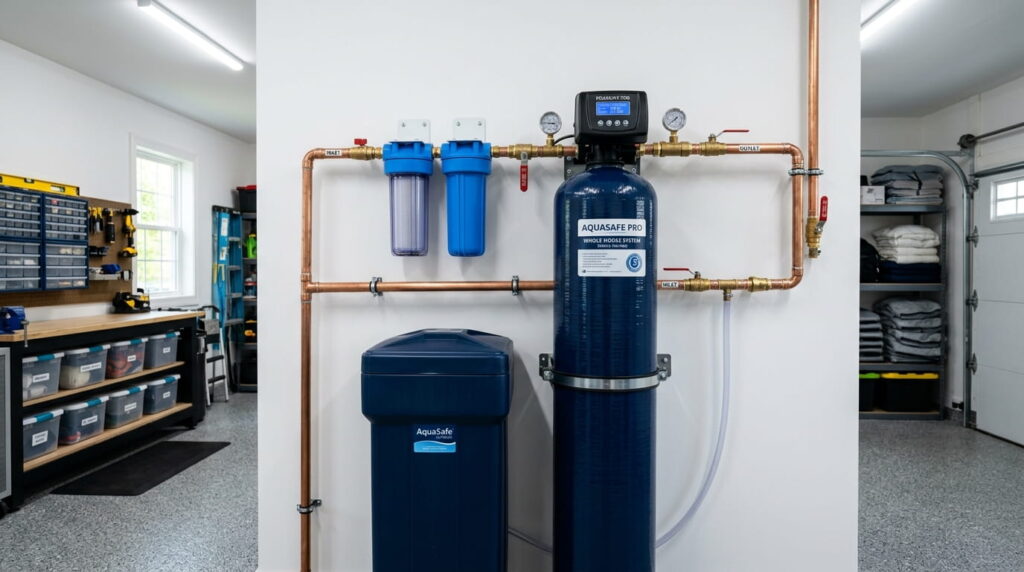
A whole-house system treats water before it reaches multiple fixtures.
Whole-house treatment may be more appropriate when water-quality problems affect:
- Showers
- Bathroom faucets
- Kitchen faucets
- Washing machines
- Water heaters
- Appliances
For example, if hard water is causing scale throughout the home, an under-sink RO system will not solve the hardness problem throughout the property.
In that situation, a whole-house softener or filtration system may need to work alongside a drinking-water purification system.
Maintenance of a 7-Stage Water Purification System
Regular maintenance is essential for keeping a seven-stage system operating properly.
Homeowners should follow the manufacturer’s recommended replacement schedule for each filter.
Important maintenance tasks can include:
- Replacing sediment filters
- Replacing carbon filters
- Checking RO membrane performance
- Replacing post-carbon filters
- Maintaining remineralization cartridges
- Replacing UV lamps when required
- Cleaning and sanitizing components
- Checking for leaks
- Monitoring water pressure and flow
Filter replacement schedules vary based on water quality and household consumption.
A home with heavy sediment or poor-quality well water may require more frequent filter changes than a property with relatively clean municipal water.
How to Choose the Right 7-Stage Water Purification System
Before purchasing a system, consider these factors.
Test Your Water
Water testing should be the first step. It identifies the contaminants that actually need to be treated.
Understand Every Stage
Do not choose a system simply because it advertises seven stages. Find out exactly what each stage does.
Check Certifications
Look for appropriate third-party certifications and verified performance claims for the contaminants you want to reduce.
Consider Maintenance Costs
Replacement filters, membranes, UV lamps, and other components create ongoing costs.
Consider Water Waste
Traditional RO systems can produce wastewater during purification. More efficient RO designs may reduce the amount of reject water.
Consider Your Water Source
Municipal water and private well water can require very different treatment approaches.
Is a 7-Stage Water Purification System Worth It?
For many homeowners, a seven-stage system can provide a convenient combination of filtration and purification technologies.
The biggest benefit is that multiple stages can work together. Sediment filtration protects later components, carbon improves taste and odor, RO addresses many dissolved contaminants, remineralization adjusts mineral content, and UV provides an additional microbial treatment barrier.
However, the system should be matched to the water problem.
If your only concern is chlorine taste, you may not need seven stages. If your property uses private well water and has several identified contaminants, a more comprehensive treatment system may make sense.
For homeowners searching for a Well Water Purification System in Tucson, professional water testing can help determine whether seven stages are actually necessary.
Final Thoughts
A 7-stage water purification system is a multi-step treatment solution that combines several filtration and purification technologies. A common configuration includes sediment filtration, two carbon stages, reverse osmosis, post-carbon filtration, remineralization, and UV purification.
Each stage has a different role. Sediment filters target physical particles, carbon filters improve taste and reduce selected contaminants, reverse osmosis provides deeper dissolved-contaminant reduction, remineralization adjusts mineral content, and UV provides additional microbial treatment.
The most important thing to remember is that more stages do not automatically mean better water. The best system is the one that matches your water quality, household requirements, budget, and treatment goals.
If you own a property supplied by a private well, start with water testing before selecting a Well Water Purification System in Tucson. The test results can help determine whether you need sediment filtration, carbon treatment, water softening, reverse osmosis, UV purification, or a combination of technologies.
With the right system and regular maintenance, homeowners can improve the quality, taste, and consistency of their drinking water while selecting treatment based on the actual needs of their property.