Choosing the right water treatment system starts with understanding what is actually in your water. For homeowners looking for Home Water Treatment System in Tucson, this is especially important because Tucson water is naturally hard. Tucson Water explains that groundwater in the area contains dissolved calcium and magnesium, which contribute to hardness. The city also notes that hard water is safe to drink and is not considered a health risk.
Different treatment systems are designed for different purposes. A water softener can address hardness, while activated carbon can improve taste and odor. Reverse osmosis can reduce many dissolved substances in drinking water, and sediment filters can remove suspended particles.
Tucson Water recommends understanding your water quality and identifying which contaminants you want to reduce before purchasing a home treatment device. It also explains that treatment systems require regular maintenance and should not simply be installed and forgotten.
Why Home Water Treatment Is Important
Water supplied to a home may meet applicable drinking-water standards, but water quality at the tap can still be affected by internal plumbing, fixtures, and the service line. Tucson Water refers to the area between the water main and the tap as the “customer zone” and notes that plumbing conditions can affect water taste and quality.
Home treatment can therefore be useful for specific concerns such as:
- Hard water and scale
- Sediment
- Unpleasant taste or odor
- Chlorine or certain chemicals
- Dissolved minerals
- Specific contaminants
- Private well-water concerns
The important point is that no single treatment system removes everything. The right equipment depends on your water source, test results, household needs, and treatment goals.
Water Softener Systems
Water softeners are among the most common whole-house treatment options in areas with hard water. They are particularly relevant in Tucson because local groundwater is naturally hard.
Traditional water softeners use ion exchange to reduce calcium and magnesium ions. These minerals are responsible for much of the scale associated with hard water.
A properly sized softener can help reduce mineral buildup on:
- Faucets
- Showerheads
- Pipes
- Water heaters
- Dishwashers
- Washing machines
Hard water can also make it more difficult for soap to create lather. Tucson Water lists difficulty “soaping up” as one of the effects residents may notice with hard water.
A softener is not designed to purify water or remove every contaminant. Its primary purpose is hardness reduction.
Reverse Osmosis Systems
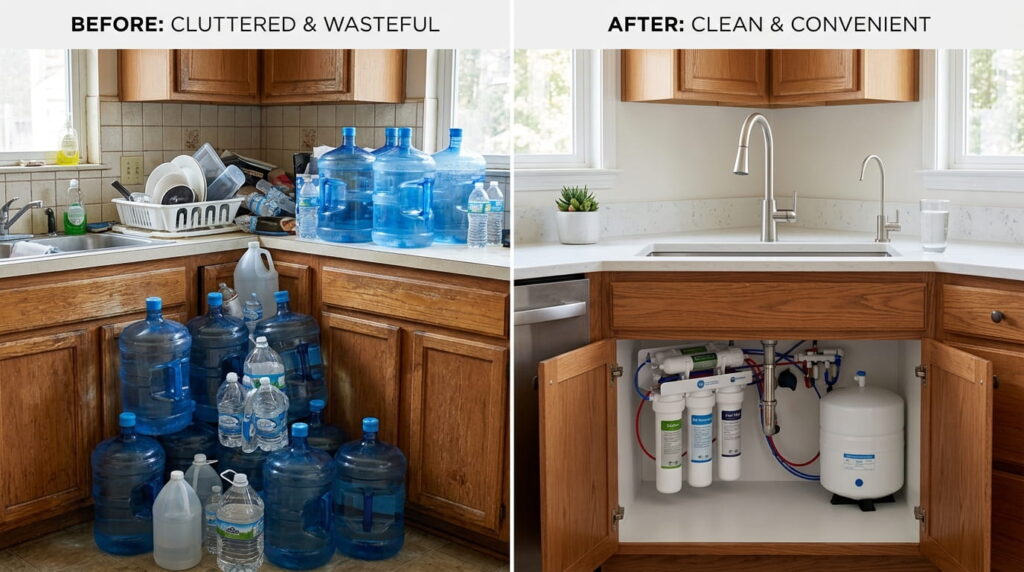
Reverse osmosis, commonly called RO, is another popular residential treatment option. Unlike a traditional water softener, an RO system is generally used to treat drinking and cooking water rather than the entire home’s water supply.
RO uses pressure to push water through a semipermeable membrane. The membrane can reduce many dissolved substances, including various salts and minerals.
Tucson Water describes reverse osmosis as a point-of-use treatment option and notes that its effectiveness depends on factors such as membrane type, water pressure, and the characteristics of the contaminant being treated.
An RO system is often installed under the kitchen sink. This approach allows homeowners to receive treated water at a specific drinking-water tap without treating every gallon used for showers, toilets, laundry, and outdoor activities.
One consideration is wastewater. Tucson Water notes that some RO units can use significantly more source water than the amount of treated water they produce.
Activated Carbon Filters
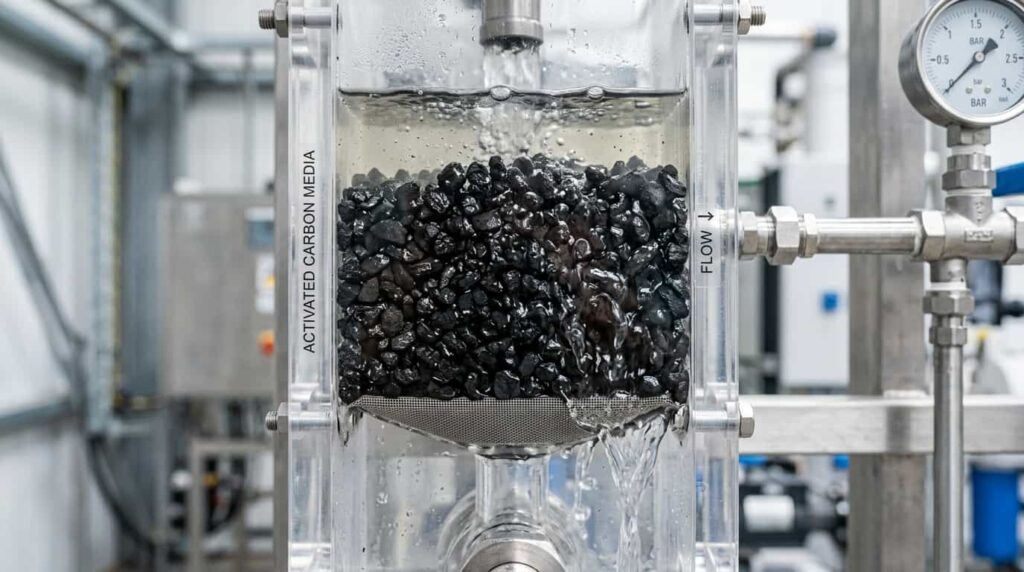
Activated carbon filtration is another common home treatment method. Carbon filters are often used to improve water taste and odor and reduce certain organic chemicals.
They are available in several formats, including:
- Pitcher filters
- Faucet filters
- Refrigerator filters
- Under-sink filters
- Whole-house carbon systems
Activated carbon is useful for certain water-quality concerns, but it does not solve every problem. Tucson Water notes that activated carbon filters can reduce unwanted tastes, odors, and organic chemicals but do not soften water or disinfect it.
For this reason, homeowners should check what a particular filter is certified to reduce instead of assuming that every carbon filter performs the same way.
Sediment Filtration Systems
Sediment filters are designed to capture suspended particles before they reach household fixtures or other treatment equipment.
These particles can include:
- Sand
- Dirt
- Rust particles
- Silt
- Other suspended solids
Sediment filters are especially useful when visible particles are present in water or when they are needed as pretreatment for another system.
For example, sediment filtration can protect downstream equipment by removing particles before water reaches a reverse osmosis membrane.
However, sediment filters are not designed to remove dissolved minerals such as calcium and magnesium. They also do not automatically solve chemical or microbial concerns.
Ultraviolet Water Treatment
Ultraviolet, or UV, treatment uses ultraviolet light to inactivate certain microorganisms in water.
UV systems are particularly relevant for some private wells and properties where microbial contamination is a concern. Unlike chemical disinfection, UV treatment does not add a disinfectant to the water.
However, UV systems require proper system design and maintenance. Water clarity also matters because excessive sediment or other particles can interfere with UV treatment.
For a private well, testing should come first. A professional can determine whether microbial treatment is actually necessary and whether UV is appropriate for the water conditions.
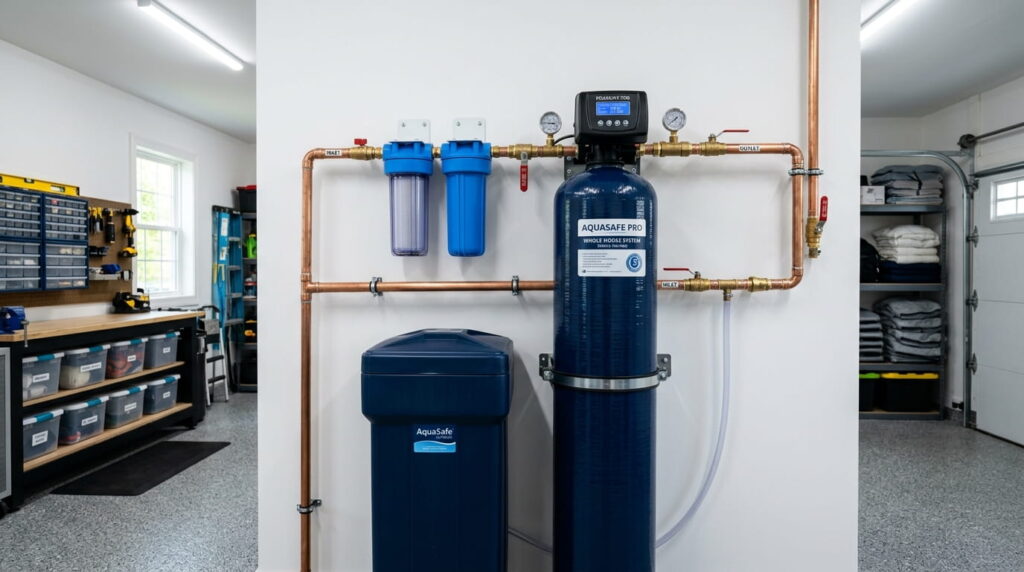
Whole-House Water Filtration Systems
A whole-house filtration system is installed at the point where water enters the property. Tucson Water describes these as point-of-entry systems because they treat all or most of the water entering the home.
Whole-house systems can be designed for different purposes. Depending on the media and equipment, they may target sediment, chlorine, taste, odor, iron, or other water-quality concerns.
The advantage is that treated water can be delivered throughout the home.
However, whole-house filtration is not automatically better than point-of-use treatment. If the concern is limited to drinking water, an under-sink system may be more practical.
Distillation Systems
Distillation is another water treatment technology. It works by heating water to create steam and then condensing that steam back into liquid water.
The process can remove many inorganic and organic contaminants and can also remove or kill microorganisms. Tucson Water lists distillation as a home treatment option but notes that it can be energy-intensive.
Distillation may make sense for specific applications, but it is generally less convenient for treating large volumes of household water.
Salt-Free Scale Prevention Systems
Some homeowners consider salt-free scale-prevention systems as an alternative to traditional water softeners.
These systems are generally designed to reduce the tendency of minerals to form scale rather than actually remove calcium and magnesium from the water.
This distinction is important.
A scale-prevention system and a traditional ion-exchange water softener should not be considered identical technologies. If your main goal is actual hardness reduction, a conventional softener may be more appropriate.
The best option depends on your water chemistry, plumbing, household preferences, and treatment goals.
Point-of-Use vs. Point-of-Entry Treatment
One of the easiest ways to understand home water treatment systems is to divide them into two categories.
Point-of-use (POU) systems treat water at a specific location. An under-sink reverse osmosis system is a common example.
Point-of-entry (POE) systems treat water as it enters the property. Whole-house filtration and water softeners are common examples.
Tucson Water identifies both categories and recommends considering how much treated water you need before selecting a treatment device.
A POU system can be a practical choice when only drinking and cooking water needs additional treatment. A POE system may be more appropriate when the entire home needs treatment for hardness, sediment, or another water-quality concern.
Which Home Water Treatment System Is Best for Tucson?
There is no single best system for every Tucson home.
Because Tucson groundwater is naturally hard, some homeowners may benefit from water softening. Others may be more concerned with taste and odor and may prefer activated carbon filtration. A homeowner concerned about dissolved substances in drinking water may consider reverse osmosis.
Private wells require a different approach because water quality can vary significantly from one well to another.
The best process is to test first and then choose equipment based on the results.
For homeowners considering Home Water Treatment System in Tucson, professional testing can help answer important questions before money is spent on equipment.
Real-World Tucson Water Quality Data
Tucson has an extensive public water monitoring program. Tucson Water states that its professionals conduct more than 400,000 individual tests each year on the drinking-water supply. The utility also reports monitoring at 170 wells, 60 reservoirs, 271 sampling stations, and 125 selected homes.
These numbers demonstrate the scale of public water monitoring in Tucson.
However, public monitoring does not mean every property has identical water conditions at the tap. Internal plumbing and the condition of household fixtures can influence water quality within the customer zone.
This is one reason property-specific testing can be useful when a homeowner notices an unusual taste, odor, scale, sediment, or other concern.
How to Choose a Home Water Treatment System
Before buying a system, follow a few simple steps.
1. Identify Your Water Source
Determine whether your home receives municipal water or uses a private well.
2. Test the Water
Testing can identify hardness, pH, TDS, minerals, microorganisms, and other relevant parameters.
3. Identify the Actual Problem
Determine whether your primary concern is scale, taste, odor, sediment, hardness, or a specific contaminant.
4. Select the Appropriate Technology
Choose a treatment method designed for the problem identified by testing.
5. Consider Capacity and Maintenance
The system should be sized for your household’s water use. Replacement filters, salt, membrane changes, cleaning, and other maintenance requirements should also be considered.
Tucson Water specifically warns that home treatment systems require regular use and periodic maintenance.
How Desert Water Services, LLC Can Help
Desert Water Services, LLC provides water-treatment solutions for Tucson homeowners and businesses. Desert Water Services, LLC
For homeowners dealing with hard water, sediment, unpleasant taste, odors, or well-water concerns, professional evaluation can make the treatment process easier.
The goal should not be to purchase the most expensive system. Instead, the goal is to identify the actual water-quality issue and choose a treatment method designed to address it.
If you are researching Home Water Treatment System in Tucson, Desert Water Services, LLC can help you understand the available options and determine which approach may be appropriate for your property.
Frequently Asked Questions
What are the main types of home water treatment systems?
Common systems include water softeners, reverse osmosis systems, activated carbon filters, sediment filters, UV systems, whole-house filtration, distillation systems, and scale-prevention systems.
What is the best home water treatment system for Tucson?
There is no universal answer. Tucson’s naturally hard groundwater makes water softening relevant for many homes, while RO or carbon filtration may be appropriate for specific drinking-water concerns. Testing should guide the decision.
Does Tucson have hard water?
Yes. Tucson Water states that groundwater in Tucson is naturally hard because of dissolved calcium and magnesium. The city also states that hard water is safe to drink and is not considered a health risk.
Do I need a water softener in Tucson?
Not necessarily. A water test can determine the hardness level and help you decide whether a softener would provide meaningful benefits for your home.
What does a reverse osmosis system remove?
RO can reduce many dissolved substances, including various salts and minerals. Its performance depends on membrane type, water pressure, contaminant characteristics, and system design.
Is activated carbon the same as a water softener?
No. Activated carbon is primarily used for concerns such as taste, odor, and certain chemicals. A traditional water softener is designed to reduce calcium and magnesium hardness.
Is whole-house filtration better than under-sink filtration?
Not always. Whole-house treatment can make sense when the entire property needs treatment. An under-sink system may be more practical when the main concern involves drinking and cooking water.
Should I test my water before installing a treatment system?
Yes. Testing helps identify the actual water-quality issue and prevents homeowners from purchasing equipment that may not address their needs.
How often do home water treatment systems need maintenance?
Maintenance depends on the type of system, water quality, usage, and manufacturer’s recommendations. Filters, membranes, softener components, and UV equipment may require periodic inspection or replacement.
Who provides Home Water Treatment Services in Tucson?
Desert Water Services, LLC provides water-treatment solutions for residential and commercial properties in Tucson. A professional evaluation can help determine which treatment option fits your water conditions and household needs.
Final Thoughts
Home water treatment systems are not one-size-fits-all solutions. Water softeners, reverse osmosis, activated carbon, sediment filters, UV systems, whole-house filtration, and distillation all serve different purposes.
For Tucson homeowners, hard water is an important consideration because the city’s groundwater is naturally hard. At the same time, hard water is not considered a health risk by Tucson Water.
The smartest approach is to understand your water before choosing equipment. Testing can help identify the actual problem and determine whether you need softening, filtration, RO, disinfection, or another technology.
If you are considering Home Water Treatment System in Tucson, Desert Water Services, LLC can help you evaluate your options and select a treatment approach based on your property’s specific needs.