Water treatment helps improve water quality for drinking, cooking, bathing, and other daily needs. If you have concerns about your home’s water, a Water Testing Service in Tucson can help identify possible contaminants and water-quality issues. The results can then guide you toward the right treatment option.
There are seven common methods of water treatment: screening and sedimentation, coagulation and flocculation, filtration, disinfection, water softening, activated carbon treatment, and reverse osmosis. Each method targets different water problems. Some systems remove physical particles, while others reduce minerals, microorganisms, chemicals, or dissolved substances.
Understanding these methods can help Tucson homeowners make better decisions about their water treatment needs.
1. Screening and Sedimentation
Screening and sedimentation are basic steps in many water treatment processes. These methods focus on removing larger particles from water.
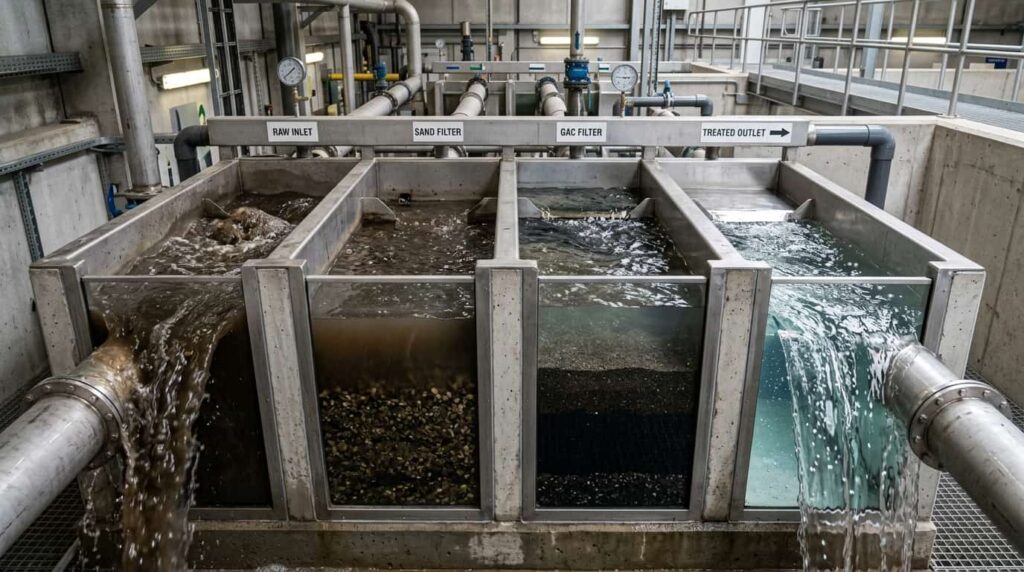
Screening uses a physical barrier to catch materials such as leaves, dirt, sand, and other debris. This step keeps large particles from entering later stages of the treatment process.
Sedimentation uses gravity to separate heavier particles from water. As water sits in a tank, heavy particles move toward the bottom. The cleaner water remains above the settled material.
Residential systems often use sediment filters for a similar purpose. These filters can capture sand, rust, dirt, and other physical particles.
Sediment filtration works well for visible particles, but it does not solve every water problem. It will not normally remove dissolved minerals, bacteria, viruses, or many chemicals.
2. Coagulation and Flocculation
Coagulation and flocculation help remove tiny particles that cannot easily settle on their own. Water treatment plants commonly use these methods during large-scale treatment.
During coagulation, treatment chemicals cause small particles to join together. The particles then form larger groups called flocs.
Flocculation gently mixes the water to help these groups grow. Once the flocs become heavy enough, they can settle at the bottom of a treatment tank.
This process can reduce suspended particles, organic material, and other impurities. It also makes later filtration more effective.
Most homeowners do not need a complete coagulation and flocculation process inside the house. Instead, a professional can determine whether another treatment method will better address the home’s water-quality concerns.
3. Filtration
Filtration is one of the most common methods of water treatment. It works by passing water through a material that traps or reduces specific impurities.
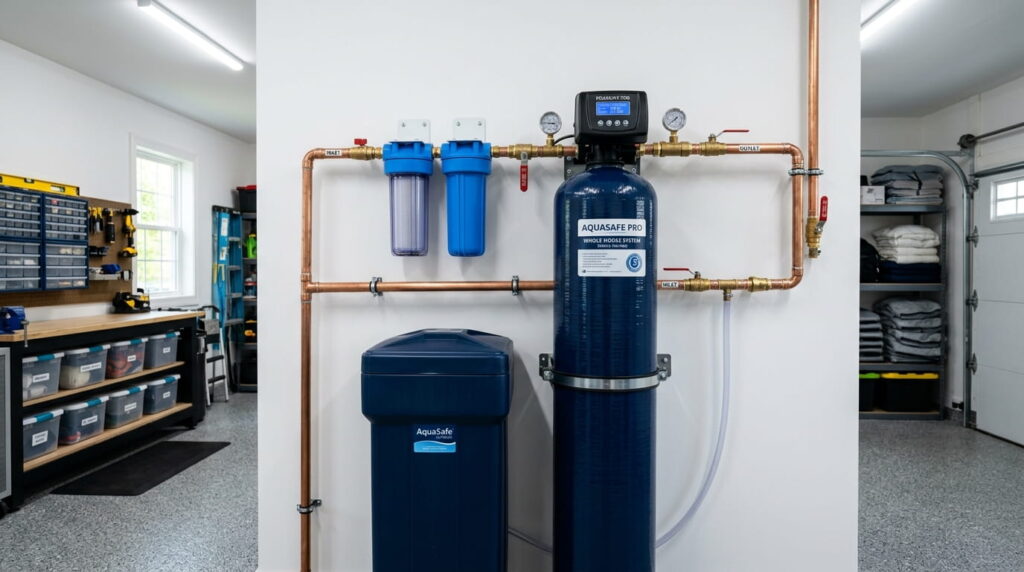
Different filters target different contaminants. A sediment filter can remove dirt and particles. Other filter media can target chlorine, iron, manganese, and certain chemicals.
Common residential filtration systems include:
- Sediment filters
- Whole-house filters
- Multimedia filters
- Iron filters
- Manganese filters
- Specialty filtration systems
A good filtration system can improve water appearance, taste, and odor. It can also help protect plumbing fixtures and appliances from certain water-quality problems.
However, no single filter removes everything. A sediment filter, for example, will not address every dissolved contaminant.
That is why homeowners should test their water before choosing a filtration system. A Water Testing Service in Tucson can help identify the specific problems that need attention.
4. Disinfection
Disinfection targets harmful microorganisms in water. These microorganisms can include bacteria, viruses, and other pathogens.
Several methods can disinfect water. Common options include chlorine, chloramine, ultraviolet light, and ozone.
UV systems have become a popular choice for some private water systems. UV light can inactivate microorganisms without adding chemicals to the water.
However, UV treatment works best when the water has low turbidity. Sediment and cloudy water can interfere with UV exposure. A pre-filter may therefore improve system performance.
Chlorine offers another approach. It can kill many microorganisms and leave a residual disinfectant in a water distribution system.
Disinfection does not solve every water-quality issue. For example, UV light does not remove hardness, dissolved salts, or many chemical contaminants.
If testing shows microbial contamination, a professional can recommend a suitable disinfection method.
5. Water Softening
Water softening focuses on hard water. Hard water contains minerals such as calcium and magnesium.
Hard water does not always mean unsafe water. However, it can create several problems around the home. Mineral deposits may appear on faucets, showerheads, sinks, and dishes. Soap may also work less effectively.
A traditional water softener uses an ion-exchange process. Water flows through resin beads that attract calcium and magnesium ions. The system then exchanges those minerals for sodium or potassium ions.
A properly sized softener can reduce hardness throughout the home. It may also help limit scale inside plumbing and water-using appliances.
Keep in mind that a water softener is not a complete purification system. It mainly targets hardness. It does not remove every bacteria, chemical, or dissolved contaminant.
Testing can confirm whether hard water actually affects your property. The results can help you decide whether you need a softener or another type of treatment.
6. Activated Carbon Treatment
Activated carbon filters can improve the taste and smell of water. They can also reduce chlorine and certain organic compounds.
Activated carbon has a large surface area with many tiny pores. Certain substances attach to this surface as water moves through the filter.
Homeowners can choose from several carbon filtration options. These include pitcher filters, refrigerator filters, under-sink units, and whole-house systems.
Carbon filtration can work well when chlorine creates an unpleasant taste or odor. Some specialized carbon systems can also target specific contaminants.
Filter maintenance plays an important role in performance. Carbon cartridges eventually become exhausted. Homeowners should replace them according to the manufacturer’s recommendations.
A professional water test can help determine whether activated carbon fits your needs.
7. Reverse Osmosis
Reverse osmosis, or RO, uses a special membrane to reduce many dissolved substances in water.
During the process, pressure pushes water through a semipermeable membrane. The membrane allows water to pass while blocking or reducing many dissolved materials.
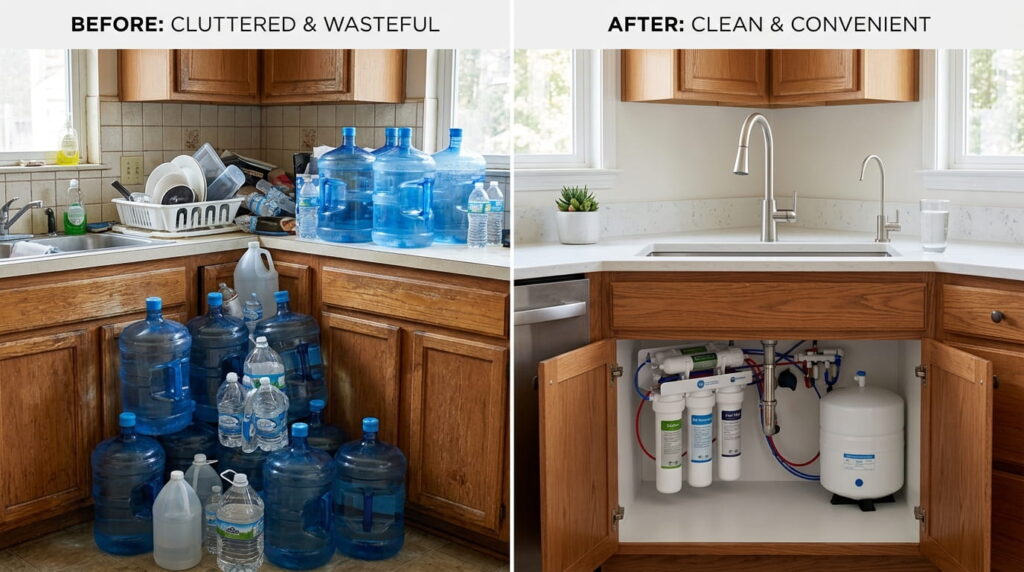
Many homes use reverse osmosis under the kitchen sink. The system provides treated water through a separate drinking-water faucet.
Depending on the system, reverse osmosis can reduce total dissolved solids, certain metals, salts, and other substances. Performance depends on the membrane, water pressure, incoming water quality, and system design.
RO systems can produce a wastewater stream during operation. Homeowners should consider water efficiency when comparing different systems.
Reverse osmosis may work well for homes with certain dissolved contaminants. A water test should guide the decision.
Why Should You Test Water Before Treatment?
Many homeowners choose a water filter because their water tastes strange or looks different. While these signs can indicate a problem, they do not tell you exactly what causes it.
Some contaminants have no noticeable taste, color, or smell. Clear water can still contain unwanted substances.
Water testing provides useful information about the actual quality of your water. Depending on the test, you may learn about hardness, pH, total dissolved solids, bacteria, nitrates, metals, and other parameters.
A Water Testing Service in Tucson can help homeowners understand these results and decide what type of treatment may work best.
Testing also prevents unnecessary spending. You may not need an expensive system if a simpler filter can solve the problem.
Which Water Treatment Method Is Best?
The best treatment method depends on the water problem.
For example, sediment filters can help with dirt, sand, and rust. A water softener can address hardness. Activated carbon can improve chlorine taste and odor. UV treatment can target microorganisms. Reverse osmosis can reduce many dissolved substances.
Some homes need more than one treatment method. A well may contain sediment, hardness, iron, and bacteria at the same time. In that situation, one filter may not provide enough protection.
A professional can review your test results and recommend a treatment combination that matches your home’s needs.
Water Treatment for Tucson Homes
Tucson homes can have different water-quality concerns depending on the water source. Some properties receive municipal water, while others depend on private wells.
Private well owners should pay close attention to water quality. Groundwater conditions can change over time. Nearby activities, environmental changes, plumbing problems, and other factors can affect the water.
Municipal water users may have different concerns. Hardness, chlorine taste, mineral buildup, and household plumbing can influence the water experience.
A Water Testing Service in Tucson can provide property-specific information instead of relying on general assumptions about local water.
How Often Should You Test Your Water?
Testing frequency depends on the water source and your individual circumstances. Private well owners should maintain a regular testing routine.
Additional testing makes sense when you notice a sudden change in taste, smell, color, or appearance. You should also consider testing after flooding or another event that could affect your water source.
Testing can also help when you move into a new home. A baseline test gives you a better understanding of your water before you install a treatment system.
How Much Does Water Treatment Cost?
Water treatment costs vary from one home to another. The price depends on the type of treatment, system size, installation requirements, maintenance needs, and water-quality problems.
Simple sediment and carbon filters usually require less equipment than whole-house treatment systems. Water softeners and reverse osmosis systems have their own equipment and maintenance requirements.
Instead of choosing a system based only on price, compare its capabilities with your actual water needs.
A water test can help you avoid spending money on equipment that does not address the main problem.
Frequently Asked Questions
1. What are the seven main methods of water treatment?
The seven common methods include screening and sedimentation, coagulation and flocculation, filtration, disinfection, water softening, activated carbon treatment, and reverse osmosis.
2. What is the best water treatment method for Tucson homes?
There is no single treatment method for every home. The right option depends on the contaminants and water-quality problems found during testing.
3. Why should I test my water before buying a filter?
Testing shows which contaminants exist in your water. This information helps you choose a system that targets your actual water-quality concerns.
4. Is Tucson tap water safe to drink?
Public water systems must meet applicable drinking-water standards. However, water quality can vary at individual properties. Testing can provide more information about the water coming from your own tap.
5. Do private wells need regular water testing?
Yes. Private well owners should monitor their water quality because they do not receive the same routine oversight as customers of public water systems.
6. Does a water softener purify drinking water?
No. A traditional softener mainly reduces calcium and magnesium. It does not act as a complete drinking-water purification system.
7. Can reverse osmosis remove every contaminant?
No. Reverse osmosis can reduce many dissolved substances, but no single treatment system removes every possible contaminant.
8. What does a Water Testing Service in Tucson check for?
Testing packages vary. Common tests may check pH, hardness, total dissolved solids, bacteria, nitrates, metals, and other water-quality parameters.
9. How do I know which water filter I need?
Start with a water-quality test. Once you know the problem, you can select a treatment system designed to address that specific contaminant.
10. When should Tucson homeowners test their water?
Consider testing when you move into a home with a private well, notice a change in water quality, experience a possible contamination event, or plan to install a new treatment system.
Final Thoughts
The seven methods of water treatment each serve a different purpose. Screening and sedimentation remove larger particles. Coagulation and flocculation help collect smaller suspended materials. Filtration targets physical and specific chemical impurities. Disinfection controls microorganisms. Water softeners reduce hardness. Activated carbon improves taste and odor while reducing certain substances. Reverse osmosis reduces many dissolved contaminants.
For Tucson homeowners, testing should come before treatment whenever possible. A professional Water Testing Service in Tucson can help identify water-quality concerns and guide you toward the right solution. With accurate testing and the correct treatment system, homeowners can make informed decisions about the water they use every day.