Clean water plays an important role in healthy homes, businesses, and communities. Water Quality Testing Services in Tucson can help homeowners and businesses identify contaminants before they choose a treatment system. Water treatment does not follow one universal method because different water sources contain different contaminants. Tucson properties may receive municipal water, private well water, or water that needs additional treatment for taste, hardness, minerals, or specific contaminants. The right treatment method depends on laboratory results, water chemistry, the property’s needs, and the intended use of the water.
The U.S. Environmental Protection Agency (EPA) recognizes several treatment technologies, including activated carbon, ion exchange, reverse osmosis, aeration, biological treatment, and ultraviolet processes. The Centers for Disease Control and Prevention (CDC) also explains that water utilities commonly combine coagulation, flocculation, sedimentation, filtration, and disinfection to produce safe drinking water.
For homeowners in Tucson, understanding these methods can make it easier to select a suitable residential, household, commercial, or well water treatment system.
1. Coagulation
Coagulation helps remove suspended particles from water. During this process, treatment professionals add chemicals that cause tiny particles to join together. These chemicals can include aluminum or iron-based compounds.
The small particles form larger groups called flocs. Larger particles become easier to remove during the next stages of treatment.
Water treatment facilities often use coagulation when source water contains suspended solids, organic matter, or other particles. The CDC identifies coagulation as one of the common early steps in conventional drinking water treatment.
For commercial and municipal systems, proper chemical dosing matters. Too little treatment may leave particles in the water, while excessive dosing can create unnecessary chemical use and additional treatment requirements.
2. Flocculation
Flocculation follows coagulation. Instead of rapidly mixing chemicals into the water, treatment systems gently mix the water to encourage small particles to combine into larger flocs.
These larger flocs become heavier and easier to separate.
The process sounds simple, but treatment professionals must control mixing speed and treatment conditions carefully. Effective flocculation improves the performance of later sedimentation and filtration stages.
For larger commercial systems, engineers can adjust the process according to the source-water characteristics. A professional water analysis helps determine whether this treatment step makes sense for a particular application.
3. Sedimentation
Sedimentation uses gravity to separate heavier particles from water.
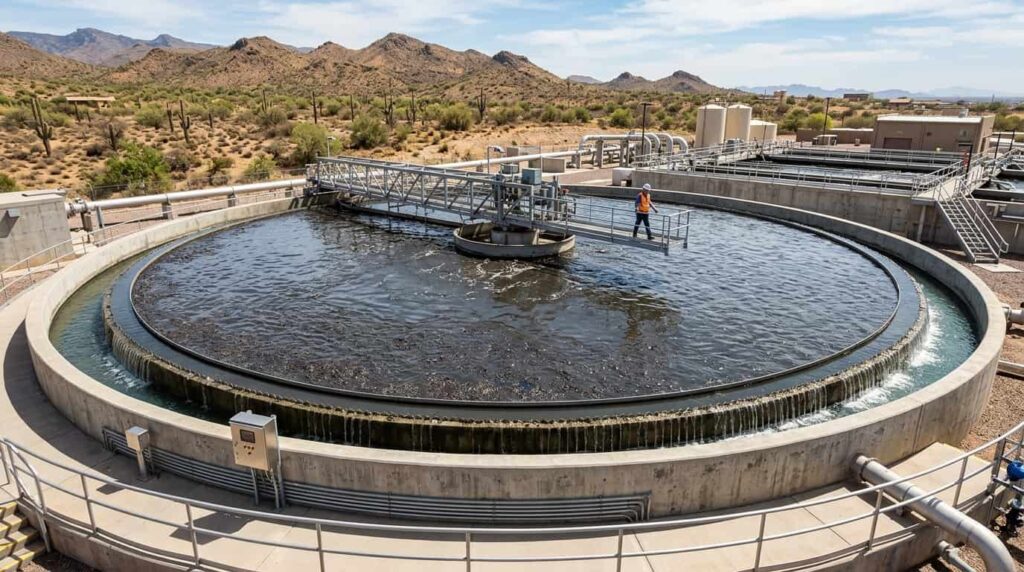
After coagulation and flocculation, water enters a tank or basin where the larger particles settle toward the bottom. The clearer water remains near the top and moves toward the next treatment stage.
The CDC lists sedimentation as a common part of conventional drinking water treatment.
Sedimentation works especially well when water contains suspended solids that can settle naturally. However, it does not remove every dissolved contaminant. Water may still require filtration, disinfection, activated carbon, reverse osmosis, or another treatment method afterward.
4. Filtration
Filtration ranks among the most common water treatment methods for residential, commercial, and well water systems. A filter physically captures particles as water passes through a filter medium.
Different filters target different contaminants. Common filtration media include:
- Sand
- Gravel
- Activated carbon
- Sediment cartridges
- Membranes
- Specialized media
The CDC explains that filtration can remove or reduce different germs and particles depending on the filter type and pore size.
For example, microfiltration typically uses pores around 0.1 micron, while ultrafiltration can use pores around 0.01 micron. Reverse osmosis uses an even tighter membrane, with a typical pore size around 0.0001 micron.
A filtration system should match the contaminants found in the water. A filter designed mainly for sediment may not remove dissolved minerals or specific chemicals.
5. Activated Carbon Treatment
Activated carbon treatment uses highly porous carbon to capture certain contaminants through adsorption. The EPA lists granular activated carbon as an established drinking water treatment technology.
Activated carbon can improve water taste and odor and can reduce certain organic compounds and chemicals. It often appears in household filters, whole-house systems, and commercial treatment systems.
This method can work particularly well when homeowners complain about unpleasant taste or odor.
However, activated carbon does not solve every water-quality problem. For example, a carbon filter does not automatically provide comprehensive protection against every dissolved mineral, salt, or microorganism.
The best approach starts with testing. Water Quality Testing Services in Tucson can help identify the actual water-quality problem before you invest in a carbon filtration system.
6. Water Softening and Ion Exchange
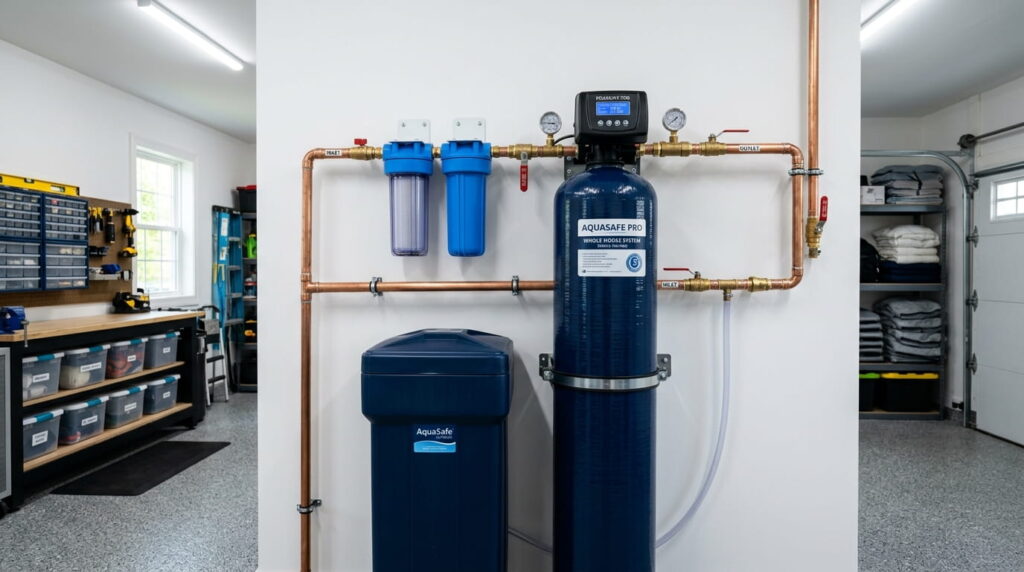
Water softeners use ion exchange to reduce hardness minerals, mainly calcium and magnesium. Hard water can create scale inside plumbing, water heaters, faucets, showerheads, and appliances.
During ion exchange, the treatment media exchanges certain ions in the water for other ions. EPA materials identify ion exchange as a treatment option for hard water and several inorganic contaminants.
A water softener can provide several practical benefits:
- Less scale buildup
- Better performance from water heaters
- Cleaner-looking fixtures
- Improved soap performance
- Reduced mineral deposits
However, homeowners should not confuse a water softener with a complete drinking water purification system. A softener primarily addresses hardness and does not automatically remove every contaminant.
7. Reverse Osmosis
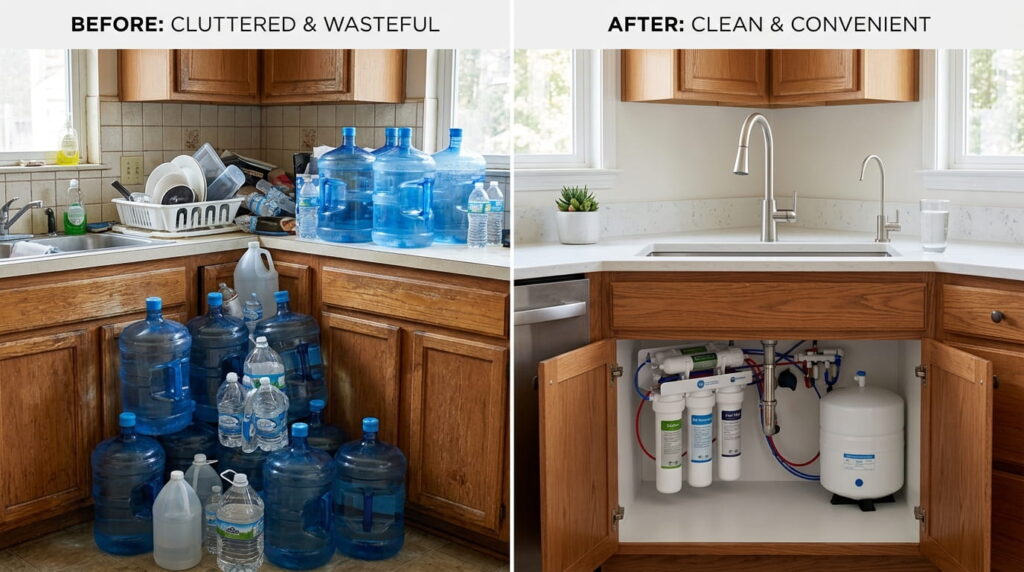
Reverse osmosis, commonly called RO, uses pressure to push water through a semipermeable membrane. The membrane blocks many contaminants while allowing treated water to pass through.
The EPA states that reverse osmosis can remove a wide range of contaminants, including many inorganic compounds, dissolved solids, radionuclides, and synthetic organic chemicals.
The CDC also notes that reverse osmosis can remove germs and reduce certain chemicals, including lead, copper, chromium, chloride, and sodium. It may also reduce substances such as arsenic, fluoride, radium, sulfate, calcium, magnesium, potassium, and nitrate, depending on the system.
RO works especially well for point-of-use drinking water systems. Many Tucson homeowners choose RO for kitchen drinking and cooking water when testing identifies contaminants that the existing filtration system cannot adequately address.
One important consideration involves water waste. EPA information notes that RO and nanofiltration systems can reject roughly 15% to 30% of incoming water as concentrate, although actual performance varies by system design and operating conditions.
8. Ultraviolet Water Treatment
Ultraviolet, or UV, treatment uses ultraviolet light to inactivate microorganisms. Unlike chemical disinfection, UV treatment does not add chlorine to the water.
UV systems can provide an important treatment step for homes and businesses, especially when microbial contamination presents a concern.
However, UV systems work best when water has suitable clarity. Sediment and other particles can interfere with UV exposure and reduce treatment effectiveness. For this reason, a UV system may work alongside sediment filtration or other pretreatment.
The CDC lists ultraviolet treatment among the available home water treatment technologies.
For private wells, testing should come first. If laboratory testing identifies bacteria or other microbial concerns, a professional can determine whether UV, chlorination, filtration, or a combination provides the appropriate solution.
9. Distillation
Distillation heats water until it becomes vapor and then collects the condensed water. Many contaminants remain behind during the boiling and condensation process.
The CDC states that distillation can remove parasites, bacteria, viruses, and many chemicals. It can also reduce substances such as arsenic, barium, cadmium, chromium, lead, nitrate, sodium, sulfate, calcium, and magnesium.
However, distillation generally consumes more energy and takes longer than many other household treatment methods.
Distillation may make sense for specific applications, but homeowners should compare its energy use, capacity, maintenance, and cost with alternatives such as reverse osmosis.
10. Disinfection
Disinfection targets microorganisms that can cause illness. Water treatment facilities commonly use chlorine, chloramine, chlorine dioxide, ozone, or ultraviolet light.
The CDC explains that utilities often use chlorine or chloramine because these disinfectants kill germs and can maintain protection while water travels through distribution pipes.
Disinfection differs from filtration. Filtration physically removes contaminants, while disinfection targets microorganisms.
A complete treatment strategy may combine both methods. For example, a private well system could use sediment filtration followed by UV treatment, depending on the water test results and system design.
Comparing the 10 Water Treatment Methods
| Treatment Method | Main Purpose | Common Applications |
|---|---|---|
| Coagulation | Combines small particles | Municipal and commercial treatment |
| Flocculation | Forms larger flocs | Municipal and commercial systems |
| Sedimentation | Settles suspended solids | Large-scale treatment |
| Filtration | Removes particles and selected contaminants | Residential, commercial, well |
| Activated Carbon | Improves taste, odor and reduces certain chemicals | Household and whole-house systems |
| Ion Exchange | Reduces hardness and selected ions | Water softeners and specialized treatment |
| Reverse Osmosis | Reduces many dissolved contaminants | Drinking and cooking water |
| UV Treatment | Inactivates microorganisms | Residential and well systems |
| Distillation | Removes many contaminants through evaporation and condensation | Specialty household applications |
| Disinfection | Controls microorganisms | Municipal, commercial and private systems |
What Does Tucson Water Treatment Require?
Tucson water conditions can vary by source and location. Tucson Water publishes annual water quality reports and provides an online water quality map that allows customers to review water-quality information associated with their area. The city’s 2025 annual water quality report also provides public access to current water-quality information.
Private well owners face a different situation because their water does not receive the same municipal treatment process. Well water can contain minerals, hardness, sediment, bacteria, or other contaminants depending on local conditions.
That makes testing especially important.
Instead of buying a treatment system based only on taste, odor, or online recommendations, homeowners should identify the contaminants first. Water Quality Testing Services in Tucson can provide useful information about hardness, minerals, bacteria, metals, and other water-quality concerns.
Why Water Testing Should Come Before Treatment
Many homeowners make the mistake of choosing a treatment system first and testing their water later. This approach can waste money and may leave important contaminants untreated.
The CDC recommends testing water and choosing a treatment system based on the specific chemicals or germs found in the water.
For example, a carbon filter may help with taste and odor but may not address a specific dissolved mineral problem. A water softener can reduce hardness but cannot replace a complete purification system. RO can address a broad range of dissolved contaminants but may not provide the best whole-house solution for every property.
A professional assessment helps match the treatment technology to the actual water problem.
Choosing a Water Treatment System in Tucson
The right system depends on several factors:
Water source: Municipal water and private well water can require different approaches.
Contaminants: Testing should identify what the treatment system needs to remove or reduce.
Water usage: A single kitchen faucet needs a different capacity than an entire home, restaurant, office, or commercial facility.
Existing plumbing: Professionals should evaluate flow rate, pressure, pipe condition, and available installation space.
Maintenance: Filters, membranes, UV lamps, and softener media require regular service.
Budget: Installation cost, replacement filters, electricity, salt, water usage, and long-term maintenance all affect the total cost.
Desert Water Services in Tucson can help property owners evaluate residential, commercial, household, and well water treatment needs based on their water conditions.
Real-World Water Treatment Facts
| Fact | What It Means |
|---|---|
| RO can remove many dissolved contaminants | RO works well when water contains certain salts, metals, minerals, and other dissolved substances. |
| RO may reject 15–30% of incoming water | System efficiency matters when selecting an RO system. |
| Microfiltration can use pores around 0.1 micron | Different pore sizes provide different levels of contaminant removal. |
| Ultrafiltration can use pores around 0.01 micron | UF can provide stronger physical filtration than typical microfiltration. |
| Tucson publishes annual water-quality reports | Residents can review local water-quality information before selecting treatment. |
How Desert Water Services Can Help
Selecting the right water treatment system does not have to feel complicated. Desert Water Services can help Tucson homeowners and businesses understand their water-quality concerns and evaluate treatment options for residential, commercial, household, and well applications.
The process should start with understanding the water source and testing for relevant contaminants. From there, a professional can recommend an appropriate combination of filtration, softening, RO, UV, carbon treatment, or other technologies.
Water Quality Testing Services in Tucson can provide the information needed to make that decision with greater confidence. Testing first can help prevent unnecessary equipment purchases and ensure that the selected system addresses the actual water-quality issue.
Frequently Asked Questions About Water Treatment in Tucson
1. What is the best water treatment method for a home in Tucson?
There is no single best method for every Tucson home. The right solution depends on the water source and test results. Some homes may benefit from carbon filtration or water softening, while others may need reverse osmosis, UV treatment, or multiple treatment stages.
2. Is reverse osmosis good for Tucson drinking water?
Reverse osmosis can provide excellent drinking water treatment when the water contains dissolved contaminants that RO can reduce. The CDC identifies RO as a method that can remove germs and reduce several chemicals and dissolved substances.
3. Do I need a water softener in Tucson?
You may benefit from a water softener if testing shows elevated hardness. A softener can reduce calcium and magnesium that contribute to scale buildup. However, testing can confirm whether hardness justifies installing a softener.
4. What is the best water treatment system for well water in Tucson?
The best well water system depends on laboratory results. A well may require sediment filtration, carbon filtration, UV treatment, water softening, RO, or a combination. Start with testing instead of selecting equipment based only on common well-water problems.
5. Does a water filter remove bacteria?
Some filters can remove bacteria, but performance depends on filter type, pore size, certification, and system design. The CDC notes that ultrafiltration, nanofiltration, and reverse osmosis can provide different levels of microbial removal.
6. What does activated carbon remove from water?
Activated carbon can improve taste and odor and reduce certain organic compounds and chemicals. However, it does not remove every contaminant. Check the specific filter’s certification and contaminant claims before purchasing a system.
7. How often should Tucson homeowners test their water?
Testing frequency depends on the water source, treatment system, property conditions, and potential contamination risks. Private well owners should follow appropriate local and professional testing recommendations. If taste, odor, color, plumbing problems, or other concerns appear, consider additional testing.
8. Can one water treatment system remove every contaminant?
No. Different technologies target different contaminants. A complete treatment strategy may combine several methods. Testing helps determine which technologies can address the specific contaminants in your water.
9. Should I test my water before buying a treatment system?
Yes. Testing gives you evidence about the actual water-quality problem. The CDC recommends testing water and choosing a treatment system that targets the specific chemicals or germs found in the water.
10. Where can I get Water Quality Testing Services in Tucson?
Tucson homeowners and businesses can seek professional water-quality testing to identify contaminants and determine appropriate treatment options. Desert Water Services can help property owners evaluate their water treatment needs and choose a system suited to their residential, commercial, household, or well application.
Final Thoughts
The 10 major water treatment methods include coagulation, flocculation, sedimentation, filtration, activated carbon, ion exchange, reverse osmosis, UV treatment, distillation, and disinfection. Each method serves a different purpose, and many water systems use multiple technologies together.
For Tucson homeowners, businesses, and private well owners, the smartest starting point involves testing the water before purchasing equipment. Water Quality Testing Services in Tucson can help identify the contaminants that matter and guide the selection of an appropriate treatment strategy.
If you need help with residential, commercial, household, or well water treatment in Tucson, Desert Water Services can help you evaluate your water and determine which treatment approach fits your property.