Tucson homebuyers ask about water. They’ve heard about the hard water, they’ve seen crusty faucets in older homes, and they want to know what’s been done about it. For builders, planning water treatment new construction Tucson buyers expect is much easier during framing and plumbing than after drywall goes up. A little planning at the rough in stage prevents expensive retrofits and gives your homes a selling point buyers notice.
This guide covers what to plan, when to plan it, and why it matters.
Why Tucson Buyers Care About Water
Tucson’s water supply is hard. Tucson Water blends recharged Colorado River water with native groundwater, and the city notes that hardness rises as more CAP water is added. Buyers who’ve lived here know what that means: scale in water heaters, spots on glass shower doors, and faucets that wear out faster.
New homes come with new appliances, new fixtures, and often tankless water heaters. Buyers want those protected from day one.
Planning by Construction Phase
During Design
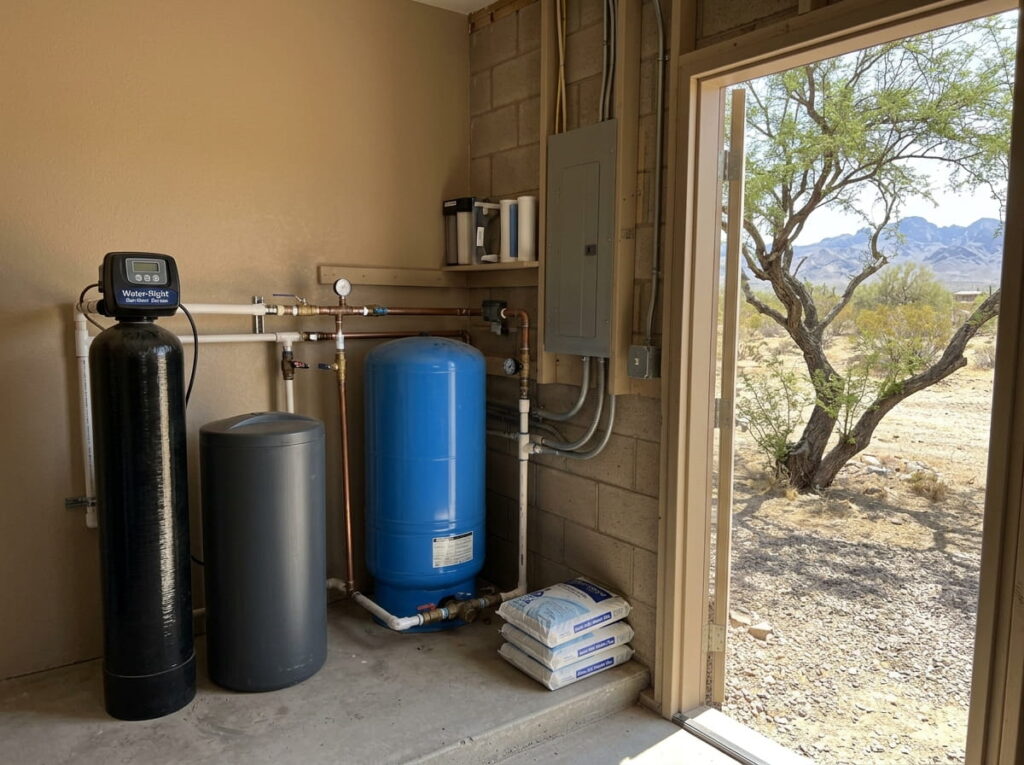
Decide where water treatment equipment will live. The garage is the usual location in Tucson because it’s close to the main water line and has space. Plan a spot with room for a softener tank and a brine tank, access for service, and protection from direct sun where possible.
During Plumbing Rough In
This is the most important phase for water treatment in new construction.
Softener loop: Route the main water line into the garage and back out, with stub outs for a softener. Separate the lines that should stay unsoftened, such as outdoor hose bibs and irrigation, which don’t need treated water.
Drain access: A softener needs a drain for regeneration water. Plan a drain point near the equipment location that meets local plumbing code, including the required air gap.
Kitchen RO rough in: Leave space under the kitchen sink for a reverse osmosis system and plan for a dedicated faucet hole in the countertop. Consider a line to the refrigerator for filtered ice and water.
During Electrical Rough In
Most softener control valves need a standard outlet. Place one close to the planned equipment location so installers don’t need extension cords.
At Finish
At this stage, the builder or buyer decides whether to install equipment now or leave the pre plumbing ready for later. Either way, the home is set up for easy installation.
Install Now or Leave It Ready?
There are two common approaches to water treatment for new construction in Tucson.
Pre plumb only: You include the loop, drain, outlet, and RO rough in. Buyers can add equipment later. This keeps base price lower while still offering convenience.
Offer as an upgrade: Buyers choose a softener, RO system, or both during the selection process. This gives buyers a protected home from move in and adds an upgrade option to your menu.
Include as standard: Some builders include a system in every home as a differentiator. It can be a strong selling point in competitive neighborhoods.
Protecting New Appliances and Fixtures
New construction homes often include tankless water heaters, high end fixtures, and new dishwashers. Hard water shortens the life of all of them. Some water heater manufacturers include water quality requirements in their warranty terms, so treatment can matter for coverage. Check with the manufacturers you use.
Protecting these items from the start reduces callbacks and helps keep buyers happy after closing.
Working With a Water Treatment Partner
Builders who work regularly with a home builder water treatment provider in Tucson benefit from consistent specs across every plan. A good partner will help you:
Create a standard rough in spec for each floor plan. Coordinate with your plumbing contractor. Size systems based on local water testing. Offer clear upgrade packages for your design center. Handle installation and warranty support after closing.
This consistency makes your job easier and gives buyers a smooth experience.
Mistakes Builders Should Avoid
Skipping the loop and forcing a costly retrofit later. Putting the loop somewhere with no drain or outlet nearby. Sending softened water to irrigation and hose bibs, which wastes capacity and salt. Forgetting the RO faucet hole in the countertop. Sizing equipment without knowing the local hardness for that neighborhood.
Why It’s Worth It
Water treatment for new construction in Tucson solves a real local problem. It protects the home you built, reduces warranty headaches, and gives your sales team a clear, tangible feature to talk about. Buyers remember the builder who thought about their water.
Want to add water treatment to your next project? Builder Program Info and learn how a local builder partnership works for Tucson construction.
Frequently Asked Questions
1. Should new construction homes in Tucson include water treatment?
Many builders include at least the pre plumbing, because Tucson’s hard water damages water heaters, fixtures, and appliances. It’s far easier to plan during construction than to retrofit.
2. What is a softener loop?
A softener loop routes the main water line into the garage and back out, with connections ready for a water softener. It makes installation quick and simple.
3. When should water treatment be planned in a build?
It should be planned during design and completed during the plumbing and electrical rough in stages.
4. Should irrigation use softened water?
Usually not. Outdoor hose bibs and irrigation are commonly left on unsoftened lines to save salt and softener capacity.
5. What does an RO rough in include?
It includes space under the kitchen sink, a drain connection, a faucet hole in the countertop, and optionally a line to the refrigerator.
6. Do softeners need electricity?
Most softener control valves need a standard electrical outlet near the equipment.
7. Can hard water affect water heater warranties?
Some manufacturers include water quality requirements in their warranty terms. Builders should check with their water heater suppliers.
8. Should builders include softeners as standard or as upgrades?
Both approaches work. Pre plumbing only keeps base prices lower, upgrades add options, and standard systems help homes stand out.
9. How is equipment sized for new homes?
Systems are sized based on local water hardness, the number of bathrooms, expected occupants, and peak flow rate.
10. What does a builder water treatment partner do?
A partner provides rough in specs, sizing, upgrade packages, installation, and after sale support across your floor plans.