Fresh flowers last only as long as the water that feeds them. Water treatment florists Tucson shops invest in can add days to vase life, cut waste, and protect your reputation. Tucson tap water carries heavy minerals and a high pH, and both work against cut stems.
This guide explains how Tucson water affects flowers, which problems cost your shop money, and which treatment systems fix them. You will also see how to match a system to your cooler, your buckets, and your design bench. Ten FAQs at the end answer common questions.
How Tucson Water Affects Cut Flowers
Cut flowers drink through tiny vessels in the stem. Those vessels need clean, slightly acidic water to move moisture upward. Most floral professionals aim for a water pH between 3.5 and 5.0, because acidic water travels up the stem faster and slows bacterial growth.
Tucson water usually runs alkaline and loaded with dissolved minerals. Hardness and total dissolved solids sit high, and the pH often lands above 7. Alkaline water resists the acid in flower food, so the food cannot do its job. Stems take up less water, and blooms droop sooner.
Minerals can also clog the stem vessels. Calcium and magnesium form tiny deposits that block water uptake. Roses, hydrangeas, and other thirsty flowers suffer most. A shop that fights hard water every day loses product it cannot sell.
The Real Cost of Poor Water Quality in a Flower Shop
Water problems show up as lost inventory. A bucket of roses that wilts two days early represents wasted money. Multiply that across a week, and the loss grows quickly. Customers also notice. A bouquet that wilts early leads to complaints, refunds, and fewer repeat orders.
Hard water causes equipment trouble too. Scale builds on humidifiers, floral cooler misters, and ice machines. Spots appear on glass vases, display windows, and design tools. Staff spend time scrubbing instead of designing.
Weddings and events raise the stakes. A large order demands flowers that look perfect on the day. Shops that control water quality deliver more consistent results, which builds trust with event planners. Water treatment florists Tucson wide recognize as a quality investment protects margins and brand.
Bacteria, Chlorine, and Stem Health
Bacteria are the quiet enemy of cut flowers. They grow in buckets and vases, clog stems, and shorten vase life. Dirty buckets, plant debris, and warm water all feed bacterial growth.
Tucson tap water contains chlorine to keep it safe for people. Chlorine helps control bacteria at low levels, but it can also stress delicate petals and foliage. The effect varies by flower variety. Some shops see browning on tender blooms when water chlorine runs high.
Good water treatment balances these factors. Filtration removes chlorine and sediment. Purification lowers dissolved solids so flower food works as designed. Clean, controlled water plus clean buckets gives each stem the best chance to last.
Why Softened Water Is Not Always the Answer
Many shop owners assume a water softener solves everything. Softeners remove calcium and magnesium, and they protect equipment from scale. They also swap those minerals for sodium. Sodium can harm some flowers, because stems absorb it and petals may suffer.
For this reason, florists often avoid softened water in their flower buckets. Softening still has value for the rest of the shop. It protects water heaters, sinks, dishwashers, and cooler equipment from scale. Many shops use softened water for cleaning and general use, then add a separate system for flower water.
Our team tests your water and your needs before recommending anything. We explain which water goes where, so you do not waste money on the wrong tool.
Treatment Options That Work for Florists
Water treatment florists Tucson shops choose falls into four main types. The best setup depends on your volume, your space, and your budget.
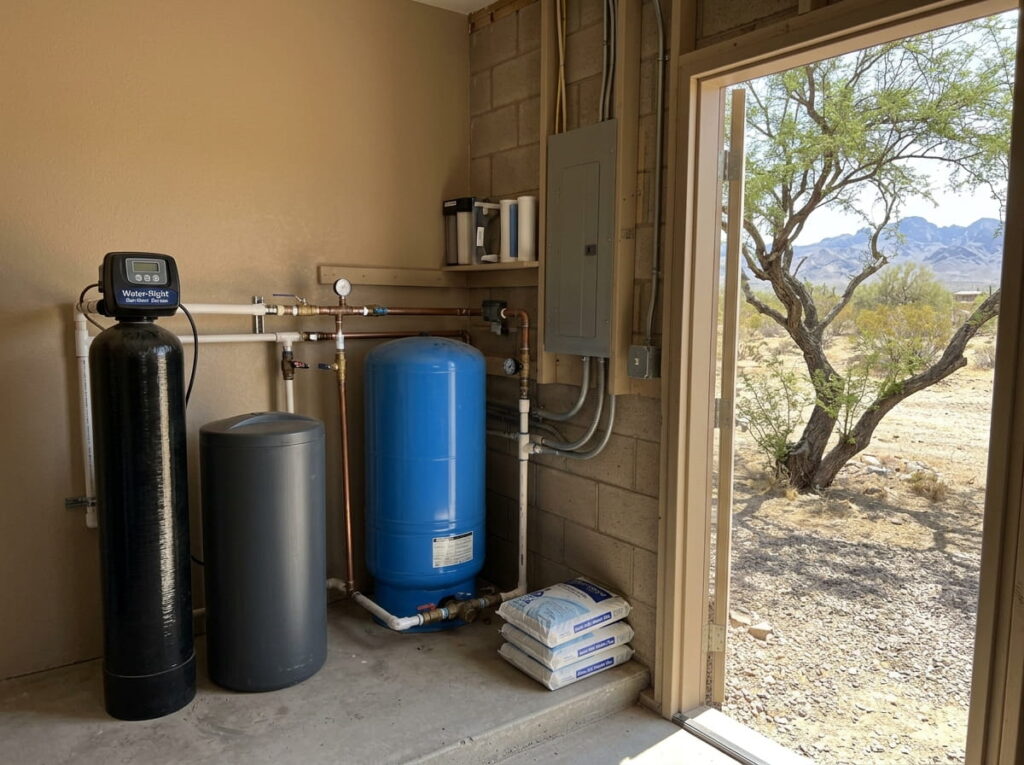
Reverse osmosis. RO removes most dissolved solids, which gives you a clean starting point. You can add flower food to RO water and get consistent pH and uptake. Many florists consider this the gold standard for flower water.
Carbon filtration. Carbon removes chlorine, odors, and many organic compounds. It improves the water and protects delicate blooms.
Sediment filtration. This stage traps particles that cloud buckets and clog fine equipment.
Softener for the building. A softener protects pipes, water heaters, and fixtures. Use it for equipment and cleaning rather than for flower water.
Water treatment florists Tucson wide use usually combines these tools. A softener protects the building, and an RO system with carbon filtration feeds the flower stations.
Setting Up Your Shop for Better Flower Water
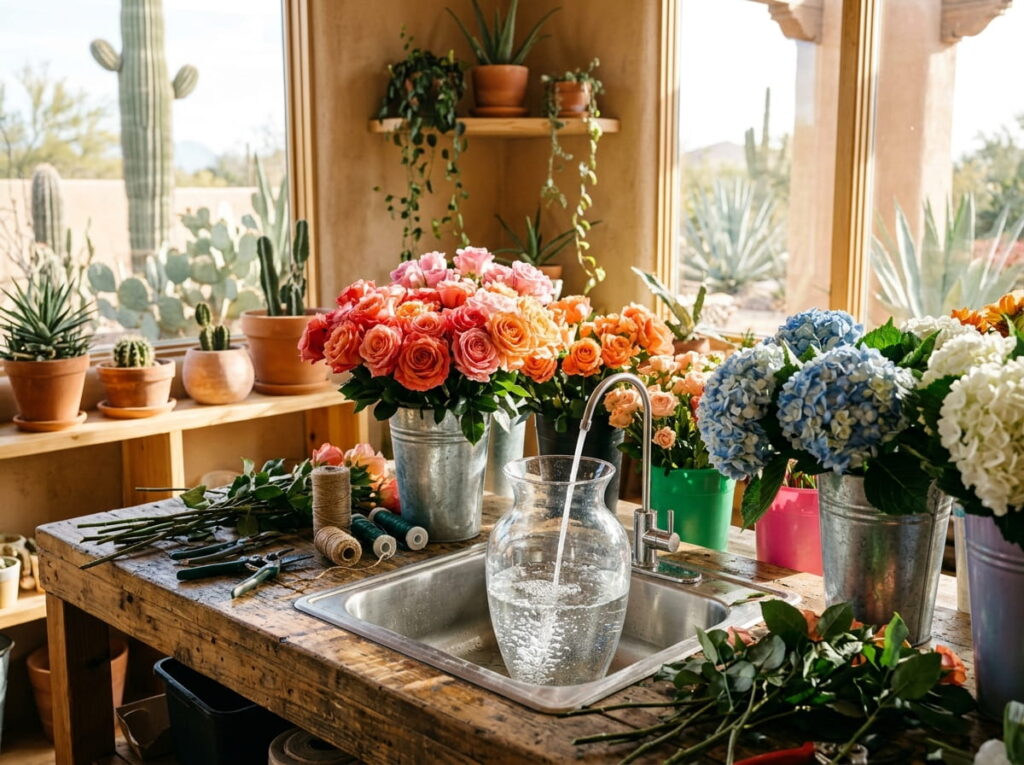
Water treatment florists Tucson wide install works best when it places treated water where you need it. Install an RO tap near your design bench and your bucket filling station. Staff then fill every vase and bucket with the same clean water.
Plan your flow rate. A busy shop fills dozens of buckets each morning, and a small RO unit may struggle to keep up. A storage tank solves this by holding treated water ready. We size the tank to your peak demand.
Keep your cooler in mind. Humidifiers and misters need clean water to avoid scale and white dust on blooms. Treat that supply too, so the cooler stays clean and your flowers stay hydrated without mineral spotting.
Tucson Heat Adds Pressure to Every Stem
Summer heat tests every flower shop in the valley. Delivery vans bake, doors open and close, and coolers work overtime. Warm water speeds up bacterial growth, so even small water problems turn into losses fast. Water treatment florists Tucson wide depend on matters most from May through September, when flowers have less margin for error.
Start the day with cool, clean, treated water in every bucket. Keep buckets out of direct sun and away from loading doors. Check water clarity at midday, and change any bucket that looks cloudy. Treated water cannot beat the heat alone, but it gives your cold chain a stronger base. Your coolers also run better when scale does not coat the misting lines and humidifier parts.
Choosing the Right Partner for Your Shop
Look for a provider who tests your water before selling any equipment. Ask for a written quote, a clear installation timeline, and a service plan. A good partner explains the reasoning behind each recommendation, sizes equipment to your real demand, and shows you the test numbers.
Ask how the provider handles emergencies, because a failed pump or an empty storage tank during wedding week costs real money. Our team responds quickly and keeps common filters and membranes in stock, so your shop always has clean water.
Daily Habits That Support Treated Water
Treated water works best with good habits. Clean buckets with soap and a mild bleach solution between uses. Remove foliage that would sit below the waterline, because decaying leaves feed bacteria. Cut stems at an angle with clean tools and place them in water quickly.
Use fresh flower food in every bucket. Follow the label, because too little or too much hurts results. With clean RO water, flower food performs as intended and keeps pH in the right range.
Change water on a schedule and watch for cloudiness. Cloudy water signals bacteria. Replace it right away, and check your treatment system filters for needed service.
What a Florist Water Consultation Includes
Water treatment florists Tucson owners request begins with a visit to your shop. We test your tap water for hardness, total dissolved solids, pH, chlorine, and iron. We look at your buckets, your cooler, your design bench, and your equipment.
You then receive a clear recommendation. We explain what each system does, what it costs, and how much space it needs. We also estimate the savings from reduced waste and equipment repairs. Our commercial water treatment system page shows the full range of options we install.
Installation usually takes a day or less, so your shop stays open. We test everything before we leave and train your staff to maintain it. Service plans handle filter changes, so you can focus on design.
Book Your Florist Water Consultation
Better water means longer lasting arrangements, fewer losses, and happier customers. Water treatment florists Tucson wide rely on starts with a simple test, and the test costs you nothing but a short visit. Book your Florist Water Consultation today and see how clean water improves every stem you sell.
Frequently Asked Questions: Water Treatment for Florists in Tucson
1. Why do Tucson florists need water treatment?
Tucson water carries high minerals and an alkaline pH. These traits reduce water uptake, blunt the effect of flower food, and shorten vase life. Treatment gives stems clean, consistent water.
2. What water pH is best for cut flowers?
Most floral professionals aim for a pH between 3.5 and 5.0. Slightly acidic water travels up the stem faster and slows bacterial growth.
3. Does hard water shorten the life of cut flowers?
Yes. Minerals can clog stem vessels and reduce water uptake. Alkaline hard water also weakens the effect of flower food, so blooms droop sooner.
4. Should florists use softened water for flower buckets?
Usually not. Softeners replace calcium and magnesium with sodium, which can harm some flowers. Use RO or filtered water for flower buckets and softened water for equipment.
5. Is reverse osmosis water good for flowers?
Yes. RO removes most dissolved solids and gives you a clean base. Flower food then works as designed, which supports longer vase life.
6. How does water treatment save a florist money?
Treatment reduces early wilting, cuts product waste, and protects equipment from scale. Fewer refunds and complaints also protect your revenue and reputation.
7. Can water treatment help my floral cooler?
Yes. Clean water prevents scale in humidifiers and misters. It also avoids white mineral dust on blooms, so the cooler works better and stays cleaner.
8. How long does installation take for a flower shop?
Most installations finish in a day or less. We plan the work around your hours so your shop keeps serving customers.
9. How often do treatment filters need service?
Sediment and carbon filters usually need replacement every six to twelve months. RO membranes last longer. Our service plans handle every change on schedule.
10. What happens during a florist water consultation?
We test your tap water, inspect your buckets, cooler, and design area, and recommend a system. You receive a clear quote with expected savings before you commit.