Turn on your kitchen faucet in Tucson and the water looks clear. It meets federal standards. But “meets standards” and “contains nothing” are not the same thing.
Every public water supply carries trace amounts of minerals, disinfectants, and other substances. Most are harmless at low levels. Some are worth watching closely, especially for families with young children, older adults, or anyone on a private well.
In this guide, we break down the most common Tucson water contaminants using the latest utility reports available in 2026. We will explain what each one is, where it comes from, and when it makes sense to filter it out.
Where Tucson’s Water Comes From
Understanding your water source helps explain what is in it.
According to Tucson Water’s most recent Main System report, about 78% of the supply is recharged Colorado River water delivered through the Central Arizona Project (CAP). The remaining 22% comes from groundwater in the Central Well Field.
CAP water travels hundreds of miles through open canals before it is recharged into the aquifer and pumped back out. Along the way, it picks up dissolved minerals. Groundwater adds its own minerals from the desert soil and rock. Your source shapes which Tucson water contaminants reach your tap.
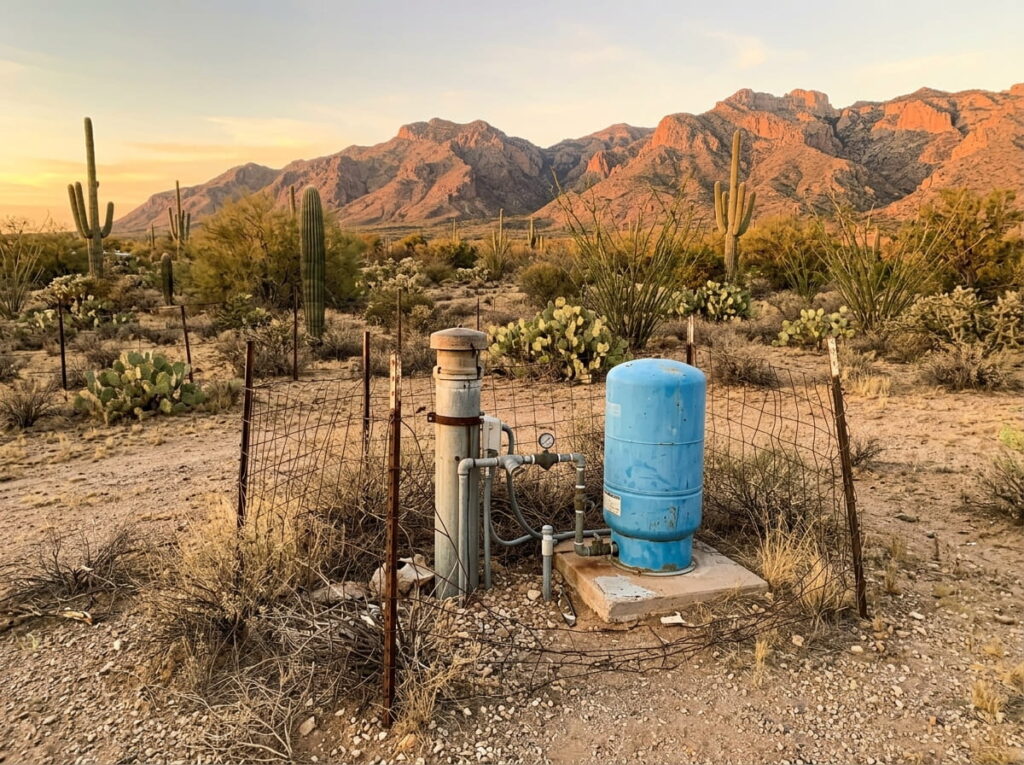
Homes outside the city, including parts of Marana, Oro Valley, and Vail, may be served by other utilities or private wells. Their water can look very different.
The Most Common Tucson Water Contaminants
The numbers below come from Tucson Water’s 2024 Main System water quality results. All regulated contaminants listed were below federal limits. “Highest level” means the highest single result, not what every home receives.
| Contaminant | Highest Level Detected | Federal Limit |
|---|---|---|
| Arsenic | 6.64 ppb | 10 ppb |
| Nitrate | 7.2 ppm | 10 ppm |
| Uranium | 15 ppb | 30 ppb |
| Fluoride | 0.59 ppm | 4 ppm |
| Combined radium | 2.5 pCi/L | 5 pCi/L |
| Total trihalomethanes | 26.3 ppb (average) | 80 ppb |
| Lead (90th percentile) | 0.65 ppb | 15 ppb action level |
You can review the full report on the Tucson Water website. If the tables feel confusing, our guide on how to read your Tucson water quality report like a pro makes it simple.
Arsenic
Arsenic occurs naturally in Arizona’s geology. It dissolves into groundwater from rock and soil. Long-term exposure to high levels is linked to health risks, which is why the EPA sets a limit of 10 ppb. Tucson’s highest result was below that, but levels in private wells can be much higher.
Nitrate
Nitrate comes from fertilizers, septic systems, and natural sources. The biggest concern is for infants under six months, because high nitrate can affect how blood carries oxygen. Tucson’s highest level of 7.2 ppm is below the 10 ppm limit but not far from it.
Uranium and Radium
These naturally occurring radioactive elements come from minerals in the aquifer. Both were detected below federal limits. Well owners in some parts of Pima County should test for them.
Disinfection Byproducts
Tucson Water uses chlorine to kill harmful bacteria. When chlorine reacts with natural organic matter, it forms byproducts such as trihalomethanes (TTHMs). Tucson’s average was well under the limit, but many people prefer to filter chlorine for taste and odor.
Lead and Copper
Lead rarely comes from the water source itself. It usually leaches from older household plumbing, solder, or fixtures. Tucson’s 90th percentile result was very low. However, homes built before 1986 can still have lead solder in their pipes. Water testing Tucson homeowners in older houses schedule can reveal it.
PFAS: The “Forever Chemicals” Question
PFAS are man-made chemicals used in firefighting foam, nonstick coatings, and industrial processes. They break down very slowly and can build up in the body.
Tucson first found PFAS in groundwater through its Sentry Program. Since then, the utility has removed nearly 30 production wells from service. It reports that wells with PFAS detections are not delivering water to customers, and it holds itself to an operational goal of less than 2 parts per trillion for PFOA and PFOS.
At the federal level, the EPA set limits of 4 parts per trillion for PFOA and PFOS in 2024. In May 2026, the agency proposed extending the compliance deadline to 2031 and rescinding limits for several other PFAS.
PFAS remains one of the most talked-about Tucson water contaminants. For extra peace of mind, a certified reverse osmosis system is one of the most effective home options for reducing it.
Who Should Pay Extra Attention?
Most healthy adults face little risk from the trace levels found in treated city water. Still, some households have good reason to take a closer look at Tucson water contaminants:
- Families with infants, especially if formula is mixed with tap water, because of nitrate
- Pregnant women, who may want to limit exposure to arsenic, lead, and PFAS
- Older adults and people with weakened immune systems
- Homes built before 1986, which may have lead solder
- Private well users, whose water is not monitored by a utility
If any of these apply, talk with your doctor and consider water testing Tucson experts perform at your tap.
Hardness and Total Dissolved Solids
Hardness is not a health risk, so it is not listed among regulated contaminants. Still, it is the issue Tucson homeowners notice most.
Tucson water is among the hardest in the country, often measuring 12 grains per gallon or more. That causes:
- White scale on faucets and showerheads
- Spotty dishes and cloudy glasses
- Shorter appliance and water heater life
- Dry-feeling skin and hair after showering
Total dissolved solids (TDS) are also relatively high because of CAP water and desert minerals. High TDS can affect taste and shorten the life of some filters.
Tucson Water Contaminants in Private Wells
Private wells are not regulated like city water. Owners are responsible for testing and treatment. Well water around Tucson may contain:
- Higher arsenic, uranium, or nitrate levels
- Iron and manganese that stain fixtures
- Hydrogen sulfide with a rotten egg smell
- Bacteria from damaged well caps or nearby septic systems
If you rely on a well, annual water testing Tucson well owners schedule is essential.
Why Tucson Water Contaminants at Your Tap May Differ From the Report
A utility report is a big-picture summary. Your tap water can be different because of:
- Your neighborhood. Tucson Water blends sources, and levels vary by zone.
- Your plumbing. Older pipes can add lead, copper, or sediment.
- Your water heater. Scale and sediment build up inside it.
- Timing. Results change throughout the year.
That is why water testing Tucson homeowners do at their own tap gives a far more accurate picture than a citywide average. Tucson Water also offers an online water quality map for localized information.
How to Know What’s in Your Water
Step 1: Read Your Utility Report
Start with your annual report. It shows what the utility found and whether it met federal standards.
Step 2: Get Professional Water Testing Tucson Experts Provide
A professional in-home test measures hardness, TDS, chlorine, pH, and iron at your tap. For well owners or specific health concerns, a certified lab test can check for arsenic, nitrate, bacteria, and PFAS.
Desert Water Services offers free water testing in Tucson with results explained on the spot. Water testing Tucson residents can book with no cost and no obligation is the easiest way to get real answers.
Step 3: Match Treatment to Your Results
Once you know what is in your water, choose a system that targets it:
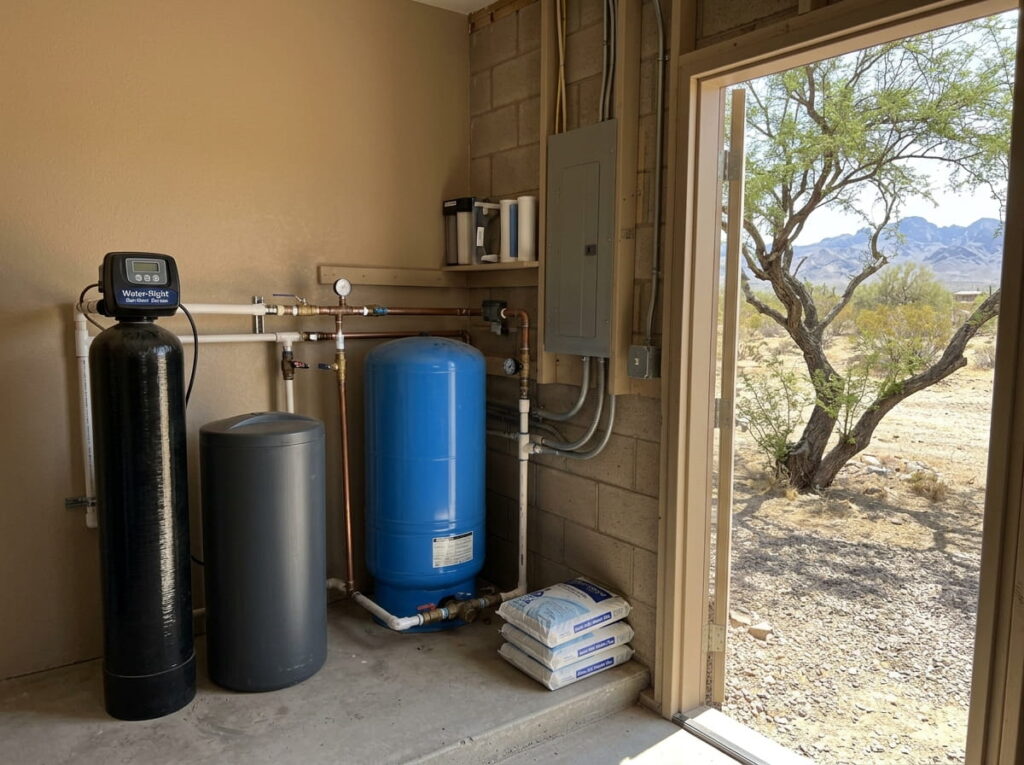
- Water softener for hardness and scale
- Carbon filtration for chlorine, taste, and odor
- Reverse osmosis for arsenic, nitrate, PFAS, and TDS
- Iron filters and disinfection for well water issues
Not sure where to start? Read what is the healthiest way to filter tap water. For drinking water, see our guide to reverse osmosis system installation in Tucson.
Frequently Asked Questions
Is Tucson tap water safe to drink?
Tucson Water reports that its supply meets all federal drinking water standards. Many families still choose filtration for better taste and extra protection against trace Tucson water contaminants.
What is the most common contaminant in Tucson water?
Hardness minerals are the most noticeable. Among regulated substances, arsenic, nitrate, and disinfection byproducts are commonly detected at levels below federal limits.
Does a water softener remove contaminants?
A softener removes hardness minerals and some iron. It does not remove arsenic, nitrate, or PFAS. Reverse osmosis is better for those.
How often should I schedule water testing Tucson services?
City water users should test every one to two years or after plumbing changes. Private well owners should test at least once a year.
Is water testing Tucson from Desert Water Services really free?
Yes. The in-home test is free, with no obligation. Specialized certified lab tests, such as PFAS analysis, are a separate service, so ask our team for details.
Can I test for PFAS at home?
Home test strips cannot reliably detect PFAS at parts-per-trillion levels. You need a certified laboratory test.
Know What’s in Your Water
The more you know about Tucson water contaminants, the easier it is to protect your home and family. Reports are a great starting point, but water testing Tucson homeowners do at their own tap shows what is really coming out of the faucet.
Ready for answers? Book water testing Tucson with Desert Water Services, or call (520) 327-8426 to schedule your Free Water Test today.