Arizona’s two biggest cities sit less than 120 miles apart. However, their tap water is not the same. When you compare Tucson vs Phoenix water quality, the main gap comes down to where the water starts and how it gets to your home. Both cities send out water that meets U.S. safety rules. Still, each one brings its own set of issues for people at home.
So if you live in Tucson, or you just moved here from Phoenix, these differences matter. They can help you pick the right water treatment. Let’s walk through it step by step.
Where Phoenix Gets Its Water
Phoenix leans mostly on rivers. In fact, about 98% of the city’s water comes from rivers and lakes, not from wells. Most of it starts as snowmelt in the mountains, and then it flows down the Salt, Verde, and Colorado Rivers.
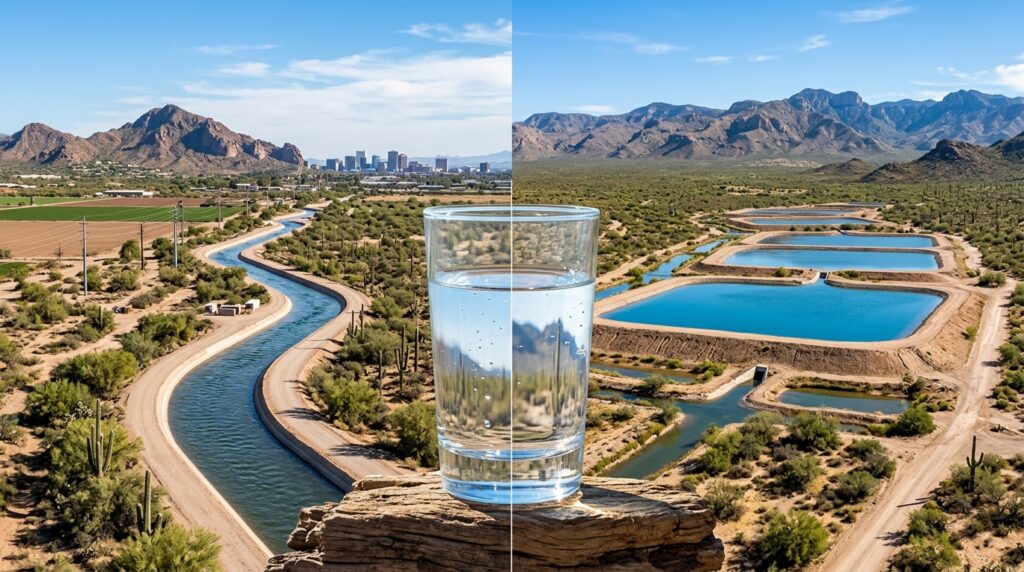
After that, the water moves through long, open canals. For example, the Salt River Project canals carry water from the Salt and Verde Rivers. Meanwhile, the Central Arizona Project canal brings water from the Colorado River. In the end, all of it reaches city plants, where it is filtered and cleaned.
However, open canals have one big downside. Because the water sits in the sun and heat, algae can grow in it. As a result, people in Phoenix sometimes notice an earthy or musty taste, mostly in late summer and fall. The city says the algae is removed at the plant, but the smell can stay behind. In addition, the Salt River Project brushes its canals to help keep algae down.
Where Tucson Gets Its Water
Tucson takes a very different path. For most of its history, the city pumped water from its own aquifer, which is the water stored deep underground.
Then, in the early 1990s, Tucson began sending treated Colorado River water straight into its pipes. Sadly, it did not go well. Many homes saw water that looked strange in color, along with damaged pipes, so the treatment plant was shut down in 1994.
After that, the city changed its plan. Today, Tucson Water sends Colorado River water into basins in Avra Valley, west of town. There, the water soaks into the ground and joins the aquifer. Later, the city pumps it back up and mixes it with native groundwater. That mix is what flows to most Tucson homes.
So here’s the simplest way to see Tucson vs Phoenix water quality. Phoenix cleans river water that has traveled through open canals, while Tucson sends out water that has spent time underground.
Tucson vs Phoenix Water Quality: Side by Side
| What We’re Comparing | Phoenix | Tucson |
|---|---|---|
| Main water source | Salt, Verde, and Colorado Rivers | Colorado River water stored underground, mixed with groundwater |
| How water arrives | Open canals to city plants | Soaks into the aquifer, then pumped back up |
| Seasonal musty taste | Common in late summer and fall | Less common |
| Hard water | Yes | Yes, and it changes by area |
| Main issue at home | Taste, smell, and scale | Scale, spots, and mineral taste |
How These Differences Show Up at Your Tap
Hard Water
Both cities have hard water. That means the water holds a lot of calcium and magnesium. These minerals are safe to drink, but they can still cause trouble around the house.
Colorado River water picks up many minerals on its long trip. Also, Tucson Water says its groundwater is naturally hard. On top of that, the city says hardness goes up as more river water is added to the mix.
There’s one more twist in Tucson. Since some areas get more river water and others get more groundwater, hardness is not the same across town. In fact, the mix can change over time, too. So your friend across town may get very different test results than you.
Taste and Smell
In Phoenix, taste issues often come and go with the seasons because of canal algae. Chlorine, which is used to kill germs, can also change the flavor.
Tucson is a bit different. Because the water filters through soil and rock before it’s pumped back up, the city doesn’t usually get the same seasonal algae taste. Instead, taste complaints in Tucson are more often about chlorine or a heavy mineral flavor.
Dissolved Minerals
Total dissolved solids, or TDS, is a way to measure all the minerals and salts in water. Colorado River water is high in TDS, so as Tucson uses more of it, TDS in the mix goes up too.
When TDS is high, water can taste salty or flat. It also leaves white spots on dishes, faucets, and glass shower doors. For reference, the EPA sets a guideline of 500 mg/L for TDS. However, this guideline is about taste and looks, not health.
What Hard Water Does Inside Your Home
Hard water may be safe to drink, but it isn’t gentle on your home. When the water is heated, minerals come out and form scale. Over time, that scale builds up inside water heaters, pipes, and appliances.
For example, scale in a water heater acts like a coat between the heat source and the water. As a result, the heater has to work harder. Scale can also clog showerheads, wear out faucets, and leave soap scum on shower walls.
This is true in both cities. However, since Tucson’s hardness shifts by area, knowing your own level helps you choose the right size system.
Why Your Treatment Needs Depend on Your City
Since the issues are different, the best fix is different too.
Common Treatment in Phoenix
Many people in Phoenix start with a carbon filter because it helps reduce chlorine and improves taste and smell. In addition, a water softener is common for dealing with scale.
Common Treatment in Tucson
In Tucson, hardness and minerals usually come first. For this reason, many homes use two systems together.
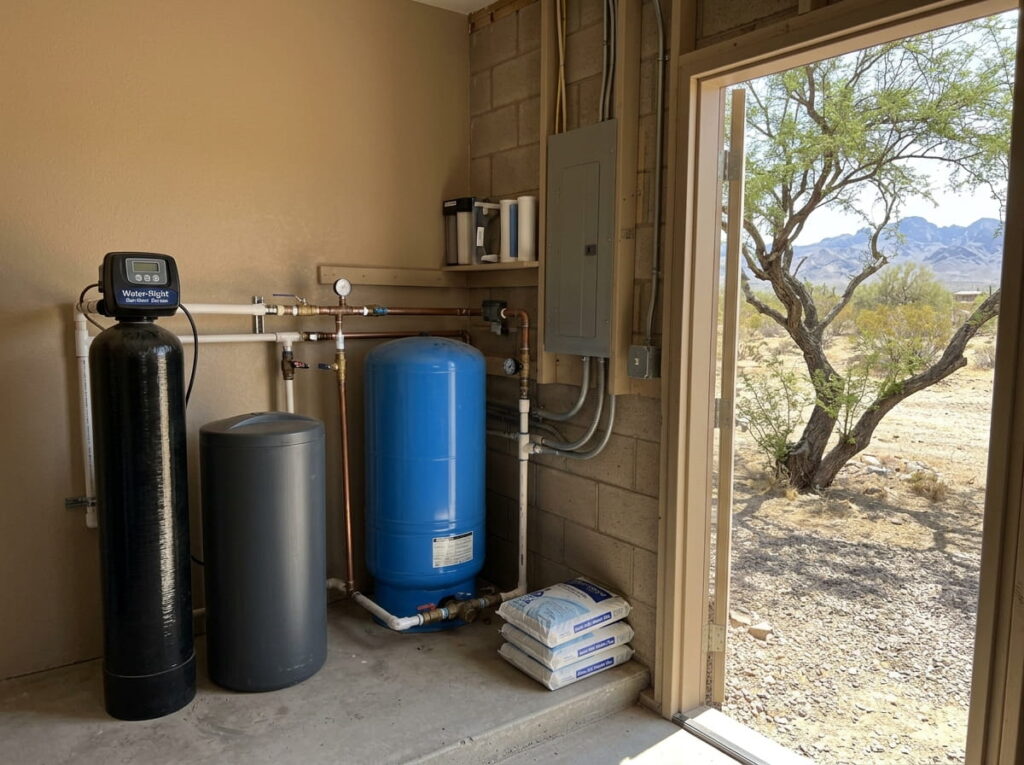
A water softener removes calcium and magnesium from all the water in your home. As a result, it helps protect your water heater, pipes, faucets, and appliances.
A reverse osmosis (RO) system sits under the kitchen sink. It lowers the minerals in your drinking and cooking water, so it tastes cleaner.
A carbon filter can still help Tucson homes with chlorine taste. On its own, though, it won’t fix hard water.
This is where Tucson vs Phoenix water quality really matters for newcomers. For example, a setup that worked well in a Phoenix home may not be the best fit for a Tucson address.
What City Water Reports Don’t Tell You
Both cities test their water often, and both publish a yearly water quality report. These reports are helpful, so they’re worth a read.
Still, they only show averages for the whole city. In other words, they can’t show what’s going on inside your own home. For instance, a city report won’t tell you which water mix reaches your street. Nor will it show the state of your home’s pipes. It also can’t tell you how hard the water is at your own tap.
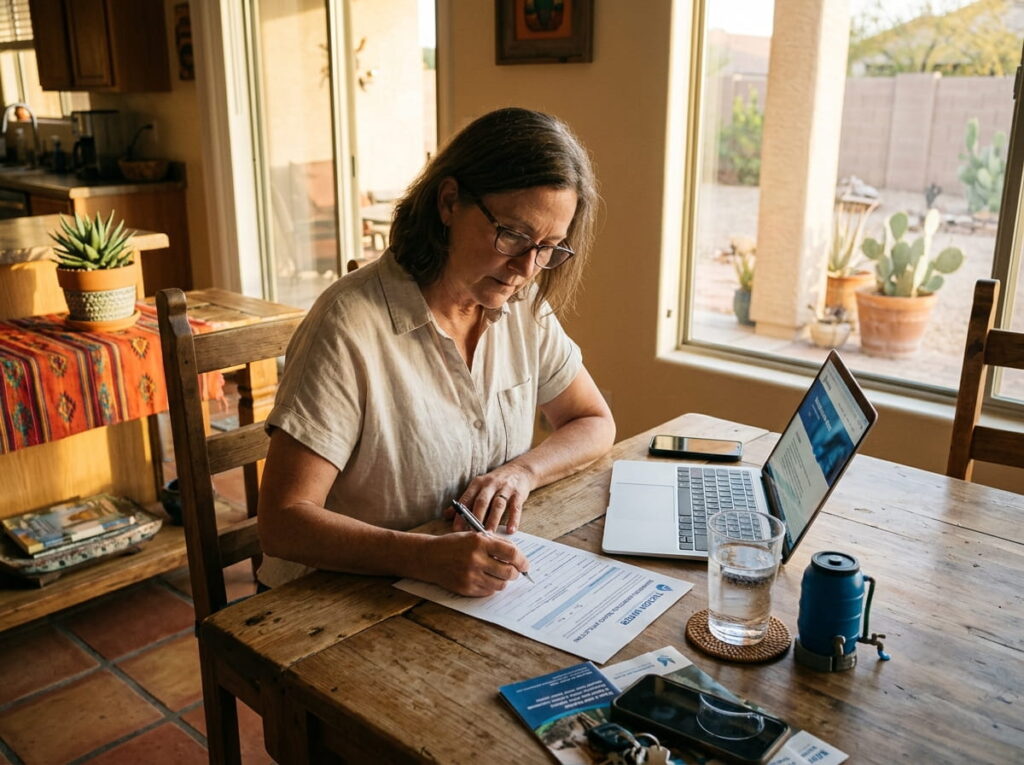
That’s why water testing in Tucson is so useful. A home test gives you real numbers for hardness, TDS, chlorine, and pH. Then, with those numbers in hand, you can pick the right treatment instead of guessing.
Signs It’s Time to Test Your Water
You may want to test your water when one of these things happens:
- After a recent move to Tucson from Phoenix or another city
- When white crust builds up on faucets and showerheads
- If dishes come out of the dishwasher with spots
- When your water heater makes popping or rumbling sounds
- If tap water tastes salty, flat, or like chemicals
- Before you buy a softener or RO system, so it’s sized right
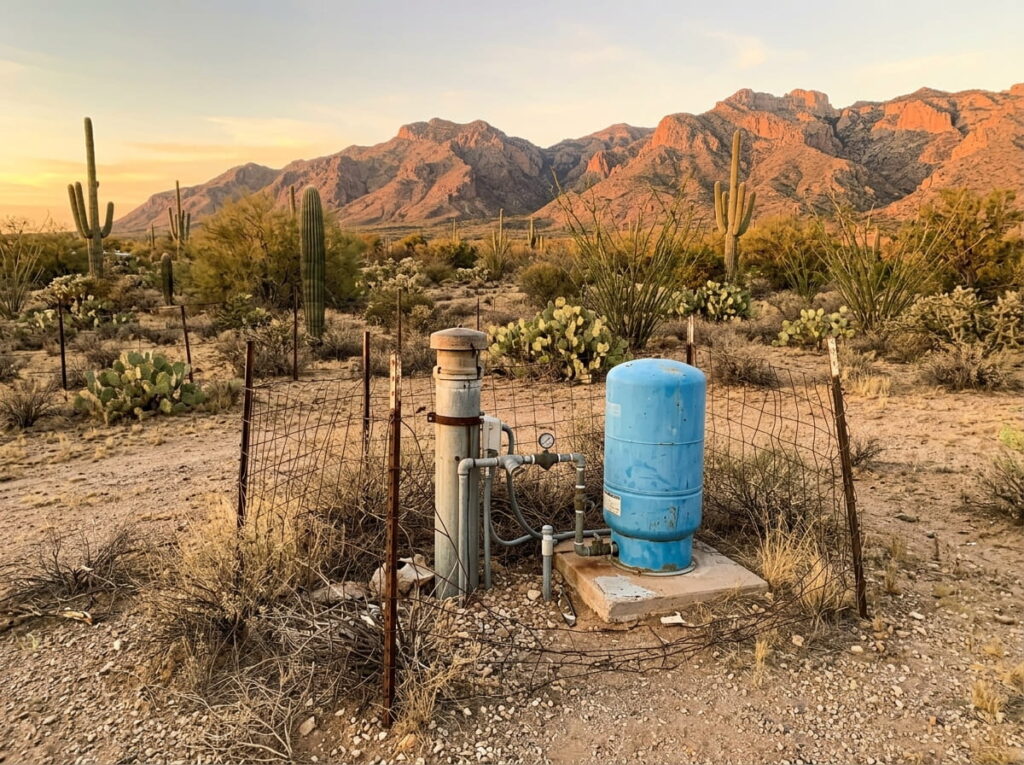
- Whenever you rely on a private well, since city reports don’t cover wells at all
A Quick Word on Moving From Phoenix
Lots of people move between Phoenix and Tucson for work, school, or family. If that’s you, don’t assume your old water setup will work the same way.
For example, if you had a filter mainly for Phoenix’s seasonal taste, it may not help much with Tucson’s hard water. On the other hand, if you already own a softener, it may need new settings. Because Tucson’s hardness is different, the system should be set to match your new water.
That’s the practical side of Tucson vs Phoenix water quality. Overall, a fresh water test is the easiest way to get your setup right.
The Bottom Line
When it comes to Tucson vs Phoenix water quality, neither city simply has “better” water. Both are safe to drink. Instead, the real gap is the type of issues each one brings.
On one side, Phoenix homes deal more with seasonal taste and smell from canal water. On the other, Tucson homes deal more with hard water and minerals that shift from one part of town to the next.
Either way, the smartest first step is the same. Before you buy any system, find out what’s in your water.
Want to know what’s really in your tap water? Free Water Test and get clear results for your Tucson home, so you only pay for the treatment you actually need.
Frequently Asked Questions
1. Is Tucson water better than Phoenix water?
Not really, because neither city simply has better water. Both meet U.S. safety rules. However, Phoenix water is more likely to have a seasonal musty taste, while Tucson water is known for hardness and high minerals.
2. Where does Tucson’s tap water come from?
Most of it starts as Colorado River water. First, it goes into basins in Avra Valley and soaks into the aquifer. Then the city pumps it back up, mixes it with native groundwater, and sends it to homes.
3. Where does Phoenix’s tap water come from?
About 98% of it comes from the Salt, Verde, and Colorado Rivers. After traveling through canals, the water is cleaned at city plants before it reaches homes.
4. Why does Phoenix water sometimes taste musty?
Algae grows in the open canals, mostly in late summer and fall. Although the plants remove the algae, a slight smell can remain.
5. Is Tucson water hard?
Yes. Tucson Water says its groundwater is naturally hard, and hardness also rises as more Colorado River water enters the mix.
6. Why does hardness change across Tucson?
Different parts of town get different mixes of river water and groundwater. Since that mix also shifts over time, hardness can vary from one home to the next.
7. Do I need a water softener in Tucson?
Most Tucson homes benefit from one because hard water leaves scale in water heaters, pipes, and appliances. Also, a water test shows your hardness so the system can be sized right.
8. Will my Phoenix water filter work in Tucson?
It may still help with chlorine taste. But Tucson’s main issues are hardness and minerals, so you’ll usually need a softener and sometimes an RO system too.
9. What does a home water test check?
A basic test checks hardness, TDS, chlorine, and pH. In addition, some tests look for iron and other things in the water.
10. Are Tucson’s water quality reports enough?
They help, but they only show averages for the whole city. By contrast, a home test shows what actually comes out of your tap, which is what matters when you choose a system.