Picking between a 1 stage vs 3 stage vs 5 stage RO system feels confusing when every brand uses different labels. A higher stage count does not automatically mean better water, and a lower count does not always mean cheaper in the long run. The right choice depends on your Tucson water, your budget, and what you want from your glass.
This guide explains what each stage does, how the three common setups compare, and which one fits most Tucson homes. You will also find maintenance tips and ten FAQs. By the end, you can choose a reverse osmosis system in Tucson with confidence.
What Reverse Osmosis Does
Reverse osmosis, or RO, pushes water through a semipermeable membrane with tiny pores. The membrane blocks dissolved solids, salts, metals, and many chemicals. Clean water passes through to a storage tank, and the rejected minerals flow down the drain.
Tucson water carries a heavy mineral load. Total dissolved solids often run in the hundreds of parts per million, and hardness runs high. An RO membrane can reduce dissolved solids by roughly 90 percent or more, which changes the taste, clarity, and feel of your water.
The membrane does the main work, but it cannot work alone. Chlorine damages membranes, and sediment clogs them. Additional filter stages protect the membrane and polish the final water. That is why stage count matters.
What Each Filter Stage Does
Every RO system uses some combination of four building blocks. Knowing them makes the stage counts easy to understand.
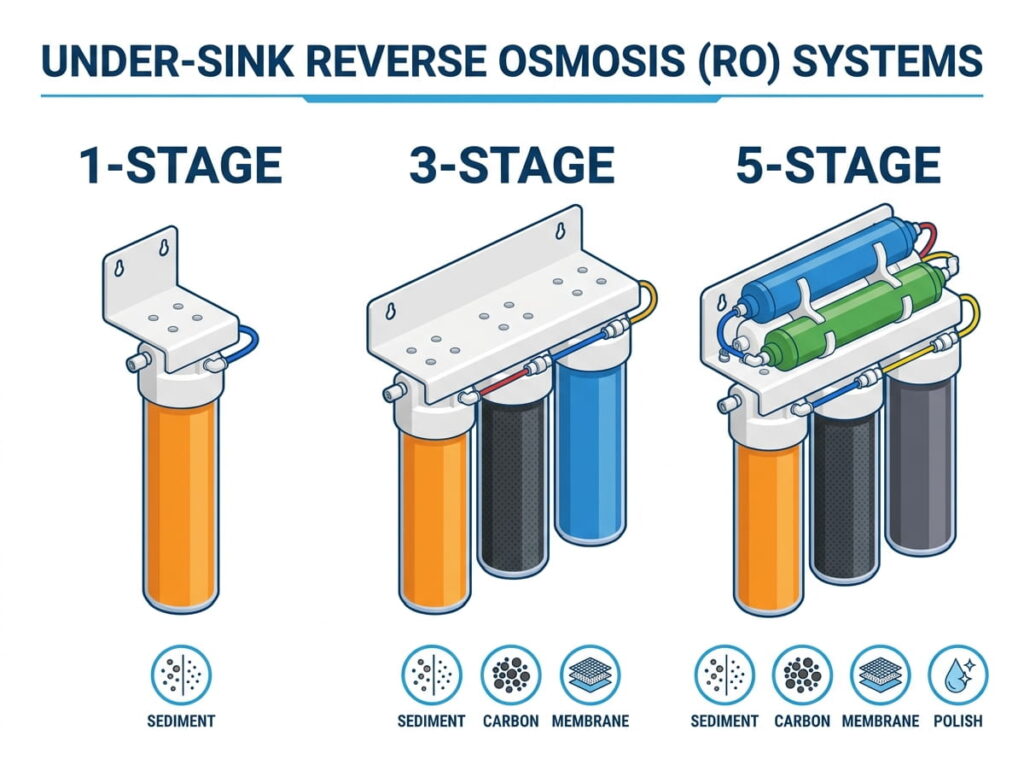
Sediment filter. This stage traps sand, rust, and dirt. It protects every filter that follows.
Carbon filter. Carbon removes chlorine, chloramine, and many odors and tastes. It also shields the membrane from chlorine damage.
RO membrane. This is the heart of the system. It removes dissolved solids and a wide range of contaminants.
Post carbon polishing filter. This final stage sits after the storage tank and cleans up any taste the tank adds. Some systems add a remineralization stage too.
More stages usually mean more protection and more refined taste, but only if each stage does a useful job.
The 1-Stage RO System Explained
A true 1 stage RO system relies on the membrane alone, or on a single filter and a membrane with almost no protection. Manufacturers rarely sell this setup for home drinking water because it leaves the membrane exposed.
In Tucson, a 1 stage setup faces trouble. City water contains chlorine, and chlorine eats away the membrane within months. Sediment can also clog the pores. The system may cost less on day one, but you replace membranes far more often.
People sometimes use the term 1 stage for a basic single cartridge filter, which does not use reverse osmosis at all. That type improves taste and removes some chlorine, but it leaves dissolved minerals untouched. For Tucson homeowners who want to reduce hard water minerals, a 1 stage option rarely delivers.
Best for: Very short term use or a low budget test. We seldom recommend it for permanent installation.
The 3-Stage RO System Explained
A 3-stage RO system combines a sediment filter, a carbon filter, and the RO membrane. This setup covers the basics. The sediment filter removes particles, the carbon filter removes chlorine, and the membrane removes dissolved solids.
For many Tucson homes, a 3 stage system gives a strong balance of cost and quality. It protects the membrane and delivers clean drinking water at an affordable price. Filters are simple to change, and the system takes up little space under the sink.
The main limit is the lack of a final polish. Water can pick up a slight taste from the storage tank, and a 3 stage setup does not remove it. If your household drinks a lot of water and notices small taste differences, a 5 stage system may suit you better.
Best for: Small households, renters who need a simple under sink option, and budget conscious buyers who want real RO performance.
The 5-Stage RO System Explained
A 5-stage RO system adds more filtration around the membrane. A common layout includes a sediment filter, two carbon stages, the RO membrane, and a post carbon polishing filter. Some brands swap in a second sediment filter or a remineralizing stage.
The extra carbon stages remove more chlorine and organic compounds before water reaches the membrane. That protection extends membrane life. The final polishing stage gives water a crisp, fresh taste straight from the tap.
Tucson water makes the extra protection worthwhile. High mineral content stresses membranes, and chlorine in the supply attacks them. A 5 stage system keeps the membrane healthier longer and delivers water that tastes cleaner. Many homeowners also appreciate coffee and tea made with this water.
Best for: Families, coffee and tea drinkers, and anyone who wants the best taste and the longest membrane life.
Side by Side Comparison of 1 Stage vs 3 Stage vs 5 Stage RO
When you compare these three setups, think about protection, taste, and long term cost. Each row below shows where the systems differ, so you can see the trade offs at a glance.
| Feature | 1 Stage | 3 Stage | 5 Stage |
|---|---|---|---|
| Sediment protection | Minimal | Yes | Yes |
| Chlorine removal | Limited | Yes | Strong |
| Dissolved solids removal | Varies | High | High |
| Final taste polish | No | No | Yes |
| Membrane life | Short | Good | Longest |
| Upfront cost | Lowest | Moderate | Higher |
| Best for Tucson | Rarely | Small homes | Most homes |
The table shows a clear pattern. A 1 stage system saves money today and costs more later. A 3 stage system covers the essentials. A 5 stage system gives you the strongest protection and the best taste.
Which RO System Fits Your Tucson Home
Start with your water test. A free test shows your hardness, total dissolved solids, chlorine level, and any contaminants of concern. Those numbers guide the right stage count.
If your household has one or two people and your water tests moderately, a 3 stage system usually meets your needs. If your home uses a lot of drinking water, serves guests often, or tests high for dissolved solids, a 5 stage system pays off. If you want mineral balance in your water, ask about a remineralizing stage.
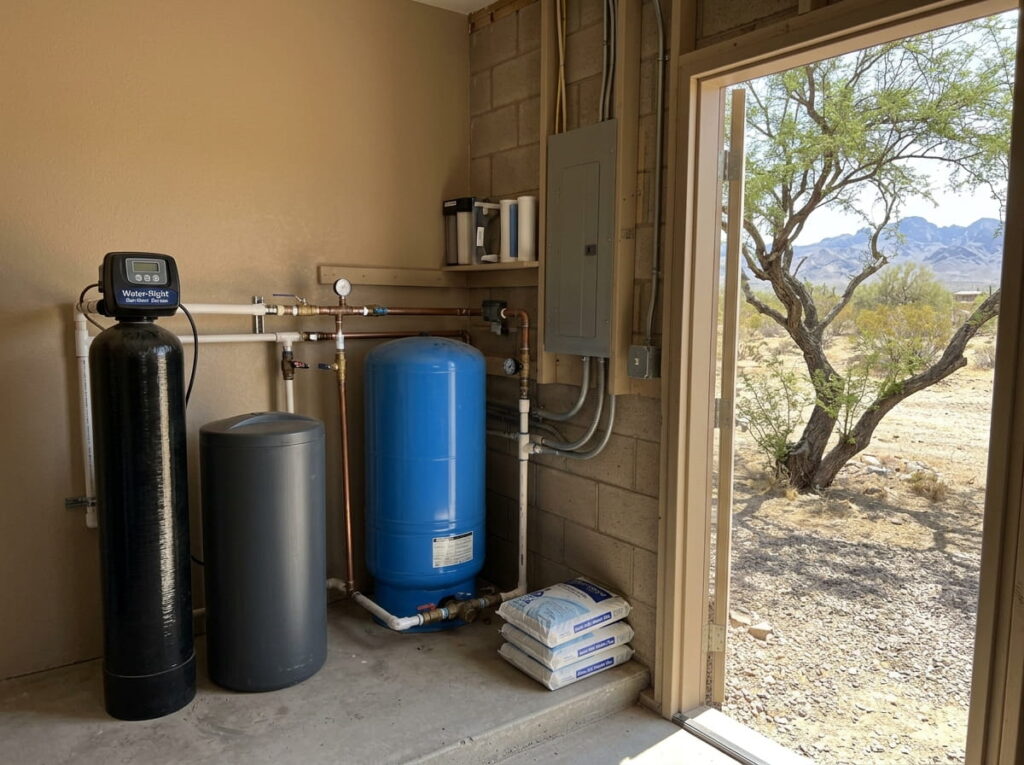
Consider your whole home setup too. RO treats drinking water at one tap, so it does not stop scale in your pipes and appliances. Many Tucson homes pair a water softener for the whole house with an RO system at the kitchen sink. That combination protects your plumbing and gives you great drinking water.
Maintenance, Filter Changes, and Water Waste
Every RO system needs regular upkeep. Sediment and carbon filters usually need replacement every six to twelve months, depending on use and water quality. Membranes last two to five years in most homes. Tucson’s mineral rich water can shorten that range, so more protection stages help.
RO systems send some water to the drain as they work. Standard systems waste several gallons for each gallon they produce. Newer high efficiency models and permeate pumps cut that waste significantly. Ask about these options if water use matters to you.
Sanitize the system whenever you change filters. Our team offers service plans that handle filter changes, membrane checks, and tank sanitizing on a schedule. You never need to track dates yourself.
Water pressure also affects performance. RO membranes work best when your home supply delivers steady pressure. If your pressure runs low, a booster pump helps the membrane produce more water and waste less. Our technicians check your pressure during installation and recommend a pump only when your numbers call for one.
Find Your Ideal RO Stage
The right choice between 1 stage vs 3 stage vs 5 stage RO systems depends on your water and your goals. Our team tests your water, explains your options in plain language, and installs the system that fits. Explore our reverse osmosis services in Tucson and request your Find Your Ideal RO Stage consultation today.
Frequently Asked Questions About RO Stages for Tucson Homes
1. What is the main difference between 1 stage vs 3 stage vs 5 stage RO?
The stage count tells you how many filters the water passes through. More stages add protection for the membrane and a cleaner taste. A 3 stage system covers the basics, and a 5 stage system adds extra carbon filtration and a final polish.
2. Is a 5 stage RO system better than a 3 stage system?
For most Tucson homes, yes. The extra carbon stages protect the membrane from chlorine and improve taste. A 3 stage system still works well for small households on a budget.
3. Do I need more than a 1 stage RO system in Tucson?
Yes. Tucson water contains chlorine and heavy minerals that damage an unprotected membrane. Sediment and carbon stages extend membrane life and improve water quality.
4. How much total dissolved solids does RO remove?
A healthy RO membrane removes roughly 90 percent or more of dissolved solids. Your actual results depend on the membrane condition and your incoming water.
5. How often should I change RO filters?
Change sediment and carbon filters every six to twelve months. Membranes usually last two to five years. High mineral content in Tucson water can shorten these times.
6. Does an RO system remove hard water minerals?
RO removes the dissolved minerals that cause hardness in the water it treats. It serves one tap, so it does not protect pipes or appliances. Pair it with a softener for whole house protection.
7. How much water does an RO system waste?
Standard systems send several gallons to the drain for each gallon they make. High efficiency models and permeate pumps reduce that waste.
8. Will RO water taste different from tap water?
Yes. RO water tastes cleaner and lighter because it contains fewer dissolved solids and less chlorine. A 5 stage system adds a final polish for the freshest taste.
9. Can I install an RO system under my kitchen sink?
Most RO systems fit under a standard kitchen sink. Our technicians handle the installation, including the drain connection and the faucet.
10. How do I choose the right RO system for my Tucson home?
Start with a free water test. The results show your hardness, dissolved solids, and chlorine, and our team recommends the stage count that fits your household and budget.