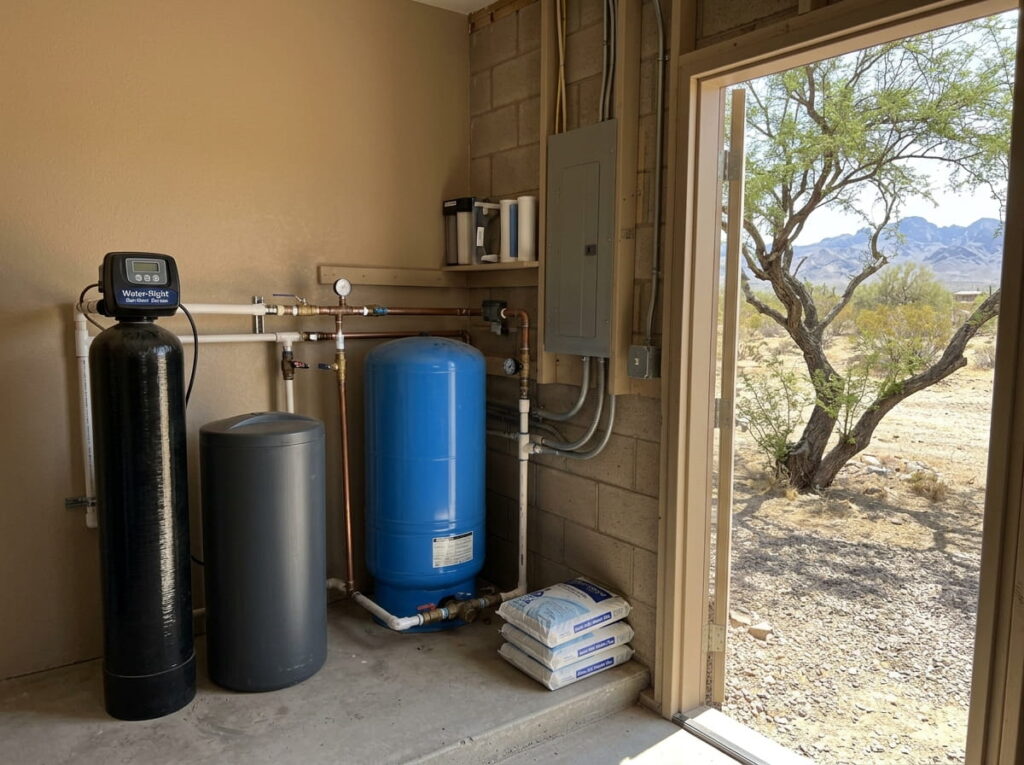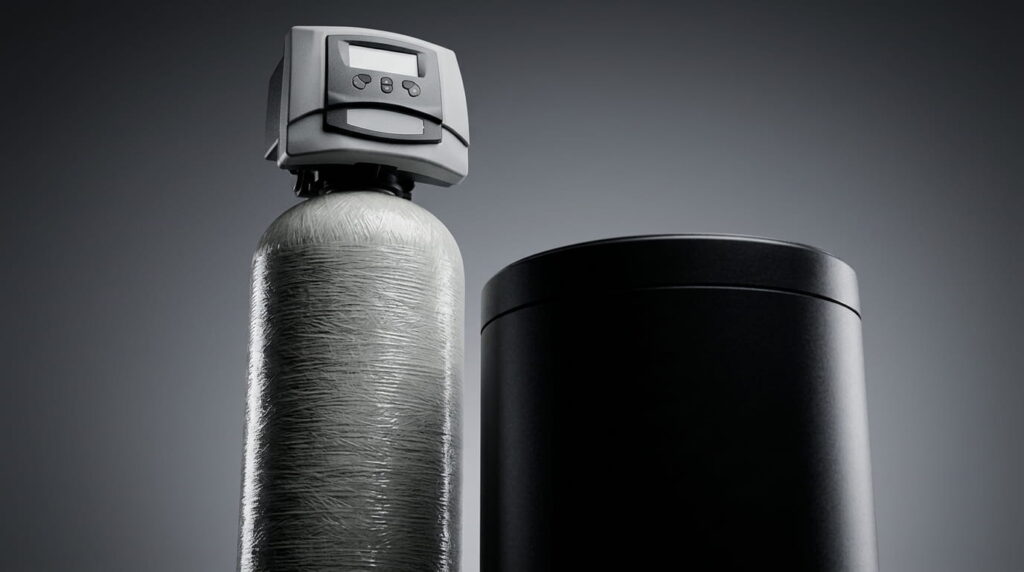
When homeowners start comparing water treatment equipment, two names come up repeatedly in the Tucson market. The Sanitizer Plus series and the Reionator Pro series both carry strong reputations, both come from established manufacturing, and both cost enough that nobody wants to guess.
The confusion is understandable, because the marketing for each one sounds similar. They are built for genuinely different jobs. Desert Water Services, LLC installs both, and the choice almost always comes down to a single question: are you fighting contamination, or are you fighting hardness?
The Core Difference in One Paragraph
The Sanitizer Plus platform is built around disinfection and oxidation. Its purpose is to attack bacteria, iron, sulfur odor, and manganese, the problems that dominate private well supplies.
The Reionator Pro platform is built around ion exchange with intelligent metering. Its purpose is to remove hardness efficiently while minimizing salt and water consumption, the problem that dominates municipal and treated supplies.
One sanitizes. One softens. Everything else follows from that.
When the Sanitizer Plus Series Is the Right Call
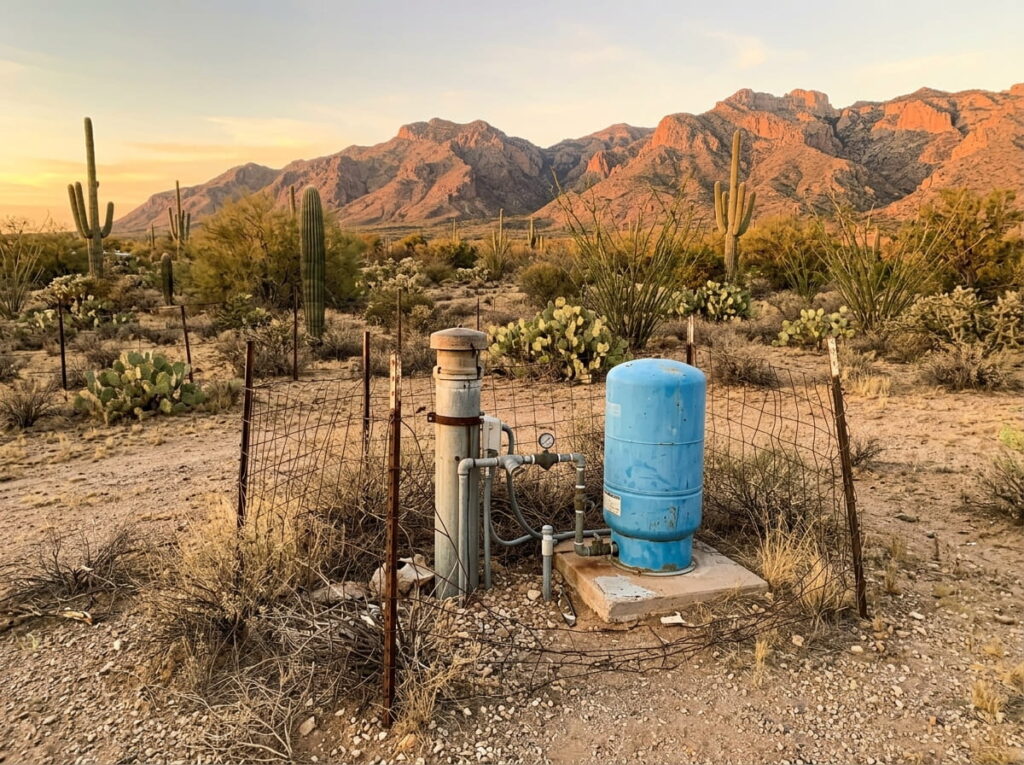
If you draw from a private well anywhere around Tucson, Marana, Sahuarita, or Vail, this is usually the starting point.
A Sanitizer Plus well water system is designed for supplies carrying live contamination and reduced minerals. It introduces a disinfecting and oxidizing action into the water, converting dissolved iron and manganese into filterable particles while addressing bacteria and the rotten egg smell of hydrogen sulfide at the same time. The media bed then captures what was oxidized, and the unit backwashes on a schedule to flush accumulated material to drain.
This matters because dissolved contaminants cannot be filtered directly. Ferrous iron passes straight through a cartridge and stains fixtures downstream. Hydrogen sulfide is a gas in solution and ignores particle filtration entirely. Iron bacteria produce a slime that blinds conventional media within weeks. A properly configured Sanitizer Plus well water system solves all three by changing the chemistry before filtration rather than hoping a finer filter catches them.
Signs that point toward this platform include orange or rust staining that returns after cleaning, a sulfur odor strongest at the hot tap, black specks or dark staining from manganese, slimy buildup inside the toilet tank, and any positive coliform result.
When the Reionator Pro Series Is the Right Call
If your water is already disinfected and biologically stable, which describes most homes on a municipal connection, hardness is the enemy and the Reionator Pro platform is engineered for it.
The system uses ion exchange resin to trade calcium and magnesium for sodium or potassium, then regenerates using brine on a demand initiated schedule. The intelligence is in the metering. Rather than regenerating on a fixed calendar, it tracks actual water volume and hardness load and regenerates only when capacity is genuinely consumed.
That translates into measurable savings. Households that vacation frequently, work irregular hours, or vary widely in size month to month waste substantial salt and water on timer based softeners. Demand metering eliminates most of that.
The other advantage is efficiency per regeneration. Well designed control valves use proportional brining, drawing only the salt needed for the exhausted portion of the bed rather than a full dose every cycle.
Signs pointing toward this platform include white scale on fixtures and shower doors, spotted glassware, soap that will not lather, dry skin and dull hair, stiff laundry, and water heaters failing early.
The Case Where You Need Both
This is more common than most homeowners expect, and it is where a lot of bad advice gets given.
Well water in southern Arizona is frequently hard and contaminated at the same time. Running hard iron laden water directly into a softener fouls the resin bed. Iron coats the resin, capacity drops, and within a year or two the unit needs an expensive rebuild that a correct design would have prevented.
The proper sequence puts oxidation and filtration first, then softening second. A Sanitizer Plus well water system handles bacteria, iron, sulfur, and manganese, delivering clean stable water to the Reionator Pro, which then removes hardness without fighting contaminants it was never built to handle.
Order matters as much as equipment selection. Desert Water Services, LLC sees more failed installations caused by reversed sequencing than by the wrong brand.
Comparing the Practical Details
Maintenance. The Sanitizer Plus platform requires periodic attention to its oxidizing element and eventual media replacement, typically measured in years rather than months. The Reionator Pro requires salt on an ongoing basis and resin replacement roughly once a decade under normal conditions.
Operating cost. Softening carries a recurring salt expense that scales with hardness and usage. Oxidizing filtration carries lower consumable cost but uses backwash water regularly.
Space. Both are tank based systems needing floor space, drain access, and an electrical outlet. Running both requires planning the layout before installation day rather than after.
Water usage. Each backwashes or regenerates to drain. Correct sizing keeps this reasonable. Oversized equipment wastes water on every cycle.
Lifespan. Both are built for long service when matched properly to the water. The fastest way to shorten either one is installing it against conditions it was not designed for.
How the Decision Actually Gets Made
Not by brand preference, and not by whichever brochure is more persuasive. By a water test.
Total iron, ferrous versus ferric breakdown, manganese, hydrogen sulfide, coliform bacteria, hardness in grains per gallon, pH, and total dissolved solids together determine which platform belongs in your home and how it should be configured.
pH deserves particular mention. Oxidation slows considerably on acidic water, so a Sanitizer Plus well water system installed without a pH correction stage on low pH water underperforms through no fault of the equipment. Similarly, softener capacity calculations depend on hardness and iron load, and getting those inputs wrong produces a unit that runs out between regenerations.
Household size, peak flow demand, and number of bathrooms complete the sizing picture. A four bathroom home with irrigation needs different flow capacity than a two bedroom casita.
Frequently Asked Questions
Can one system do both jobs?
Not effectively. Disinfection and oxidation solve a different chemistry problem than ion exchange. Homes needing both get a two stage train installed in the correct order.
Which comes first if I install both?
Oxidation and filtration first, softening second. Sending iron and bacteria into a resin bed fouls it and voids the value of the softener.
Do I need the Sanitizer Plus platform on city water?
Usually not. Municipal supplies arrive disinfected and biologically stable. A Sanitizer Plus well water system exists to solve well specific problems that treated water has already addressed at the plant.
Will the Reionator Pro remove iron?
It tolerates small amounts, generally low single digits in parts per million. Beyond that, iron belongs on a dedicated stage ahead of it.
How do I know which one I need?
A full water panel answers it. Symptoms give strong hints, orange staining and sulfur odor point one direction while white scale points the other, but sizing and configuration require actual numbers.
Are these systems difficult to maintain?
Both are designed for homeowner friendly upkeep with periodic professional service. Salt refills and occasional filter attention cover most of it.