A reverse osmosis system delivers the purest drinking water available. Therefore, homeowners in our region rely on them to filter out local contaminants. However, these systems require regular care to function correctly. Specifically, adhering to an RO system maintenance schedule Tucson experts recommend ensures your water stays safe.
Tucson’s water supply is exceptionally hard. Consequently, the high mineral content and dissolved solids put immense stress on RO membranes. Furthermore, without regular maintenance, the system’s filters clog, and the membrane fails prematurely.
Desert Water Services provides comprehensive reverse osmosis Tucson services. Additionally, we teach our clients how to protect their investments. Ultimately, a proactive maintenance routine guarantees a continuous supply of clean, great-tasting water.
Why Maintenance is Crucial for RO Systems
An RO system uses multiple stages of filtration. Specifically, it forces water through a semi-permeable membrane to remove impurities. Furthermore, it relies on pre-filters to protect that delicate membrane.
When you skip maintenance, the pre-filters become saturated. Consequently, they stop trapping sediment and chlorine. Additionally, the chlorine degrades the RO membrane.
Once the membrane fails, contaminants bypass the filter. Furthermore, the system slows to a trickle and eventually stops producing water. Ultimately, a strict RO system maintenance schedule Tucson prevents this breakdown and extends the life of your equipment.
Daily and Weekly Tasks
You do not need to do much daily maintenance. However, a quick visual check goes a long way. Specifically, look under the sink for any signs of leaking water. Furthermore, check the tubing connections for dampness.
Additionally, listen to the system when it runs. It should produce a steady hum. Consequently, if you hear rattling or banging, turn it off and inspect it.
If you have a system with a storage tank, check the tank periodically. Specifically, ensure it feels heavy when full. Ultimately, these quick checks help you catch minor issues before they cause water damage.
Monthly Maintenance: Checking the TDS
The most important monthly task involves testing your water quality. Specifically, you must use a Total Dissolved Solids (TDS) meter. Therefore, fill a glass with RO water and dip the meter in.
Healthy RO systems reduce TDS by 90% to 95%. Furthermore, you should compare the RO reading to your tap water reading. Consequently, if the rejection rate drops significantly, your membrane may be failing.
Additionally, check the system for any salt or mineral buildup around the faucet. Moreover, clean the faucet aerator if the flow seems restricted. Ultimately, this monthly monitoring keeps you informed about your system’s health.
Every 6 to 12 Months: Replacing Pre-Filters
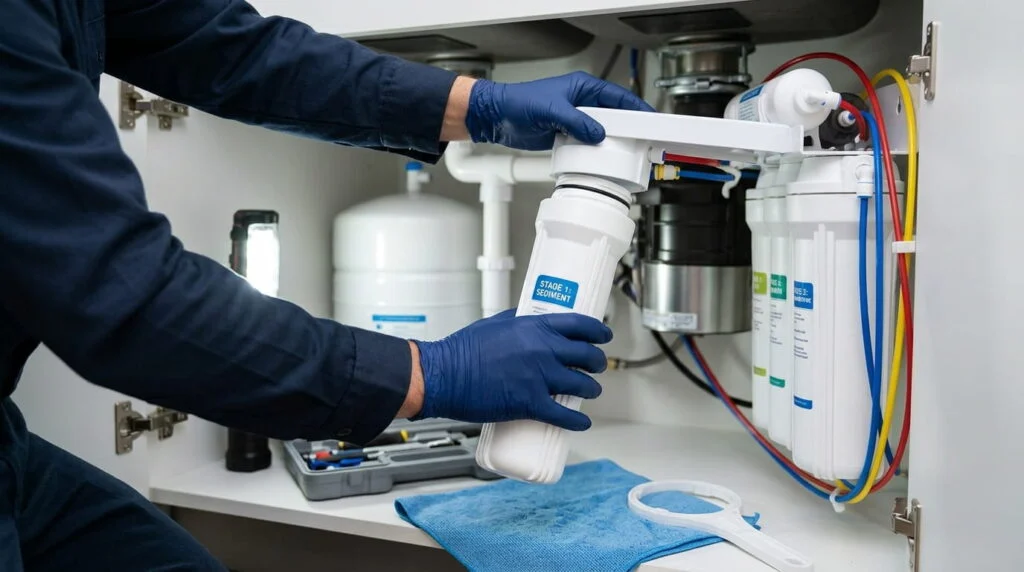
This is the most critical part of the RO system maintenance schedule Tucson homeowners must follow. Specifically, you must replace the sediment and carbon pre-filters. Furthermore, these filters protect the expensive RO membrane.
Sediment filters capture dirt and rust. Consequently, they typically need changing every 6 months. Carbon filters remove chlorine. Additionally, they usually last 6 to 12 months, depending on your water usage.
Why Chlorine is Dangerous for RO Systems
Chlorine destroys the thin, delicate RO membrane. Therefore, if the carbon filter fails, the membrane will quickly degrade. Replacing the cheap pre-filters on time prevents the need for a costly membrane replacement.
Desert Water Services stocks these filters. Moreover, we can handle the replacement during a routine service visit. Ultimately, this simple step preserves your water quality.
Every 2 to 3 Years: Replacing the RO Membrane
The RO membrane is the heart of the system. Specifically, it removes microscopic contaminants like lead, arsenic, and nitrates. Furthermore, it cannot be cleaned or reused once it degrades.
Most membranes last two to three years. Consequently, you must replace it when your TDS meter shows a drop in efficiency. Additionally, a sudden drop in water production indicates membrane failure.
Professional Membrane Replacement
Replacing a membrane requires sanitizing the system housing. Therefore, it is best left to professionals. Furthermore, improper handling can introduce bacteria into the system.
Desert Water Services provides expert reverse osmosis Tucson service. Additionally, we ensure the new membrane is seated correctly. Ultimately, replacing the membrane restores peak performance and safety.
Annual Sanitization and Professional Service
Even with regular filter changes, bacteria can grow inside the system. Therefore, annual sanitization is a vital part of the RO system maintenance schedule Tucson residents need. Specifically, this involves cleaning the lines, faucet, and storage tank.
Furthermore, a professional service visit checks for leaks and tests all connections. Additionally, we evaluate the system’s overall pressure and flow rate. Consequently, we catch minor repairs before they become major expenses.
If you have a system with a storage tank, we check the tank’s air pressure. Specifically, the tank uses an internal bladder to push water out. Furthermore, if the pressure drops, the tank must be re-pressurized. Ultimately, professional servicing ensures every component functions perfectly.
Extending the Life of Your RO System
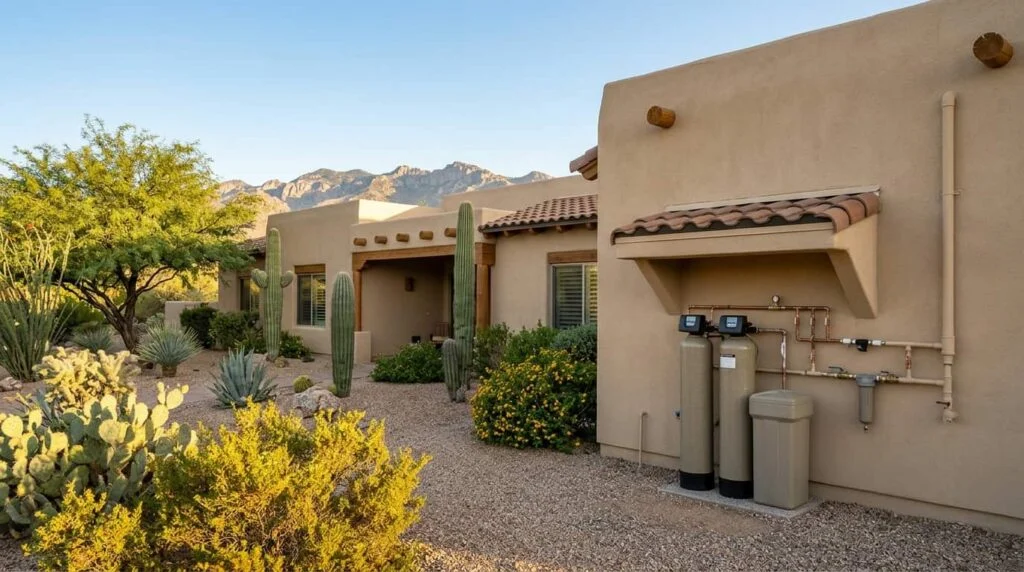
Following the schedule protects your investment. However, you can take extra steps to extend its life. Specifically, installing a whole-home water softener before the RO system is highly recommended.
Tucson’s hard water contains heavy calcium. Consequently, this hardness clogs pre-filters rapidly. Furthermore, it scales the RO membrane. By softening the water first, the RO system works less.
Additionally, do not let the system sit idle for long periods. Moreover, drain the storage tank if you plan to be away for a month. Ultimately, these small actions make a massive difference in longevity.
Conclusion
A reverse osmosis system is a valuable appliance for any home. Therefore, protecting it with a consistent RO system maintenance schedule Tucson guide is essential. Specifically, timely filter changes and professional servicing guarantee pure, safe drinking water.
Do not wait until your water flow slows to a trickle. Consequently, schedule routine maintenance with Desert Water Services. Our team handles every aspect of reverse osmosis Tucson service.
We offer comprehensive RO service plans to fit your needs. Ultimately, taking care of your system ensures your family enjoys clean, great-tasting water every single day.
Frequently Asked Questions
1. What is the recommended RO system maintenance schedule Tucson?
The recommended schedule involves checking for leaks monthly, replacing pre-filters every 6-12 months, sanitizing the system annually, and replacing the RO membrane every 2-3 years.
2. How often should I change the filters in my RO system?
Sediment filters typically need changing every 6 months. Carbon filters need changing every 6 to 12 months, depending on your water usage and chlorine levels.
3. How do I know if my RO membrane needs replacing?
Use a TDS meter to test your water. If the TDS rejection rate drops below 80%, or if water production slows significantly, the membrane is likely failing and needs replacement.
4. Can I install an RO system without a water softener in Tucson?
You can, but you will need to change the pre-filters much more frequently. Tucson’s extreme hardness quickly clogs filters. Installing a softener first protects the RO system and saves money.
5. Why does my RO system taste bad suddenly?
A sudden bad taste usually indicates that the carbon pre-filter is exhausted. Consequently, it can no longer remove chlorine or organic compounds. Replace the pre-filters and sanitize the system.
6. Does Desert Water Services offer reverse osmosis Tucson service?
Yes. Desert Water Services provides expert RO system installation, maintenance, and repair. We offer comprehensive service plans to keep your system running efficiently.
7. How long does an RO membrane last in Tucson?
With proper maintenance and regular pre-filter changes, an RO membrane typically lasts 2 to 3 years. However, heavy sediment or chlorine can degrade it faster.
8. Why is my RO water flow so slow?
Slow flow can indicate a clogged sediment filter, a failing membrane, or low water pressure entering the system. A professional inspection will diagnose the exact cause.
9. Can I sanitize my RO system myself?
Yes, you can use approved sanitization kits, but professional servicing is safer. Professionals ensure all lines and tanks are thoroughly cleaned without damaging sensitive components.
10. How do I schedule RO system maintenance in Tucson?
Contact Desert Water Services to schedule RO service. Our team will replace your filters, test your water quality, and ensure your system is operating perfectly.