A reverse osmosis (RO) system is one of the best ways to enjoy clean, fresh, and safe drinking water at home. It removes many harmful contaminants, improves the taste of water, and gives your family peace of mind. Like any water treatment system, it needs regular care to work properly. Following a Reverse Osmosis Maintenance Checklist helps keep your system in excellent condition and extends its lifespan.
Many homeowners forget about maintenance until they notice slow water flow, strange tastes, or unusual odors. By then, filters may already be clogged or the membrane may need attention. Regular Reverse Osmosis Maintenance prevents these problems and helps your system deliver high-quality water every day.
A well-maintained RO system also saves money. Replacing filters on time protects the expensive membrane and reduces the risk of unexpected repairs. With a simple maintenance routine, your reverse osmosis system can provide reliable performance for many years.
If your reverse osmosis system has not been serviced recently, now is the perfect time to inspect the filters, test your water quality, and schedule professional maintenance to keep your drinking water safe.
Why Reverse Osmosis Maintenance Is Important
Your RO system works hard every day by filtering water through several stages. Over time, dirt, sediment, chlorine, and other contaminants build up inside the filters and membrane. If these parts are not replaced on schedule, the system becomes less effective.
Regular maintenance offers several benefits, including:
- Better tasting drinking water
- Cleaner and healthier water
- Longer filter and membrane life
- Improved water pressure
- Lower repair costs
- Better system efficiency
- Consistent water production
- Reduced risk of leaks
Taking care of your RO system is much easier and less expensive than replacing damaged components.
How a Reverse Osmosis System Works
Understanding how your system works makes maintenance much easier.
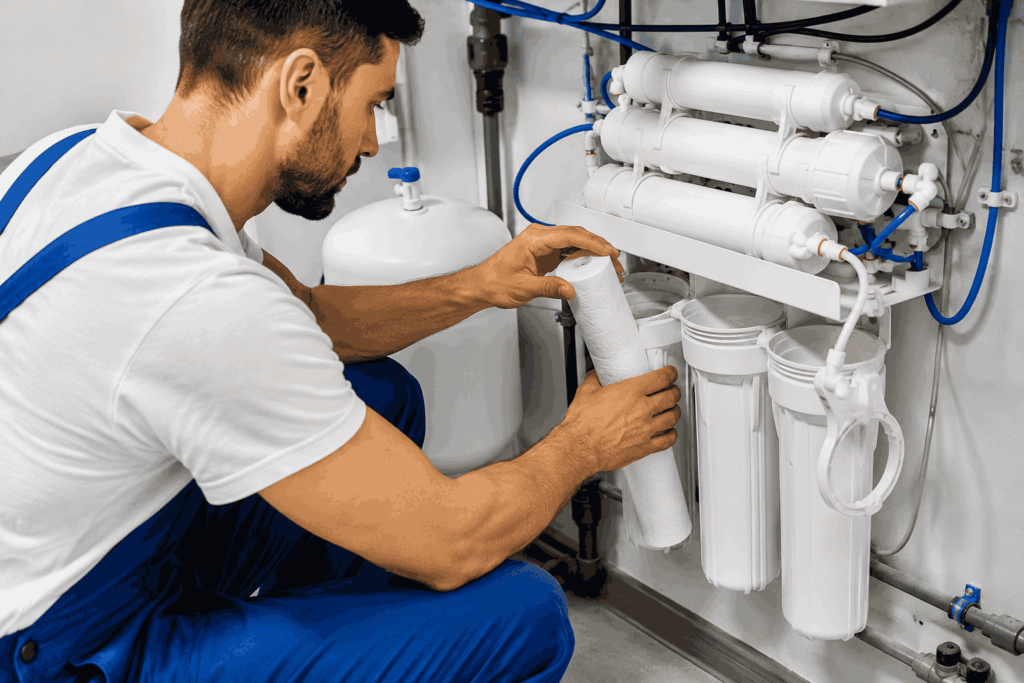
Most residential reverse osmosis systems include several important parts:
Sediment Filter
This filter removes dirt, sand, rust, and other large particles before the water reaches the membrane.
Carbon Filter
The carbon filter removes chlorine, unpleasant odors, chemicals, and bad tastes. It also protects the reverse osmosis membrane from chlorine damage.
Reverse Osmosis Membrane
The membrane is the heart of the system. It removes dissolved solids, heavy metals, fluoride, nitrates, lead, arsenic, and many other contaminants.
Post Carbon Filter
This final filter improves the taste of the purified water before it reaches your faucet.
Storage Tank
The storage tank holds clean water until you need it.
Faucet and Tubing
These parts deliver purified water directly to your sink.
Every component has a specific purpose, and each one should be checked during routine Reverse Osmosis Maintenance.
Reverse Osmosis Maintenance Checklist
Following a regular maintenance schedule helps your system perform at its best.
Replace the Sediment Filter
The sediment filter is the first line of defense. It traps dirt, rust, sand, and other debris before they can reach the membrane.
Most sediment filters should be replaced every six to twelve months. Homes with poor water quality may need more frequent replacement.
Signs the sediment filter needs replacing include:
- Slow water flow
- Dirty-looking filter
- Reduced water production
- Lower water pressure
Replacing this inexpensive filter helps protect the entire system.
Change the Carbon Filters
Carbon filters remove chlorine, chemicals, odors, and unwanted tastes.
As carbon filters become saturated, they lose their ability to remove contaminants. If chlorine reaches the RO membrane, it can permanently damage it.
Replace carbon filters every six to twelve months to maintain water quality and protect the membrane.
Inspect the Reverse Osmosis Membrane
The RO membrane does most of the filtration work.
Although it lasts much longer than the filters, it eventually wears out.
Most membranes should be replaced every two to three years depending on:
- Water quality
- Household water usage
- Filter replacement schedule
- Water pressure
A damaged membrane may allow more contaminants to pass through the system, reducing water quality.
Sanitize the Entire System
Many homeowners replace filters but forget to sanitize the system.
Over time, bacteria can grow inside the filter housings, tubing, and storage tank.
Sanitizing the system once a year helps:
- Remove bacteria
- Eliminate odors
- Improve water quality
- Keep the system clean
Professional sanitization provides the best results, especially if your system has not been serviced for a long time.
Check Water Pressure
Proper water pressure is essential for efficient filtration.
Most reverse osmosis systems operate best between 40 and 80 PSI.
Low pressure can cause:
- Slow water production
- Poor filtration
- Increased wastewater
If your home’s water pressure is consistently low, a booster pump may improve system performance.
Inspect the Storage Tank
The storage tank keeps purified water ready whenever you need it.
During maintenance, inspect the tank for:
- Leaks
- Rust
- Physical damage
- Low air pressure
A properly functioning storage tank improves water flow and system efficiency.
Examine Tubing and Fittings
Small leaks often start around tubing connections.
Inspect all tubing for:
- Cracks
- Loose fittings
- Water leaks
- Moisture around connectors
Fixing small leaks early can prevent expensive water damage and improve system performance.
Test Your Water Quality
One of the easiest ways to monitor your RO system is by testing your water.
A Total Dissolved Solids (TDS) meter measures how effectively your system removes dissolved contaminants.
If TDS levels begin to rise, it may indicate:
- Worn filters
- An aging membrane
- A system that needs maintenance
Testing your water every few months helps you identify problems before they become serious.
Clean the Drinking Water Faucet
Mineral deposits and bacteria can collect around the faucet over time.
Cleaning the faucet regularly helps maintain hygiene and improves water flow.
Use a soft cloth and a mild cleaner to keep the faucet clean without damaging its finish.
Flush the System After Filter Replacement
Whenever you install new filters, flush the system before drinking the water.
Flushing removes loose carbon particles and trapped contaminants from the new filters, ensuring clean and fresh-tasting water.
Annual Reverse Osmosis Maintenance Schedule
A simple maintenance schedule helps keep your reverse osmosis system working efficiently throughout the year.
Every Month
Take a few minutes to inspect your system.
- Check for water leaks.
- Look at the tubing and fittings.
- Make sure the faucet is working properly.
- Notice any changes in water taste or smell.
- Listen for unusual sounds from the system.
Every Six to Twelve Months
This is the most important maintenance period.
- Replace the sediment filter.
- Replace the carbon filters.
- Test your water quality with a TDS meter.
- Inspect the storage tank.
- Flush the system after replacing filters.
Every Two to Three Years
The reverse osmosis membrane usually needs replacement during this period. The exact lifespan depends on your water quality and how often you replace the filters.
Once Every Year
Schedule a complete professional inspection. A technician can sanitize the system, inspect all components, test water quality, and make sure everything is working properly.
Signs Your Reverse Osmosis System Needs Maintenance
Even with regular care, your system may show signs that it needs attention.
Slow Water Flow
If water comes out much slower than usual, clogged filters or a worn membrane may be the cause.
Bad Taste or Odor
Clean drinking water should taste fresh. If the water develops a strange taste or smell, your filters may need replacement.
Cloudy Water
Purified water should be clear. Cloudy water may indicate that the filtration system is no longer removing contaminants effectively.
Low Water Production
A reverse osmosis system that takes a long time to fill the storage tank often has clogged filters, low water pressure, or an aging membrane.
Continuous Drain Water
If you notice water constantly flowing into the drain, the automatic shut-off valve may not be working correctly.
Water Leaks
Any leak around the filter housings, tubing, or storage tank should be repaired as soon as possible to prevent water damage.
Benefits of Regular Reverse Osmosis Maintenance
Routine Reverse Osmosis Maintenance offers many long-term benefits.
Cleaner Drinking Water
Fresh filters remove contaminants more effectively, giving your family safe and great-tasting water.
Longer System Life
Replacing filters on time reduces wear on the membrane and other parts, helping the system last longer.
Better Performance
A clean system produces water faster and maintains steady water pressure.
Lower Repair Costs
Regular maintenance prevents small issues from turning into expensive repairs.
Improved Water Taste
Replacing old filters removes chlorine, odors, and unpleasant flavors, making every glass of water taste fresh.
Greater Efficiency
A well-maintained system uses water more efficiently and reduces unnecessary waste.
Common Reverse Osmosis Maintenance Mistakes
Many homeowners make simple mistakes that shorten the life of their RO system.
Avoid these common problems:
- Waiting until the water tastes bad before replacing filters.
- Forgetting to sanitize the system.
- Ignoring small leaks.
- Using the wrong replacement filters.
- Skipping membrane replacement.
- Not flushing the system after installing new filters.
- Never testing water quality.
- Waiting too long between maintenance appointments.
Avoiding these mistakes helps keep your reverse osmosis system working at its best.
Tips to Extend the Life of Your Reverse Osmosis System
You can help your system last for many years by following a few simple tips.
- Replace filters on schedule.
- Use high-quality replacement filters.
- Test your water regularly.
- Clean the faucet often.
- Inspect the system every month.
- Repair leaks immediately.
- Keep the storage tank clean.
- Schedule professional maintenance every year.
- Flush the system after replacing filters.
- Keep a record of maintenance dates.
These simple habits protect your investment and improve your drinking water.
Why Professional Reverse Osmosis Maintenance Matters
Some maintenance tasks are easy for homeowners, but professional service offers additional benefits.
A trained technician can:
- Check the condition of the RO membrane.
- Test water quality.
- Sanitize the complete system.
- Inspect valves and fittings.
- Check water pressure.
- Find hidden leaks.
- Replace worn components.
- Make sure the system is operating efficiently.
Professional maintenance helps prevent unexpected breakdowns and keeps your reverse osmosis system performing like new.
Conclusion
A reverse osmosis system is one of the best ways to enjoy clean, healthy drinking water, but it needs regular care to deliver the best results. Following a complete Reverse Osmosis Maintenance Checklist helps improve water quality, extend the life of your system, and reduce repair costs. Replacing filters on time, checking for leaks, testing water quality, and scheduling annual maintenance are simple steps that make a big difference. With consistent Reverse Osmosis Maintenance, your system can continue providing safe, fresh, and great-tasting water for many years.
Frequently Asked Questions
1. How often should I replace reverse osmosis filters?
Most sediment and carbon filters should be replaced every 6 to 12 months. The reverse osmosis membrane usually lasts 2 to 3 years, depending on water quality and usage.
2. Why is my reverse osmosis system producing water slowly?
Slow water production is often caused by clogged filters, a worn membrane, low water pressure, or a storage tank that needs maintenance.
3. How do I know if my RO membrane needs replacement?
A higher TDS reading, poor water taste, slow water flow, and reduced filtration performance are common signs that the membrane should be replaced.
4. Can I perform reverse osmosis maintenance myself?
Yes. You can replace filters, inspect for leaks, and clean the faucet. However, annual professional maintenance is recommended for system sanitization and complete inspections.
5. How often should I sanitize my reverse osmosis system?
Sanitize the system at least once a year or whenever you replace the membrane or major components.
6. What happens if I do not maintain my reverse osmosis system?
Poor maintenance can lead to clogged filters, reduced water quality, slower water flow, higher repair costs, and a shorter system lifespan.
7. Does reverse osmosis maintenance improve water taste?
Yes. Replacing filters and maintaining the system removes contaminants, odors, and chlorine, resulting in cleaner and better-tasting water.
8. How can I test if my reverse osmosis system is working properly?
A Total Dissolved Solids (TDS) meter is the easiest way to check the quality of your filtered water and monitor system performance.
9. Why is professional reverse osmosis maintenance recommended?
Professional maintenance includes water testing, system sanitization, pressure checks, membrane inspection, and leak detection to keep the system running efficiently.
10. Where can I get reverse osmosis maintenance in Tucson?
Professional reverse osmosis maintenance services in Tucson include filter replacement, membrane inspections, water quality testing, leak detection, and complete system sanitization to keep your drinking water clean and safe.