Choosing between residential vs commercial water treatment systems depends on the property’s size, water usage, water source, and treatment goals. A system designed for a Tucson home may not have enough capacity for a restaurant, office, hotel, or other commercial property.
Both residential and commercial systems can address concerns such as hard water, sediment, unpleasant taste, odors, and specific water-quality issues. However, the equipment, capacity, installation, maintenance, and operating requirements can be very different.
For Tucson property owners, understanding these differences can make it easier to choose a treatment system that fits the property instead of paying for equipment that is too small or unnecessarily large.
What Is a Residential Water Treatment System?
Residential water treatment systems are designed for homes, apartments, and other smaller properties. Their main purpose is to improve water quality for everyday household use.
Homeowners may choose treatment for several reasons, including hard water, mineral buildup, drinking-water concerns, sediment, or unpleasant taste and odor.
Common residential systems include:
- Water softeners
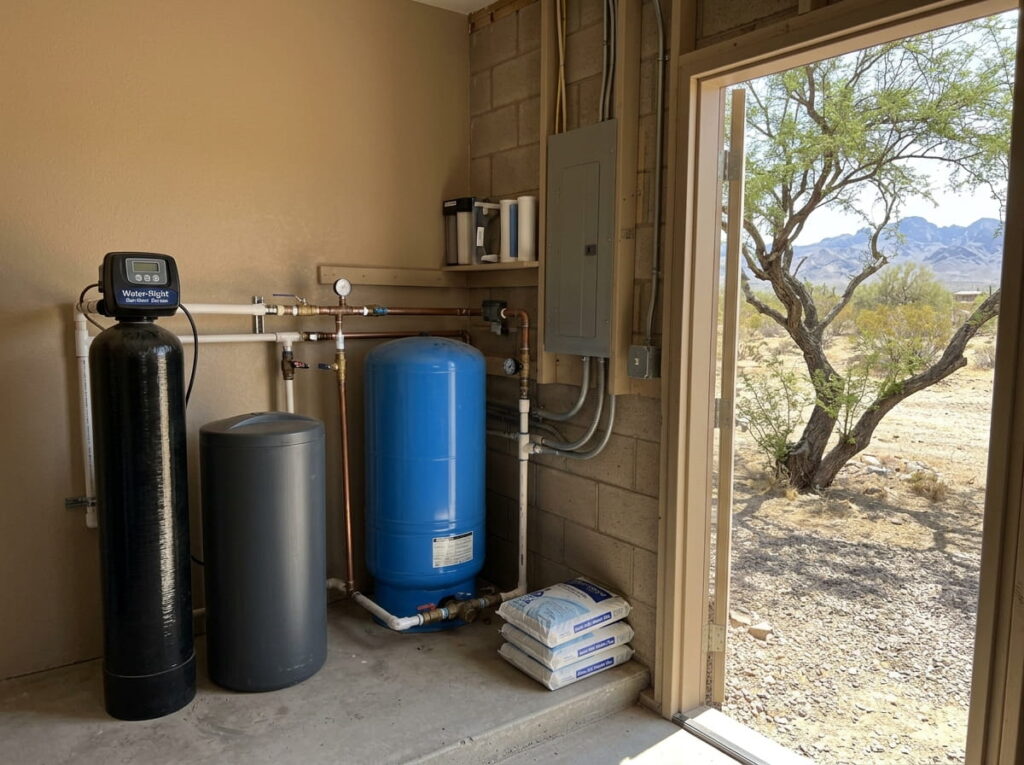
- Whole-house filters
- Sediment filters
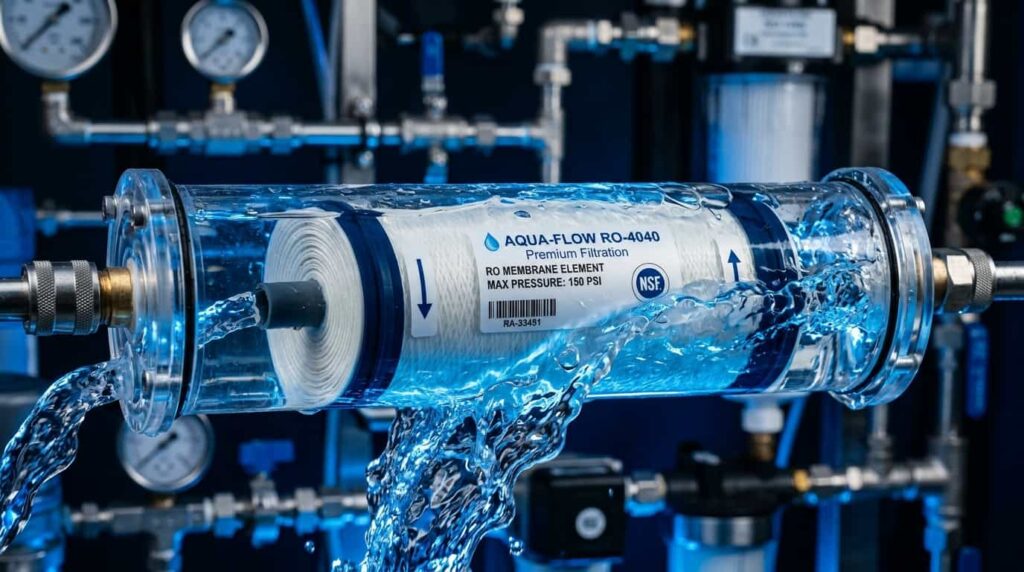
- Reverse osmosis systems
- Carbon filtration
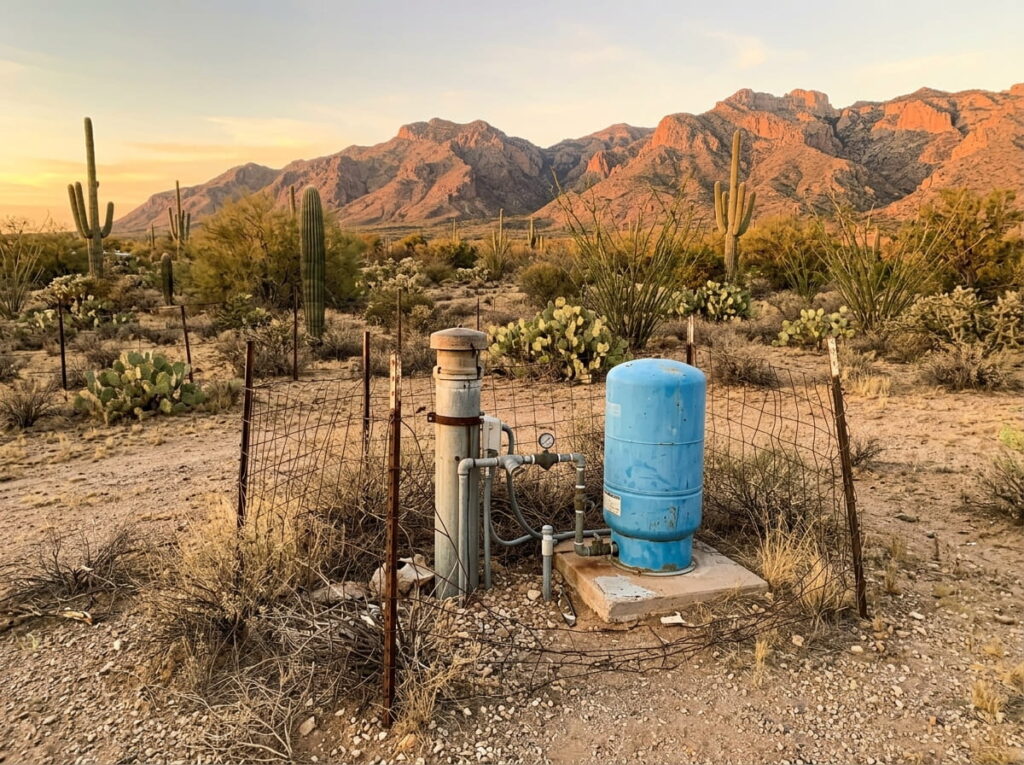
- Well-water treatment systems
The right system depends on the home’s water quality and the homeowner’s goals.
For example, a family dealing with hard water throughout the house may consider a water softener. A homeowner mainly concerned about drinking and cooking water may prefer a reverse osmosis system at the kitchen sink.
What Is a Commercial Water Treatment System?
Commercial water treatment systems are designed for businesses and properties with higher water demand.
Restaurants, hotels, offices, schools, apartment buildings, salons, healthcare facilities, and other businesses may require more treatment capacity than a typical home.
Commercial systems can include:
- High-capacity water softeners
- Commercial filtration systems
- Reverse osmosis systems
- Sediment filtration
- Specialty treatment systems
- Multi-stage filtration
- Customized well-water treatment
The system should be designed around the property’s water consumption and operational requirements.
A business that uses water throughout the day may need equipment capable of handling high flow rates without reducing water availability.
Residential vs. Commercial Water Treatment: Key Differences
The biggest difference between residential and commercial treatment is usually the scale of the application.
| Factor | Residential System | Commercial System |
|---|---|---|
| Property type | Homes and smaller properties | Businesses and larger properties |
| Water demand | Usually lower | Usually higher |
| Equipment size | Smaller | Larger or higher capacity |
| Installation | Often simpler | Can be more complex |
| Treatment needs | Household-focused | Business-specific |
| Maintenance | Usually less frequent | May require more frequent service |
| Flow requirements | Lower | Higher |
| Customization | Moderate | Often extensive |
These are general differences. Some large homes may need higher-capacity systems, while smaller businesses may only require a modest treatment setup.
Why Water Quality Matters in Tucson
Tucson has naturally hard water, which is one of the reasons water treatment is commonly considered by local property owners.
Tucson Water explains that groundwater contains dissolved minerals, especially calcium and magnesium, that contribute to water hardness. Hard water is generally safe to drink, but it can cause scale and mineral deposits around fixtures and appliances.
Hard water can be noticeable in both homes and businesses.
In a home, you may see white spots on dishes or buildup around faucets. In a business, mineral deposits may affect water-using equipment that operates throughout the day.
This is why the property’s water quality should be considered before choosing equipment.
Residential Water Treatment Needs
Residential treatment is usually based on the needs of the household.
A family may want to reduce hard-water problems throughout the home. Another homeowner may be focused on drinking-water quality.
Some common residential treatment goals include:
Hard Water Management
A water softener can be used to manage hardness minerals that contribute to scale.
Drinking Water Treatment
Reverse osmosis is commonly used for drinking and cooking water.
Whole-House Filtration
Whole-house filtration can treat water entering the property and provide filtered water at multiple fixtures.
Well-Water Treatment
Homes supplied by private wells may require customized treatment based on water-testing results.
Commercial Water Treatment Needs
Commercial properties often require a more detailed evaluation.
A restaurant, for example, may use water for food preparation, cleaning, dishwashing, ice production, and other operations. A hotel may have water demand across guest rooms, laundry facilities, kitchens, and other areas.
A commercial water treatment system may therefore need to handle:
- Higher flow rates
- Greater daily water consumption
- Multiple points of use
- Specialized equipment
- Longer operating hours
- More frequent maintenance
The treatment system should be sized according to actual demand.
Installing a system that cannot keep up with a property’s water usage can lead to poor performance and unnecessary service issues.
Water Softening for Homes and Businesses
Water softeners can be useful in both residential and commercial settings when hardness is the main concern.
However, the system size can be very different.
A home might need a smaller softener designed around household water consumption. A commercial facility may require larger tanks, higher capacity, or additional equipment.
Before installation, water hardness and expected water usage should be evaluated.
The goal is to select a system that can handle the property’s needs without unnecessary capacity.
Reverse Osmosis for Residential and Commercial Properties
Reverse osmosis can also be used in both residential and commercial applications.
At home, an under-sink RO system may be sufficient for drinking and cooking water.
Commercial applications can be much larger. Restaurants, cafes, food-service businesses, and other facilities may require higher-capacity RO equipment depending on their operations.
The correct system depends on water quality, required production volume, available space, and intended use.
Professional assessment is especially important for commercial RO systems because the equipment must meet the property’s water demand.
Well Water: Residential and Commercial Considerations
Private well water can be used by both homes and businesses.
However, treatment should begin with water testing. Well-water conditions can vary significantly between properties.
Testing may identify concerns involving:
- Hardness
- Sediment
- Iron
- Sulfur-related odors
- pH
- Bacteria
- Dissolved minerals
After testing, a treatment provider can recommend the appropriate combination of filtration, softening, disinfection, reverse osmosis, or other technologies.
This customized approach is more reliable than selecting equipment without knowing what is in the water.
Real-World Tucson Water Statistics
Tucson Water operates a large municipal water system and publishes detailed water-quality information.
Its 2024 Annual Water Quality Report reported the following:
| Tucson Water System Information | 2024 Figure |
|---|---|
| Households and businesses served | 241,496 |
| Active potable wells | 139 |
| Miles of pipe | 4,650 |
| Water-quality sampling points | 275 |
| Required samples | 12,549 |
| Required tests | 15,310 |
Tucson Water also provides a Water Quality Dashboard that allows residents to review available water-quality information by location and parameter.
These figures demonstrate the scale of the municipal system. However, individual homes and businesses can still have different treatment needs based on plumbing, usage, water source, and treatment goals.
Installation Differences
Residential installations are often more straightforward because the system is designed around a smaller plumbing network.
Commercial installations may require more planning.
The installation may need to account for:
- Larger equipment
- Higher water flow
- Multiple connections
- Drainage requirements
- Electrical requirements
- Available equipment space
- Existing plumbing
- Business operating schedules
A commercial treatment system should be installed with minimal disruption to daily operations.
Professional installation can also help ensure that equipment is properly connected and configured.
Maintenance Requirements
Both residential and commercial systems require maintenance, but commercial equipment may need more frequent attention because of higher usage.
Residential maintenance may include:
- Filter replacement
- Salt or media management
- RO membrane replacement
- Leak checks
- System inspections
Commercial maintenance may involve additional inspections, filter changes, media replacement, and performance checks.
Following the manufacturer’s maintenance schedule can help protect the system and maintain consistent performance.
Cost Differences Between Residential and Commercial Systems
Commercial systems generally cost more because they often require larger equipment and higher treatment capacity.
Residential systems may have lower installation and maintenance costs, especially when the treatment need is limited to drinking water or a specific household concern.
The final price for either type depends on:
- Water quality
- System capacity
- Equipment type
- Installation requirements
- Plumbing modifications
- Maintenance
- Replacement components
- Water usage
Instead of choosing based only on price, compare the system’s expected performance and long-term operating costs.
Dedicated Desert Water Services Section
For Tucson property owners, Desert Water Services provides water treatment solutions for residential, commercial, household, and well-water applications.
The company can help customers evaluate their water concerns and determine which type of treatment system may be appropriate.
For a residential customer, the focus may be hard-water management, whole-house filtration, or reverse osmosis. For a commercial property, the focus may be higher treatment capacity and reliable operation during busy periods.
Well-water customers may require a customized solution based on water testing.
This flexible approach is important because every property does not have the same water-quality concerns or usage requirements.
Desert Water Services can also provide ongoing support so customers understand how to maintain their treatment equipment after installation.
How to Choose Between Residential and Commercial Systems
The decision should begin with the property rather than the equipment.
Ask yourself:
- How much water does the property use?
- What is the main water-quality concern?
- Is the water municipal or from a private well?
- How many fixtures require treated water?
- Does the property have specialized equipment?
- How much maintenance can be handled regularly?
- What are the long-term operating costs?
For homes, a residential system is usually appropriate when the water demand is relatively low.
For businesses, commercial equipment may be necessary when water demand is high or specialized treatment is required.
If you are unsure, a professional water treatment evaluation can help determine the appropriate system size and technology.
When Should You Choose a Customized System?
A customized system may be appropriate when standard equipment does not fully address your needs.
This can happen when:
- The property uses private well water
- Multiple water-quality concerns exist
- Water demand is unusually high
- A business has specialized equipment
- The property has unusual plumbing requirements
- Several treatment technologies are needed
Customized treatment can combine multiple technologies into one coordinated system.
The goal is to solve the actual water problem without adding unnecessary equipment.
Frequently Asked Questions
1. What is the difference between residential and commercial water treatment systems?
Residential systems are designed for homes and lower water demand, while commercial systems are generally built for higher water usage, larger properties, and specialized business requirements.
2. Is commercial water treatment more expensive than residential treatment?
Usually, commercial systems cost more because they may require larger equipment, higher capacity, more complex installation, and additional maintenance.
3. Can the same water softener be used for a home and business?
Not necessarily. The correct softener depends on water hardness, flow rate, daily water usage, and the property’s treatment requirements.
4. What water treatment system is best for a Tucson home?
It depends on the home’s water and treatment goals. Options may include water softeners, whole-house filters, reverse osmosis, or customized well-water treatment.
5. What water treatment does a Tucson business need?
The answer depends on the type of business, water usage, equipment, and water-quality concerns. A professional evaluation can help determine the appropriate system.
6. Does Tucson have hard water?
Yes. Tucson Water states that local groundwater is naturally hard because of dissolved minerals such as calcium and magnesium.
7. Can reverse osmosis be used commercially?
Yes. Commercial RO systems are available for businesses that require higher volumes of treated water, but the system should be sized according to demand.
8. Can well water require different treatment for each property?
Yes. Well-water conditions can vary between properties, so testing is important before selecting treatment equipment.
9. How often do commercial water treatment systems need maintenance?
Maintenance depends on water quality, system design, water usage, and manufacturer recommendations. Higher usage can increase the need for service.
10. Does Desert Water Services provide residential and commercial treatment?
Yes. Desert Water Services serves residential, commercial, household, and well-water treatment needs in Tucson, AZ.
Final Thoughts
Residential and commercial water treatment systems have the same basic goal: to address water-quality concerns with appropriate treatment. However, the equipment and requirements can be very different.
Residential systems are generally designed around household water use, while commercial systems must often handle higher demand, larger properties, and specialized equipment.
Tucson’s naturally hard water makes water treatment an important consideration for many property owners. However, the right solution should always be based on the property’s actual water conditions and treatment goals.
Whether you own a home, operate a business, or use private well water, professional evaluation can help you choose the right equipment.
For Tucson customers, Desert Water Services offers residential, commercial, household, and well-water treatment solutions designed around individual property requirements. Choosing the right system from the beginning can help improve performance, simplify maintenance, and provide better long-term value.