You turn on the tap after a repair crew finishes, and the water runs brown, cloudy, or smells odd. Knowing how to test water after main break Tucson homeowners face can protect your family’s health. A water main break lets sediment, bacteria, and debris enter the pipes, and your home plumbing can carry those contaminants for days.
This guide walks you through what happens during a break, what to do first, which tests matter, and how to flush and sanitize your system. It also explains when a professional test makes sense. Ten FAQs at the end cover the most common questions.
What Happens When a Water Main Breaks
A water main is the large underground pipe that carries water from the Tucson Water system to your street. When it breaks, pressure drops. The loss of pressure lets groundwater, soil, and bacteria seep into the pipe through the crack. Repair crews shut off sections of the line, fix the damage, and flush the pipes, but they cannot always clear every particle from every home connection.
When service returns, a surge of water can stir up old sediment and rust inside the pipes. Your tap may run discolored. The surge can also push air and debris into your plumbing, your water heater, and your fixtures.
Tucson Water issues notices when a break affects water safety. Always follow those official instructions first. Testing your own water adds a second layer of protection, but it never replaces an official notice.
Step One: Follow Official Guidance
Check Tucson Water announcements, local news, and any notice on your door. If officials issue a boil water notice, bring water to a rolling boil for at least one minute before you drink it, cook with it, brush your teeth with it, or make ice. Tucson sits at a modest elevation, so one minute meets the standard.
Use bottled water if you cannot boil. Do not drink water that looks cloudy, brown, or smells unusual, even after the notice ends. Cloudy water signals particles that can shelter bacteria.
Keep official guidance in your phone or on your fridge. Test water after main break Tucson events only after you understand the official status of your area. If you stay unsure, call Tucson Water and ask whether your address sat inside the affected zone.
Signs Your Water Needs Testing
Your senses give early clues, but they do not tell the full story. Many dangerous contaminants have no color, taste, or smell. Still, certain signs should push you to test sooner.
Look for these warning signs after a break:
- Brown, yellow, or cloudy water from the tap
- A strong chlorine, earthy, or sewage smell
- Sediment or grit at the bottom of a glass
- Sudden low pressure that stays low after repairs
- Stomach upset in your household that starts after the break
Any one of these signs justifies a test. Even if your water looks perfect, you may still want a test if you have infants, older adults, pregnant family members, or anyone with a weak immune system at home.
What to Test After a Main Break
A good post-break test checks several measures. Each one tells you something different about your water.
Total coliform and E. coli bacteria. This test is the most important after a break. Coliform bacteria signal that contamination entered the system. A positive E. coli result means fecal contamination and a real health risk.
Turbidity. Turbidity measures cloudiness. High turbidity means particles in the water, and those particles can shield bacteria from disinfectant.
Free chlorine residual. Tucson Water adds disinfectant to protect the pipes. A residual near zero after a break may mean the protection failed.
pH and metals. Disturbed pipes can release iron, lead, or copper. Testing for these metals matters if your home has older plumbing.
A full panel from a certified lab gives the most reliable result. Home test strips offer a quick look at chlorine and pH, but they cannot confirm bacteria.
Home Test Kits Versus Professional Testing
Home test kits cost little and give fast answers. They work well for basic checks such as pH, hardness, and chlorine. Some kits claim to detect bacteria, but results vary and false negatives happen.
Professional testing uses certified lab methods. A technician collects your sample using sterile bottles and proper technique, because a dirty bottle or a touched cap can ruin a bacteria test. The lab then reports exact numbers and compares them with safe limits.
Many households test water after main break Tucson repairs finish, and those who want certainty choose the lab route. Our team offers a post-break water test for Tucson homes and businesses. We visit, collect samples at the right points, and explain each result in plain language. Learn more on our water testing in Tucson page. If you want certainty after a break, professional testing gives you the clearest answer.
How to Collect a Water Sample Correctly
Poor sampling gives poor answers, so follow these steps if you collect your own sample for a lab.
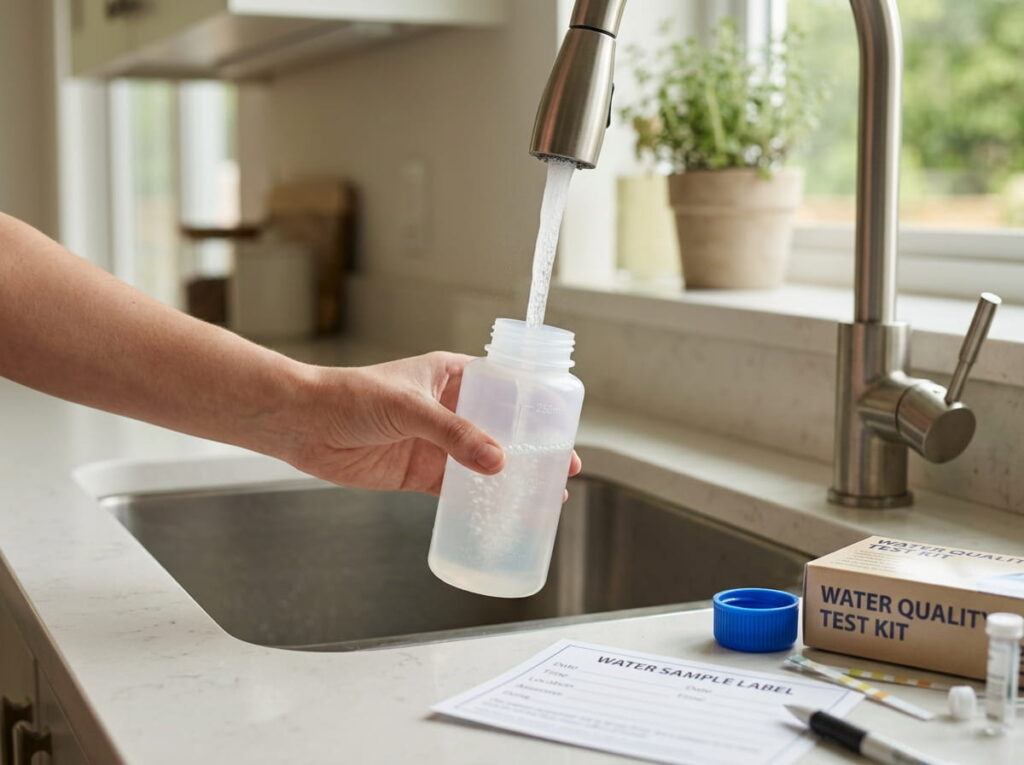
Pick a cold water tap that you use for drinking, such as your kitchen faucet. Remove any aerator or filter from the tip. Wash your hands with soap and dry them well.
Run the cold water for two to three minutes to clear the line. Fill the sterile bottle the lab provides, and leave a small air gap at the top. Do not touch the inside of the bottle or the cap.
Seal the bottle, label it with the time and address, and keep it cool. Deliver it to the lab within the window they give you, usually 24 hours for bacteria. Bacteria samples that sit too long give unreliable results.
What to Do While You Wait for Results
Lab results usually take one to three days. Use bottled or boiled water for drinking, cooking, and brushing teeth during that time. Keep a cold pitcher of safe water in the fridge so nobody reaches for the tap out of habit. Skip the ice maker and any drink that uses tap water.
You only need to test water after main break Tucson crews repair once, but retest if symptoms appear or the water changes color again. Keep your lab report. It documents the date, the results, and the steps you took, which helps if you need to answer questions from a landlord, an insurer, or a health inspector.
How to Flush and Sanitize Your Plumbing
Once service returns and any official notice ends, flush your home system. Flushing clears sediment, air, and stagnant water from your pipes.
Start with the cold water taps. Open the tap nearest your main line first, and run it until the water clears. Work through the house, including bathtubs and outdoor spigots. Run each tap for several minutes.
Flush your hot water heater next. Drain a few gallons from the tank to remove sediment, and refill it. Replace refrigerator and ice maker filters, because they trap particles and bacteria during a break. Run the ice maker through a few cycles and discard the ice.
Clean faucet aerators and showerheads. Debris collects there and can release contaminants later. Run your dishwasher and washing machine empty once before normal use.
When to Call a Professional
You can handle minor discoloration with flushing and a filter change. Some situations need expert help.
Call a professional if your water stays cloudy after thorough flushing, if a bacteria test comes back positive, or if your household has symptoms of waterborne illness. Call us too if you rely on a private well, since a nearby main break can affect more than the municipal system.
Businesses face higher stakes. Restaurants, daycare centers, and clinics must protect customers and meet health codes. A fast, documented test shows you acted responsibly, and it supports your records if questions arise.
Protect Your Home With a Post-Break Water Test
Test water after main break Tucson events cause, and you replace worry with facts. Our team arrives quickly, tests the measures that matter, and explains the next step. Book your Post-Break Water Test today and drink with confidence.
Frequently Asked Questions: Test Water After a Main Break in Tucson
1. Should I test my water after a water main break in Tucson?
Yes, especially if your water looks cloudy, smells odd, or your household includes infants, older adults, or people with weak immune systems. Testing confirms whether bacteria or sediment entered your plumbing.
2. How soon after a main break should I test my water?
Wait until service returns and you flush your lines. Then test within a day or two. Bacteria samples need quick delivery to the lab, so plan your timing.
3. Is it safe to drink Tucson tap water right after a main break?
Follow Tucson Water notices. If officials issue a boil water notice, boil water for at least one minute before drinking. Avoid cloudy or odd-smelling water even without a notice.
4. What contaminants can enter water during a main break?
Soil, sediment, bacteria such as coliform and E. coli, and rust or metals from disturbed pipes can enter the system. Pressure loss lets outside material seep into the line.
5. Can I use home test strips after a main break?
Strips check chlorine, pH, and hardness quickly, but they cannot confirm bacteria. Use a certified lab test if you need proof that the water is safe to drink.
6. How do I flush my pipes after a main break?
Run each cold water tap until the water runs clear, starting with the tap nearest your main line. Flush the water heater, replace appliance filters, and clean aerators and showerheads.
7. Why is my water brown after a water main repair?
Repairs disturb sediment and rust inside the pipes. A surge of water stirs it into the flow. Brown water often clears after flushing, but persistent discoloration needs a test.
8. How much does a post-break water test cost in Tucson?
Price depends on the test panel you choose. A bacteria and turbidity check costs less than a full panel with metals. We give a clear quote before we visit.
9. Do I need to replace my fridge filter after a main break?
Yes. Refrigerator and ice maker filters trap particles and bacteria during a break. Replace them, run several cycles, and discard the first batch of ice.
10. What if my water test shows bacteria?
Stop drinking the water, boil or use bottled water, and contact a professional. We help you sanitize your plumbing, retest, and confirm that your water meets safe limits.