Water softener installation Tucson pros hear the same story every April. The patio misters sputter, drip, or quit right when the heat arrives. In most cases, hard water did the damage months earlier. Hard water outdoor misters in Tucson face a tough job, because every drop that turns into fog leaves its minerals on the nozzle. This guide explains how hard water hurts outdoor misters in Tucson, what it does to pumps and evaporative coolers, and which treatment actually stops it.
Quick answer: Hard water outdoor misters in Tucson clog because the water evaporates and the calcium and magnesium stay on the nozzle as white scale. Over one summer, that scale can narrow or block the tiny nozzle opening. White vinegar removes light scale. A water softener protects lines and pumps, and a reverse osmosis feed removes most dissolved minerals so nozzles stay clear much longer.
Why Tucson Water Is Hard in the First Place
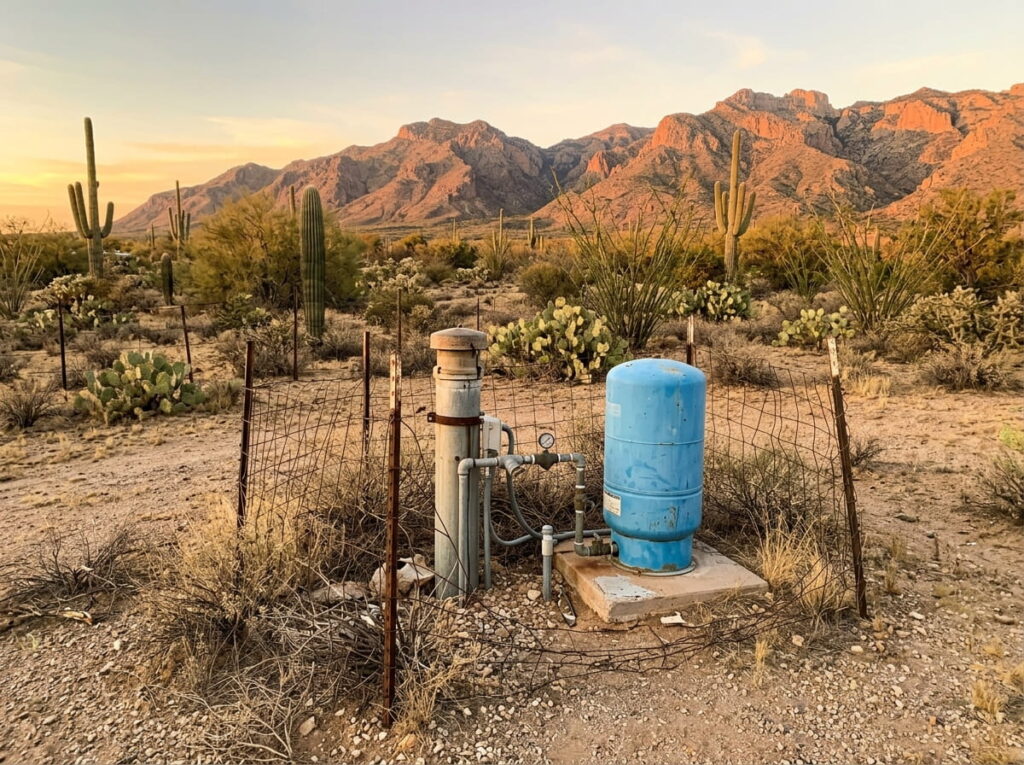
Tucson Water pulls its supply from local aquifers and from Colorado River water. The utility says the blend tends to be hard, and it confirms that hard water poses no health risk. The mix changes across the service area, so hardness on the east side may not match the northwest side. Many private wells around Pima County run even harder, since groundwater spends years in contact with mineral rich sediment. That local chemistry explains why hard water outdoor misters in Tucson need more care than misters in many other cities.
You can read the utility’s own guidance on the Tucson Water hard water page. For your exact number, a hardness test at your outdoor spigot beats any citywide average.
The Water Quality Association scale reads hardness like this. One grain per gallon equals 17.1 milligrams per liter.
| Hardness Level | Grains per Gallon (gpg) | Milligrams per Liter (mg/L) |
|---|---|---|
| Soft | Less than 1 | Less than 17.1 |
| Slightly hard | 1 to 3.5 | 17.1 to 60 |
| Moderately hard | 3.5 to 7 | 60 to 120 |
| Hard | 7 to 10.5 | 120 to 180 |
| Very hard | Over 10.5 | Over 180 |
How Hard Water Damages Outdoor Misters in Tucson
A misting system cools the air through evaporation. Water leaves the nozzle as tiny droplets, the dry air absorbs them, and your patio cools down. That process works well in Tucson because humidity stays low for much of the year. The problem is chemistry. Water evaporates, but calcium and magnesium do not. With hard water, outdoor misters in Tucson keep every grain of that mineral load right at the nozzle tip.
Heat speeds up the reaction. Sun baked lines push calcium carbonate out of solution, so hard water outdoor misters in Tucson gain scale even on short afternoon runs.
Clogged Nozzles From Hard Water
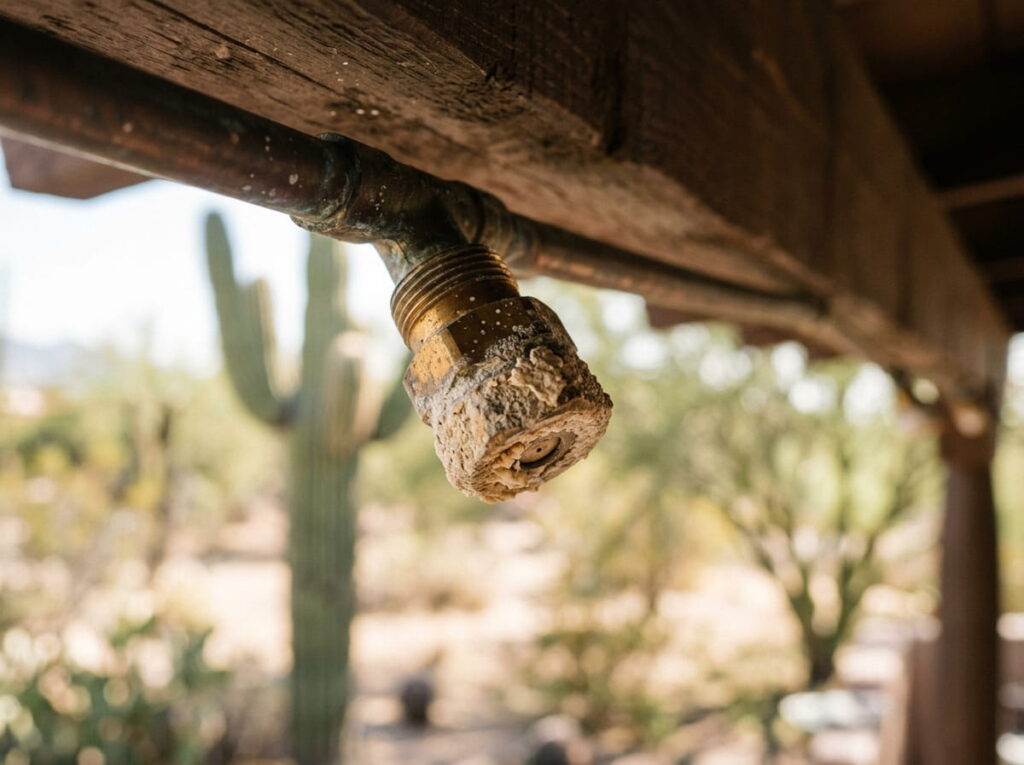
Mister nozzles have very small openings. Scale forms a ring around the opening and slowly shrinks it. First you notice uneven spray. Then a few nozzles drip. Finally, several stop completely, and the rest push out heavy droplets that soak your furniture. This pattern shows up on hard water outdoor misters across Tucson every summer.
Scaled Lines, Fittings, and Check Valves
Many nozzles include a small anti drip check valve. Scale keeps that valve from sealing, so water dribbles out after shutoff. Mineral crust also builds inside tubing and fittings, which lowers pressure along the line. Low pressure means poor atomization, and poor atomization means less cooling. Owners of hard water outdoor misters in Tucson often blame the timer or the pump first, when the real cause sits inside the fittings.
High Pressure Pump Wear
High pressure misting systems use a pump to force water through the nozzles. Scale inside the pump head, valves, and fittings makes the pump work harder. Hard water outdoor misters in Tucson often lose the pump before the tubing, because the pump has the tightest tolerances in the system.
White Spots on Everything Nearby
Overspray dries on glass doors, patio tables, stucco, and plant leaves. Each droplet leaves a chalky mark. Over a season, those marks turn into a film that rinsing will not remove, since rinsing with the same hard water adds more minerals. This film tells you that your hard water outdoor misters in Tucson need treated water, not just a cleaning.
What Hard Water Does to Evaporative Coolers
Evaporative coolers, often called swamp coolers, face the same problem on a larger scale. A pump pulls water from a reservoir and soaks the pads. Air passes through the wet pads, the water evaporates, and cool air flows inside. The minerals stay behind.
Here is what hard water does inside a cooler:
- Crusty pads. Scale hardens the pad material, blocks airflow, and cuts cooling.
- Reservoir buildup. A white crust forms on the pan floor and walls.
- Sticky float valve. Scale keeps the float from moving freely, which can cause overflow or a dry pan.
- Clogged pump and distribution lines. Mineral flakes break loose and block the holes that spread water across the pads.
Most coolers include a bleed off line that dumps a small stream of water to dilute minerals. That helps, but it also wastes water. Better water going in means less scale and less bleed off.
Signs of Hard Water Damage in Tucson Outdoor Misters
Watch for these warning signs before the summer peak:
- White or gray crust around the nozzle openings.
- Uneven fog, with some nozzles misting and others dripping.
- Water dribbling from nozzles after shutoff.
- Wet patio furniture and floors under the mist line.
- A pump that runs louder, cycles more, or shuts off on its own.
- Chalky spots on windows, glass tables, and plant leaves.
If you see two or more of these, your hard water outdoor misters in Tucson need cleaning now and better water going forward.
How to Clean Hard Water Scale From Tucson Outdoor Misters
Light scale comes off with a vinegar soak. White vinegar contains acetic acid, which dissolves calcium carbonate.
- Turn off the water and release pressure in the line.
- Unscrew each nozzle by hand or with a small wrench.
- Soak the nozzles in white vinegar for several hours or overnight.
- Flush the empty line with clean water to push out loose flakes.
- Rinse the nozzles and check each opening against the light.
- Reinstall the nozzles and test the spray.
Never push a pin or wire through a nozzle opening. A pin can scratch or widen the orifice, and a damaged nozzle will drip forever. Replace any nozzle that still sprays unevenly after a soak. Cleaning helps hard water outdoor misters in Tucson for a few weeks, but the scale returns as long as the same water feeds the line.
Treatment Options for Hard Water Outdoor Misters in Tucson
Cleaning fixes the symptom. Treating the water fixes the cause. Each option below solves a different part of the problem.
| Option | What It Does | Limits | Best For |
|---|---|---|---|
| Vinegar cleaning | Dissolves existing scale | Does not stop new scale | Routine maintenance |
| Inline sediment filter | Catches sand, rust, and loose flakes | Cannot remove dissolved calcium or magnesium | Protecting nozzles from debris |
| Water softener | Swaps hardness minerals for sodium or potassium, which stops hard scale in lines, pumps, and fixtures | Does not lower total dissolved solids | Whole home and mister line protection |
| Reverse osmosis (RO) | Removes most dissolved minerals before the water reaches the nozzles | Needs proper sizing, a storage tank, and often a booster | Spot free misting and long nozzle life |
The Honest Truth About Softened Water and Misters
A softener removes calcium and magnesium through ion exchange and replaces them with sodium or potassium. Sodium salts dissolve easily, so they do not form the rock like crust that calcium carbonate leaves. That protects your pump, lines, and check valves. However, softened water still carries dissolved solids, and it can leave a light white residue when it evaporates. The residue wipes off far more easily than calcium scale, but it does not disappear.
Why Reverse Osmosis Gives the Cleanest Mist
Reverse osmosis pushes water through a membrane that holds back most dissolved minerals. Water with very few dissolved solids evaporates almost cleanly, so nozzles stay open and glass stays clear. That explains why many commercial misting installers pair their systems with RO. A misting line needs steady volume, so an RO setup for hard water outdoor misters in Tucson needs proper sizing and often a softener in front to protect the membrane.
Why a Whole House Softener Makes Sense Beyond the Patio
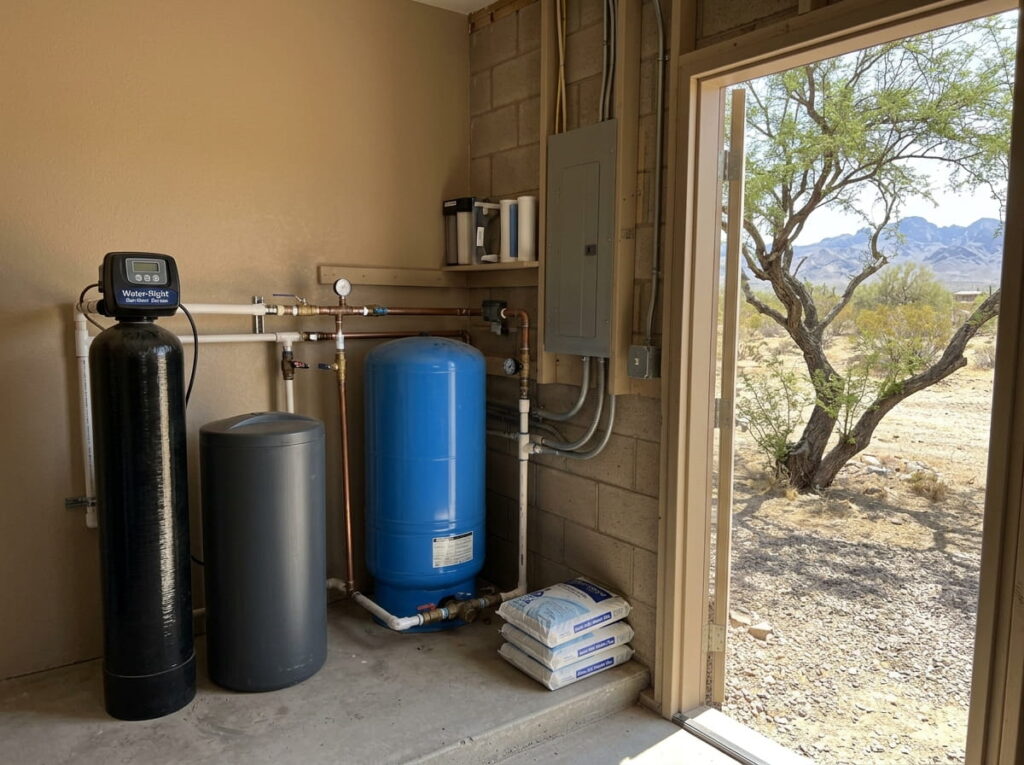
The same hard water that clogs your misters also coats your water heater, faucets, shower glass, and dishwasher. A properly sized softener protects all of them at once. Our team handles water softener installation in Tucson for homes on city water and on private wells, and we size each system to your hardness test, household size, and daily use.
If you are weighing the cost of treating all the water in your home against buying drinking water by the jug, read our breakdown of whole house water treatment vs. bottled water delivery costs in Tucson.
When to Call a Professional
Call a water treatment specialist when cleaning no longer keeps the nozzles clear for more than a few weeks, when your misting pump starts failing, or when you see scale on indoor fixtures too. Desert Water Services has installed and serviced water treatment systems in Tucson and surrounding communities since 1998. We start every job with a complete water analysis, so you pay only for the equipment your water needs.
Ready for a Mister Water Solution? Call Desert Water Services at (520) 327-8426 or book a free consultation. We will test your water, check your setup, and recommend the simplest fix for hard water outdoor misters at your Tucson home.
Frequently Asked Questions
1. Why do hard water outdoor misters in Tucson clog so fast?
Tucson water is naturally hard. When a mister sprays fog, the water evaporates and leaves calcium and magnesium on the nozzle. Hard water outdoor misters in Tucson can lose spray quality within one summer without treatment or regular cleaning.
2. Is Tucson tap water safe even though it is hard?
Yes. Tucson Water states that its water meets all federal, state, and local drinking water rules, and that hardness carries no health risk. Hardness mainly affects taste, fixtures, and equipment.
3. How often should I clean hard water outdoor misters in Tucson?
Check nozzles every few weeks during heavy use. With untreated hard water, many owners of outdoor misters in Tucson soak the nozzles in vinegar once or twice per season. Treated water stretches that interval a lot.
4. Does a water softener stop mister nozzles from clogging?
A softener stops the hard calcium scale that blocks lines, pumps, and check valves. Softened water can still leave a light, easy to wipe residue on the nozzle, because it still contains dissolved solids.
5. What water works best for misting systems?
Reverse osmosis water works best for misting because it contains very few dissolved minerals. Many installers combine a softener with an RO system sized for the misting pump.
6. Can hard water damage the pump on outdoor misters in Tucson?
Yes. On hard water outdoor misters in Tucson, scale builds inside the pump head, valves, and fittings. The pump works harder and wears out sooner, and high pressure pumps feel this first.
7. Will an inline filter fix hard water in my misters?
No. A sediment filter catches sand and loose particles. It cannot remove dissolved calcium or magnesium, so it will not stop scale on hard water outdoor misters in Tucson.
8. Does hard water hurt evaporative coolers too?
Yes. Minerals build up in the cooler pads, reservoir, float valve, and pump. Crusty pads block airflow and reduce cooling. The bleed off line helps, but treated water reduces the problem at the source.
9. How do I know how hard my water is in Tucson?
Use a hardness test kit at your outdoor spigot or ask a water treatment company for a full analysis. Tucson Water also publishes an annual water quality report and a neighborhood water quality dashboard.
10. Who fixes hard water problems for outdoor misters in Tucson?
Desert Water Services installs water softeners, reverse osmosis systems, and well water treatment for hard water outdoor misters and homes in Tucson and nearby rural areas. Call (520) 327-8426 for a free consultation.