Cloudy water faucet Tucson complaints are among the most common calls water professionals get, and the good news is that most cases have a harmless explanation. Still, cloudy water can sometimes point to mineral problems, sediment, or an issue with your plumbing or treatment equipment. Knowing the difference helps you decide whether to relax or pick up the phone.
This guide walks through what causes cloudy tap water, how to test it with nothing more than a glass, and when water testing in Tucson is worth scheduling.
The Simple Glass Test
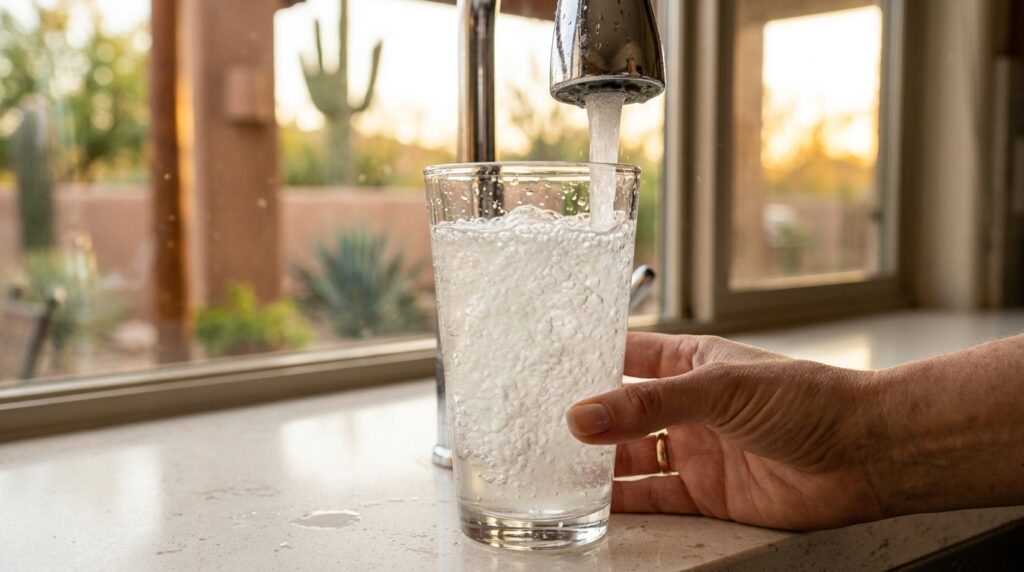
Before you worry, try this. Fill a clear glass with the cloudy water and set it on the counter. Watch it for a minute or two.
If the water clears from the bottom of the glass upward, you’re looking at tiny air bubbles. This is the most common cause of a cloudy water faucet in Tucson homes, and it’s harmless.
If the cloudiness stays, settles to the bottom as a layer, or leaves a film when it dries, something else is going on. That’s when you should look deeper.
Common Causes of Cloudy Water in Tucson
Trapped Air
Water in city pipes is under pressure, and pressurized water can hold more dissolved air. When it leaves your faucet, the pressure drops and the air comes out as millions of tiny bubbles. Cold water holds more air than warm water, so you may notice this more in winter.
Air also gets into lines after plumbing repairs, water main work in your neighborhood, or a service shutoff. It usually clears on its own after running the tap for a bit.
Hot Water Heater Issues
If only the hot water looks cloudy, the water heater may be the source. Heat releases dissolved air, and mineral sediment builds up at the bottom of tanks in hard water areas. Flushing the tank can help. If sediment keeps coming back, it’s a sign your water isn’t being treated for hardness.
Dissolved Minerals
Tucson’s water has a high level of dissolved solids. That’s natural, and it’s partly due to Colorado River water delivered through the Central Arizona Project. These minerals usually don’t make water look cloudy, but they can leave white spots and film when water dries. If your glass test leaves a white residue, hardness is the likely culprit.
Sediment and Particles
Sand, rust, or fine particles can make water look hazy or leave visible specks. This can come from aging pipes, disturbed sediment after main breaks, or a private well. A sediment filter often solves it.
Treatment Equipment Problems
Sometimes the cause is inside your home. A damaged softener can release resin beads, which look like small yellow or amber specks. A clogged or failing filter can let particles pass through. If the cloudiness started soon after a system was installed or serviced, mention that when you call.
Hot Water vs. Cold Water: Narrowing It Down
A quick way to find the source is to test the hot and cold taps separately.
If cold water is cloudy but clears quickly, it’s almost always air. If only hot water is cloudy, look at the water heater. If both hot and cold are cloudy and don’t clear, the issue may be with your supply line, your treatment equipment, or the water itself.
This step alone often tells a technician a lot before any water testing in Tucson begins.
Is Cloudy Water Safe to Drink?
If the cloudiness is from air bubbles, the water is generally fine. Tucson Water states that its hard water is safe to drink, and hardness alone is not a health concern.
However, cloudiness that doesn’t clear, comes with an odd smell, a strange taste, or color should not be ignored. In those cases, stop drinking it until you know more, and get the water tested. It’s always better to confirm than to guess.
When to Get Your Water Tested
A cloudy water faucet in your Tucson home becomes a testing issue when:
The glass test doesn’t clear. The problem lasts more than a day or two. You notice smells, off tastes, or colors. White film and scale keep showing up on fixtures. You have a private well. Someone in the home has a weakened immune system. You recently moved into an older home.
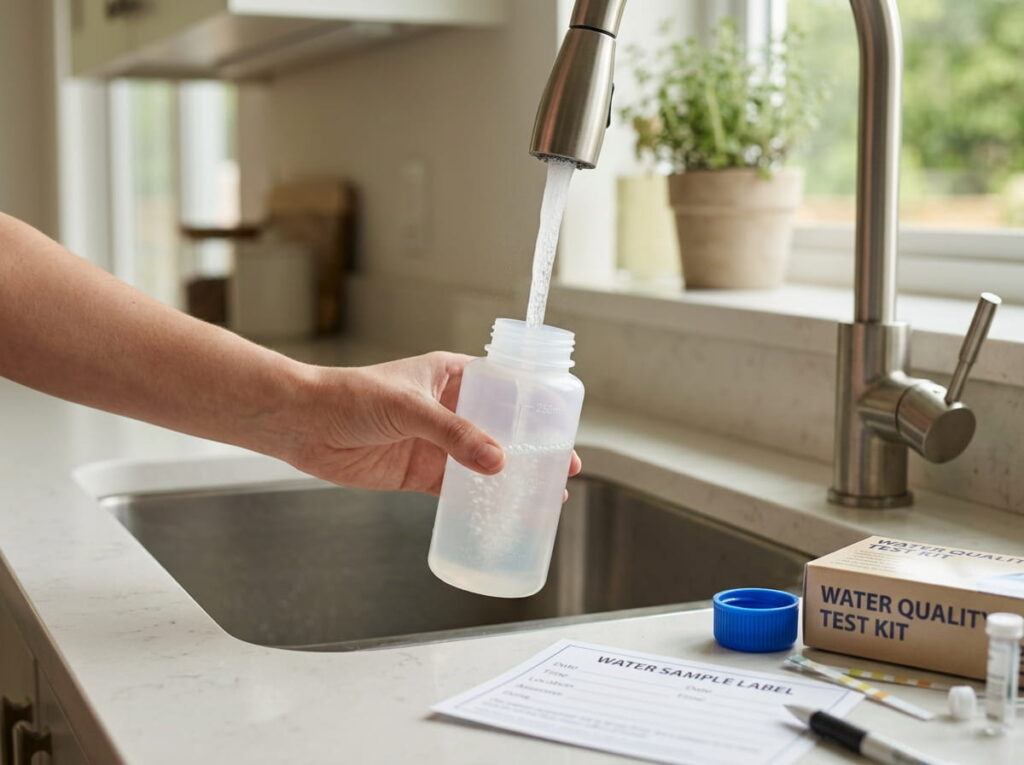
Professional water testing in Tucson measures hardness, total dissolved solids, chlorine, pH, and other factors. The results tell you whether you need a softener, a filter, a reverse osmosis system, or nothing at all.
How to Fix Cloudy Water for Good
The right fix depends on the cause.
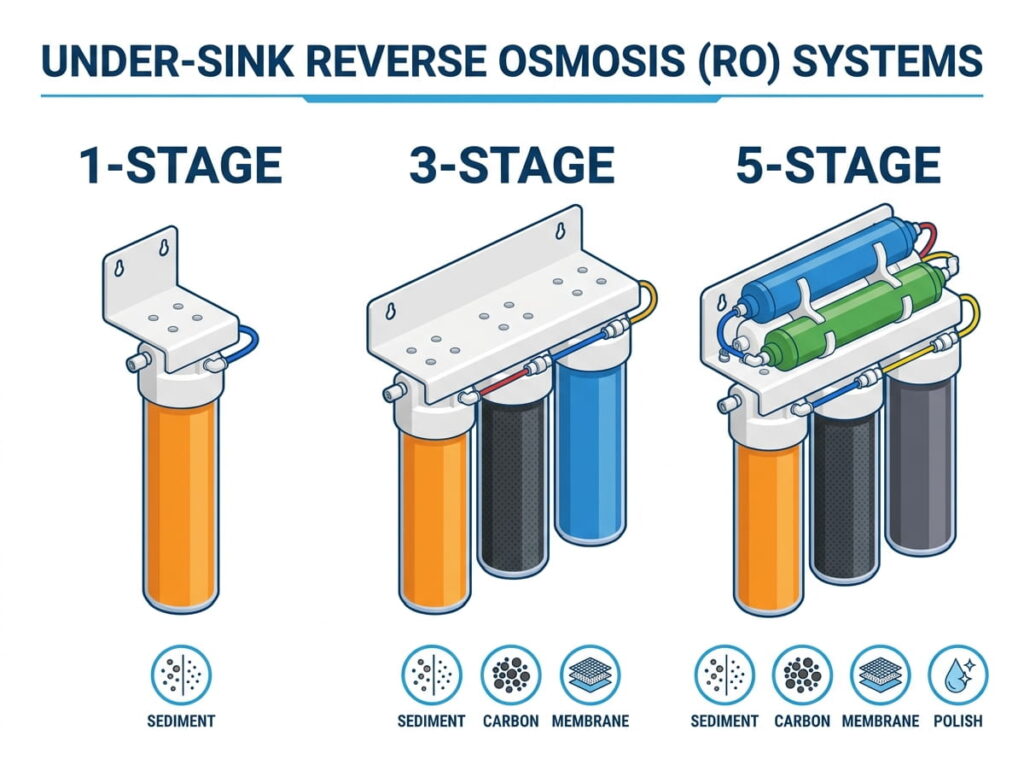
For air, running the tap usually clears it, and there’s nothing to fix. For water heater sediment, flush the tank and consider a softener to prevent buildup. For hardness and mineral film, a water softener treats the whole home. For particles, a sediment filter at the main line helps. For taste and dissolved solids at the drinking tap, a reverse osmosis system is a common choice.
The important point is to match the solution to the problem. Buying equipment without testing first can mean paying for something you don’t need.
What Your Local Water Report Tells You
Tucson Water publishes an annual water quality report. It lists what the utility tests for and the average levels across its system. It’s worth reading, but keep in mind that it shows system averages. Your home’s water can differ based on location, plumbing age, and whether you have any treatment installed. A home test fills in that gap.
Want answers instead of guesses? Get Water Tested and find out exactly what’s behind the cloudy water coming from your faucet.
Frequently Asked Questions
1. Why is my tap water cloudy in Tucson?
The most common cause is tiny air bubbles, which clear on their own within a minute or two. Other causes include water heater sediment, dissolved minerals, and loose particles.
2. Is cloudy water safe to drink?
Cloudy water caused by air is generally safe. If the cloudiness doesn’t clear or comes with a smell, taste, or color, stop drinking it and get it tested.
3. How do I know if it’s air bubbles?
Fill a clear glass and watch it. If it clears from the bottom up, it’s air.
4. Why is only my hot water cloudy?
Heat releases dissolved air, and water heaters collect mineral sediment in hard water areas. Flushing the tank often helps.
5. Can hard water make water look cloudy?
Hard water usually looks clear, but it leaves white spots and film when it dries. In some cases minerals can contribute to a hazy look, especially in hot water.
6. Why does my water get cloudy after plumbing work?
Air gets trapped in the lines during repairs or main work. Running the taps for a few minutes usually clears it.
7. Can a water softener cause cloudy water?
A properly working softener shouldn’t. If you see small amber beads or new cloudiness after installation, the system may need inspection.
8. How much does water testing cost in Tucson?
Costs depend on how many things are tested. Basic tests are often low cost or included with a consultation, while lab panels cost more. Ask for a quote before testing.
9. Does Tucson Water test the water supply?
Yes. The utility tests regularly and publishes an annual water quality report. Home testing adds detail specific to your property.
10. Will a filter fix cloudy water?
It depends on the cause. A sediment filter helps with particles, but it won’t change air bubbles. Testing tells you which solution fits.