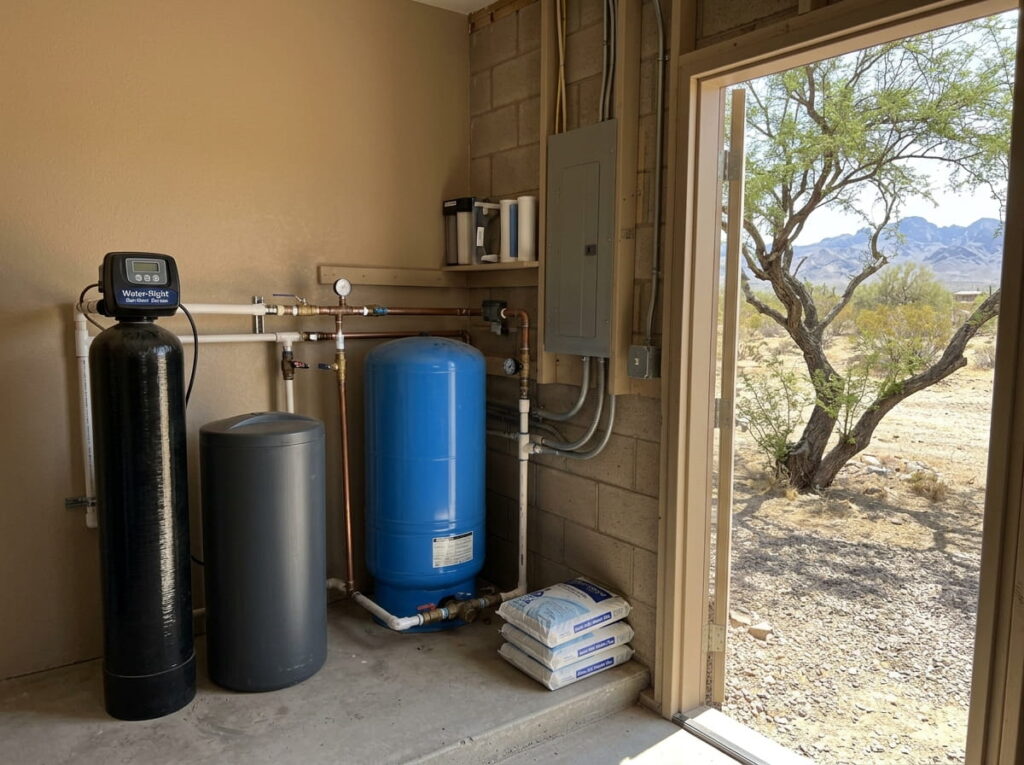
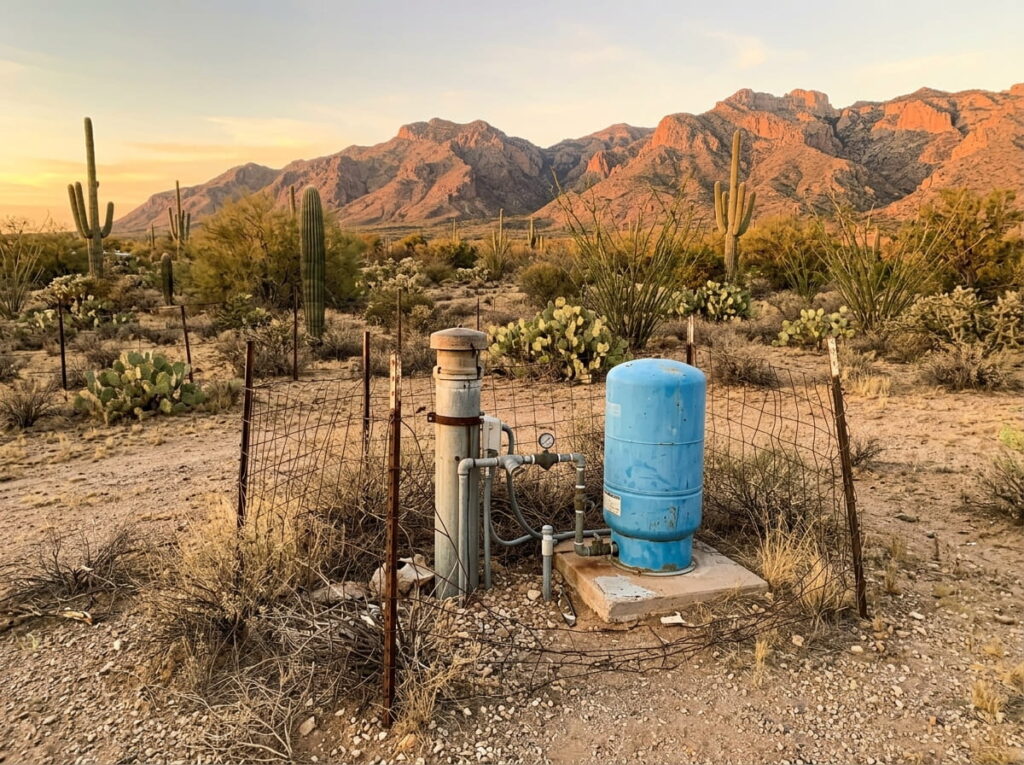
Tucson homeowners who rely on private wells can face water-quality problems that differ from those on the city’s municipal water supply. Iron and manganese are two common minerals that can affect well water. They may leave stains, create unpleasant tastes or odors, and cause deposits around sinks, toilets, tubs, and appliances. The right Iron & Manganese Removal Systems can help address these problems and improve water quality throughout your home.
Well water conditions can vary significantly from one property to another. One Tucson-area well may have elevated iron, while another may have manganese, hardness, sediment, low pH, or several issues at the same time. Because of that variation, homeowners should test their water before purchasing treatment equipment.
Desert Water Services helps Tucson homeowners evaluate their water conditions and choose treatment solutions based on actual test results. A properly selected system can provide better results than a one-size-fits-all filter.
Why Tucson Well Water Can Contain Iron and Manganese
Groundwater naturally moves through soil and rock before it reaches a private well. During that process, the water can dissolve minerals from the surrounding geological formations. Iron and manganese can enter groundwater in dissolved forms and later create visible problems after the water reaches the home’s plumbing.
Iron commonly causes orange, red, or brown staining. You may notice these stains inside toilets, sinks, bathtubs, and laundry. Some homes also experience a metallic taste or odor.
Manganese can create dark or black staining and may affect the taste of water at higher concentrations. It can also combine with other minerals and create deposits in plumbing.
Hardness can make the situation more complicated. Calcium and magnesium can create scale, while iron and manganese can create staining. A single well may contain several of these minerals.
That is why professional testing should come before choosing Iron & Manganese Removal Systems for a Tucson property.
How Iron and Manganese Affect a Tucson Home
Iron and manganese can create more than an appearance problem. Over time, mineral deposits can affect fixtures, plumbing components, water heaters, washing machines, and other equipment that uses water.
Iron can stain white clothing and make laundry difficult to clean. It can also leave reddish deposits around fixtures.
Manganese may produce dark staining. Some homeowners also notice an unpleasant taste or odor.
| Water Problem | Common Household Effect |
|---|---|
| Iron | Orange, red, or brown staining |
| Manganese | Dark or black staining |
| Hardness | White scale and mineral buildup |
| Sediment | Cloudy water and clogged filters |
| Low pH | Potential plumbing corrosion |
| Hydrogen sulfide | Rotten-egg odor |
These problems do not always occur independently. A well may have iron and manganese along with hardness, sediment, or sulfur.
A water test helps identify the complete problem instead of treating only one symptom.
How Iron & Manganese Removal Systems Work
Different treatment systems remove iron and manganese in different ways. Some systems oxidize dissolved minerals and then filter them from the water. Others use specialized catalytic or adsorption media.
The treatment method depends on the form and concentration of the minerals.
Dissolved ferrous iron behaves differently from oxidized ferric iron. Manganese can also require different treatment conditions. Water pH plays an important role in treatment performance.
Some systems use air injection or oxidation. Others use chemical oxidation. Certain media can remove iron and manganese while also addressing hardness or other water-quality concerns.
For this reason, homeowners should avoid choosing a system based only on the words “iron filter” on the product label.
A professional should consider the water chemistry, flow rate, household demand, pH, hardness, iron concentration, manganese concentration, and other relevant measurements.
Best Types of Iron & Manganese Removal Systems
Tucson well owners have several treatment options. The best option depends on the test results.
Air Injection Oxidation Systems
Air injection systems introduce air into the treatment process. The oxygen helps oxidize certain dissolved iron and manganese compounds. The system then filters the oxidized particles.
These systems can work well for certain private wells and may reduce the need for continuous chemical injection.
However, performance depends on water chemistry and system sizing.
Catalytic Media Filters
Catalytic media can help oxidize and filter iron and manganese. These systems often provide a practical whole-house approach when the water contains measurable concentrations of these minerals.
The media type matters. Different products have different operating ranges and treatment capabilities.
Chemical Oxidation Systems
Some wells require stronger oxidation. Treatment may use chlorine or another approved oxidizing method before filtration.
Chemical oxidation can handle certain difficult water conditions, but it adds maintenance requirements. Homeowners must monitor chemical levels and maintain the equipment correctly.
Multi-Function Treatment Systems
Some systems combine several treatment processes in one unit. These systems can address combinations of hardness, iron, manganese, pH, and other water-quality concerns.
They can work well when a Tucson well has several problems at once.
The key is proper sizing and programming.
How to Choose the Right System for Tucson Well Water
The best Iron & Manganese Removal Systems start with water testing.
Before purchasing equipment, homeowners should know the concentration of iron and manganese in their well water. They should also test other important characteristics.
Consider testing for:
- Iron
- Manganese
- Hardness
- pH
- TDS
- Hydrogen sulfide
- Sulfur
- Sediment
- Arsenic
- Nitrates
- Bacteria
- Other contaminants relevant to the property
The test results help determine the treatment method.
For example, a home with low iron and moderate manganese may need a different system from a property with high iron, manganese, sulfur, and hardness.
Household water usage also matters. A system must provide enough flow for showers, toilets, washing machines, dishwashers, and other fixtures operating at the same time.
Why pH Matters for Iron and Manganese Removal
pH can strongly influence iron and manganese treatment.
Many oxidation and filtration processes perform differently at different pH levels. A system that works well at one pH may perform poorly when the water chemistry changes.
For example, iron oxidation can become easier under certain conditions, while manganese often requires more careful treatment.
That means homeowners should not look only at iron and manganese numbers.
A professional water analysis should consider the entire chemistry of the well.
If the water has low pH, the homeowner may also need pH correction before or as part of the treatment process.
Iron & Manganese Treatment vs. Water Softening
A water softener and an iron-removal system do not always perform the same job.
Water softeners primarily target hardness minerals such as calcium and magnesium. Some softeners can handle limited amounts of iron, but they may not provide the right solution for higher iron or manganese concentrations.
Iron and manganese treatment systems use different processes designed specifically for those minerals.
A Tucson homeowner with hard well water and iron may need both types of treatment, depending on the test results.
| Treatment | Main Purpose |
|---|---|
| Water softener | Calcium and magnesium hardness |
| Iron filter | Iron removal |
| Manganese filter | Manganese removal |
| Oxidation system | Converts certain dissolved minerals for filtration |
| Sediment filter | Removes suspended particles |
| Reverse osmosis | Point-of-use reduction of many dissolved contaminants |
Choosing the correct combination can prevent unnecessary equipment and reduce long-term maintenance costs.
Why Professional Installation Matters in Tucson
A well-water treatment system needs more than a good filter. Correct installation can determine whether the equipment performs as expected.
The installer should evaluate water pressure, well-pump capacity, pipe size, drain access, household flow requirements, and available installation space.
The system also needs correct programming.
If the equipment regenerates too frequently, it may waste water and media. If it regenerates too rarely, water quality can suffer.
Desert Water Services can evaluate these factors before recommending a treatment solution.
A professional installation also gives homeowners an opportunity to learn about maintenance, filter replacement, regeneration, and future service requirements.
Maintaining Your Well Water Treatment System
Regular maintenance helps protect the performance of Iron & Manganese Removal Systems.
Maintenance requirements depend on the system type. Some systems require periodic media cleaning or replacement. Others may need air-injection components checked or filters replaced.
Chemical oxidation systems require additional attention to chemical levels and equipment components.
Homeowners should also test their well water periodically. Water chemistry can change over time, particularly after changes in groundwater conditions, well equipment, plumbing, or nearby land use.
Keep records of your water tests and service visits. These records can help identify changes before they become major problems.
Why Tucson Well Owners Should Test Before Buying
Online reviews can provide useful information, but they cannot replace a water test.
A homeowner in another part of Arizona may have very different well chemistry from a homeowner in Tucson. Even two wells located relatively close to each other can produce different results.
One home may have iron as the main problem. Another may have manganese and sulfur. A third may have hardness and sediment but very little iron.
That difference explains why Iron & Manganese Removal Systems should not be selected solely by price, brand, or online ratings.
The right system should match the water.
Testing also helps homeowners compare quotes. Instead of comparing systems based on marketing descriptions, you can ask each provider how the equipment addresses the specific contaminants in your well.
Desert Water Services for Tucson Well Water Treatment
Desert Water Services provides water-treatment solutions for homeowners in Tucson and surrounding communities.
For private well owners, the process should begin with understanding the water. A professional assessment can identify iron, manganese, hardness, pH, sulfur, sediment, and other potential concerns.
Once the water chemistry is clear, the treatment system can be selected around the home’s needs.
This approach helps homeowners avoid unnecessary equipment and gives them a clearer understanding of what they are paying for.
Whether your home is in Tucson, Vail, Marana, Oro Valley, or another nearby community, well-water conditions can vary. A local evaluation can provide more useful information than a generic recommendation designed for another region.
1. What are the best Iron & Manganese Removal Systems for Tucson well water?
The best system depends on your well’s iron, manganese, pH, hardness, sulfur, sediment, and flow conditions. Air-injection, catalytic-media, oxidation, and multi-function systems can all work in suitable applications.
2. How do I know if my well water has iron?
Orange, red, or brown staining can indicate iron. You may also notice a metallic taste or odor. A professional laboratory water test provides a more accurate measurement.
3. How do I know if my well water has manganese?
Dark or black staining can indicate manganese. However, visual symptoms alone cannot confirm the concentration. Testing provides a reliable answer.
4. Can a water softener remove iron and manganese?
Some softeners can handle limited iron under suitable conditions, but they do not replace a dedicated iron and manganese treatment system for every well. Higher concentrations may require specialized treatment.
5. Does pH affect iron and manganese removal?
Yes. pH can significantly affect oxidation and filtration performance. A professional water test should include pH before you select treatment equipment.
6. How often should Tucson well water be tested?
Private well owners should test their water regularly and whenever they notice changes in taste, odor, color, or staining. Testing frequency can also depend on the well and local conditions.
7. Can one system remove both iron and manganese?
Yes. Certain treatment systems can address both minerals. However, the system must match the concentrations and water chemistry of the specific well.
8. Will an iron filter remove hard water?
Not necessarily. Iron filters primarily target iron and, depending on the media, manganese or other contaminants. Hardness may require a separate softener or another treatment method.
9. Should I install an iron filter before a water softener?
The correct order depends on your water chemistry and equipment. Some systems benefit from pre-treatment before softening. A professional should determine the treatment sequence based on your test results.
10. Can Desert Water Services test and treat Tucson well water?
Desert Water Services can help Tucson homeowners evaluate their well-water concerns and determine an appropriate treatment strategy. Testing first provides the information needed to select the right equipment.