A reverse osmosis (RO) system is one of the best ways to provide clean, safe, and great-tasting drinking water for your home. It removes harmful contaminants, improves water quality, and gives you peace of mind every time you fill a glass. However, your system can only perform well if the filters are replaced on time. Knowing the Signs Your Reverse Osmosis Filter Needs Replacement can help you avoid poor water quality, expensive repairs, and unnecessary damage to your system.
Every reverse osmosis system uses several filters that work together to remove sediment, chlorine, chemicals, heavy metals, and other impurities. As these filters collect contaminants, they gradually become clogged and less effective. Ignoring RO Filter Replacement in Tucson can reduce the system’s performance and affect the quality of your drinking water.
Replacing filters at the right time keeps your water fresh, protects the reverse osmosis membrane, and helps your system last longer. Understanding the warning signs makes it easier to know when maintenance is needed.
If your drinking water has changed in taste, smell, or flow, it may be time for a professional RO filter replacement to restore clean, healthy water and protect your filtration system.
Why RO Filter Replacement Is Important
Reverse osmosis filters do not last forever. Over time, they become full of dirt, sediment, chlorine, and other contaminants removed from your water.
When filters are not replaced on schedule, your system has to work harder. This can reduce water pressure, slow water production, and allow contaminants to pass through the system.
Regular RO Filter Replacement in Tucson provides several important benefits:
- Better tasting drinking water
- Cleaner and healthier water
- Improved water flow
- Longer system lifespan
- Protection for the RO membrane
- Lower repair costs
- Better filtration performance
- Reliable water quality
Replacing filters is one of the easiest ways to keep your reverse osmosis system working like new.
How Reverse Osmosis Filters Work
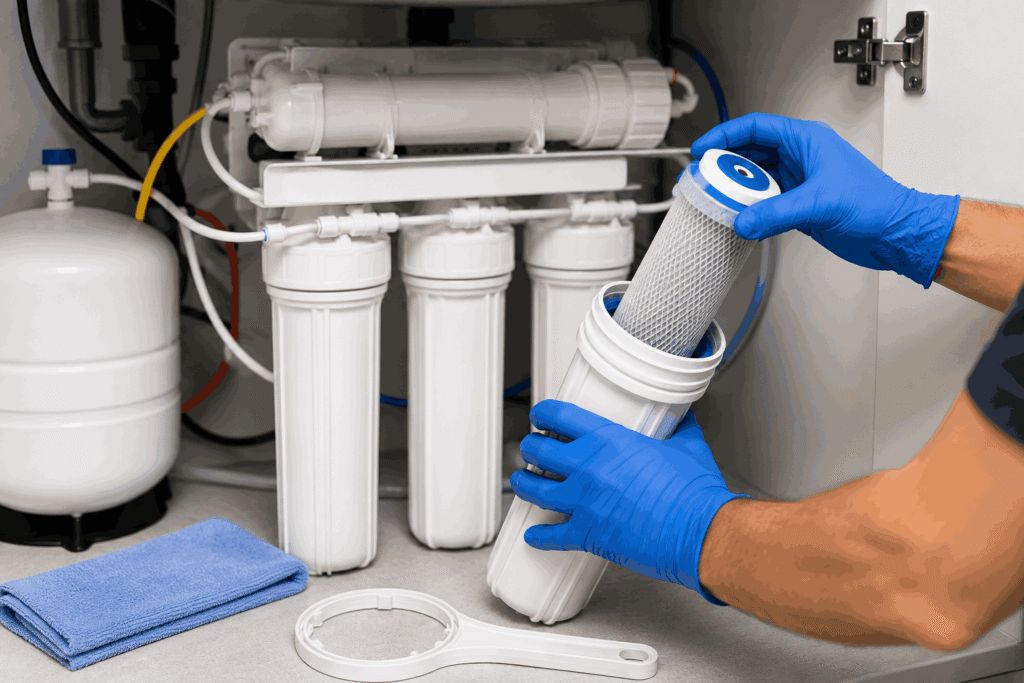
A reverse osmosis system uses multiple stages of filtration.
Sediment Filter
The sediment filter captures dirt, sand, rust, and other large particles before they reach the rest of the system.
Carbon Filter
The carbon filter removes chlorine, unpleasant odors, chemicals, and bad tastes. It also protects the reverse osmosis membrane from chlorine damage.
Reverse Osmosis Membrane
The membrane removes dissolved solids, heavy metals, fluoride, nitrates, lead, arsenic, and many other contaminants.
Post Carbon Filter
The final filter improves the taste of purified water before it reaches your faucet.
Each filter has a different lifespan and should be replaced according to the manufacturer’s recommendations.
Common Signs Your Reverse Osmosis Filter Needs Replacement
Your reverse osmosis system usually gives several warning signs before the filters completely fail.
1. Water Tastes Different
One of the first signs is a change in the taste of your drinking water.
If your water begins to taste:
- Bitter
- Metallic
- Salty
- Sour
- Chlorine-like
your filters may no longer be removing contaminants effectively.
Fresh filters restore the clean and refreshing taste that reverse osmosis systems are known for.
2. Unpleasant Odors
Clean drinking water should not have a noticeable smell.
If you notice odors such as:
- Chlorine
- Musty smells
- Rotten odors
- Chemical smells
your carbon filter may be exhausted and should be replaced.
3. Slow Water Flow
A clogged filter restricts water movement through the system.
If filling a glass of water suddenly takes much longer than usual, the filters may be full of sediment and debris.
Slow water flow is one of the most common reasons homeowners schedule RO Filter Replacement in Tucson.
4. Low Water Production
A reverse osmosis system should consistently produce enough purified water for daily use.
If the storage tank takes much longer to refill, clogged filters or an aging membrane may be reducing system performance.
5. Cloudy Drinking Water
Purified water should always appear clear.
Cloudy or hazy water may indicate that contaminants are no longer being removed properly.
Although air bubbles can sometimes cause temporary cloudiness, water that stays cloudy should be checked by a professional.
6. Higher TDS Readings
A Total Dissolved Solids (TDS) meter measures the amount of dissolved material remaining in your water.
When filters or the membrane begin to fail, TDS readings often increase.
Testing your water every few months is a simple way to monitor filter performance.
7. Unusual Noises
Your reverse osmosis system should operate quietly.
If you hear:
- Gurgling
- Continuous draining
- Vibrations
- Unusual clicking sounds
the system may be working harder because clogged filters are restricting water flow.
Ignoring these sounds can lead to more serious problems.
8. Visible Sediment in Water
If you notice small particles floating in your drinking water, the sediment filter may no longer be trapping debris effectively.
Clean, filtered water should always look clear and free from visible particles.
9. Water Pressure Drops
Low water pressure at the RO faucet often indicates clogged filters.
As contaminants build up, water has more difficulty passing through the filtration stages.
Replacing the filters usually restores normal pressure.
10. It’s Been More Than One Year
Sometimes there are no obvious warning signs.
Even if your water appears normal, filters should still be replaced according to the recommended schedule.
Waiting too long increases the risk of poor water quality and system damage.
When Should Reverse Osmosis Filters Be Replaced?
Although every home is different, most manufacturers recommend the following schedule.
Sediment Filter
Replace every 6 to 12 months.
Carbon Filters
Replace every 6 to 12 months.
Post Carbon Filter
Replace every 12 months.
Reverse Osmosis Membrane
Replace every 2 to 3 years, depending on water quality and household usage.
Homes with hard water or high sediment levels may require more frequent filter changes.
Factors That Affect Filter Life
Several factors determine how long your filters will last.
These include:
- Household water usage
- Number of people in the home
- Water quality
- Hard water levels
- Sediment content
- Chlorine levels
- Proper system maintenance
Homes with poor water quality often need RO Filter Replacement in Tucson more frequently than homes with cleaner water supplies.
Why You Shouldn’t Delay RO Filter Replacement
Delaying filter replacement may seem like a way to save money, but it often leads to bigger problems.
Old filters can:
- Reduce filtration efficiency.
- Allow contaminants into your drinking water.
- Damage the reverse osmosis membrane.
- Increase maintenance costs.
- Shorten the lifespan of the entire system.
Replacing filters on time is much less expensive than repairing or replacing major components.
More Signs Your Reverse Osmosis Filter Needs Replacement
Sometimes the warning signs are not obvious. Paying attention to small changes in your system can help you replace the filters before bigger problems develop.
The System Runs Continuously
A reverse osmosis system should stop producing water once the storage tank is full.
If you notice the system running all the time, clogged filters or a worn membrane may be forcing it to work harder than normal. This wastes water and increases wear on the system.
Frequent Leaks Around the Filter Housing
Although leaks can have different causes, old filters or worn O-rings may prevent the filter housing from sealing correctly.
Inspect the filter housings regularly and replace damaged parts whenever needed.
Increased Water Waste
Every reverse osmosis system produces some wastewater during filtration.
If you notice much more wastewater than usual, clogged filters or an aging membrane could be reducing system efficiency.
It’s Time Based on the Manufacturer’s Schedule
Even if everything seems normal, filters should never be used beyond their recommended lifespan.
Following the manufacturer’s replacement schedule is one of the best ways to keep your system working properly.
Benefits of Replacing RO Filters on Time
Replacing your filters before they become completely clogged offers many advantages.
Cleaner Drinking Water
Fresh filters remove contaminants more effectively, giving you cleaner and healthier water every day.
Better Water Taste
New filters eliminate chlorine, odors, and unwanted flavors, making your drinking water taste fresh again.
Longer System Life
Routine RO Filter Replacement protects the reverse osmosis membrane and reduces wear on the entire system.
Improved Water Flow
Replacing clogged filters restores proper water pressure and improves water production.
Lower Maintenance Costs
Changing inexpensive filters on time helps prevent expensive repairs in the future.
Better Filtration Performance
A clean filtration system removes more contaminants and provides consistent water quality for your family.
Simple Tips to Extend the Life of Your RO Filters
Although filters must eventually be replaced, proper care can help them last longer.
Follow these simple tips:
- Replace filters on schedule.
- Flush the system after installing new filters.
- Test your water quality every few months.
- Fix leaks as soon as they appear.
- Clean the RO faucet regularly.
- Schedule annual system inspections.
- Use high-quality replacement filters.
- Replace the membrane when recommended.
- Monitor changes in water taste and pressure.
- Keep a record of maintenance dates.
These habits help improve system performance and reduce unexpected problems.
Common RO Filter Replacement Mistakes
Many homeowners unintentionally shorten the life of their reverse osmosis system.
Avoid these common mistakes:
Waiting Until the Water Tastes Bad
Many people wait until the water develops an unpleasant taste before replacing the filters.
By that point, contaminants may already be passing through the system.
Ignoring Slow Water Flow
Slow water production is often an early warning sign of clogged filters.
Replacing the filters promptly helps restore normal performance.
Using Low-Quality Replacement Filters
Not all filters provide the same level of filtration.
Always choose high-quality filters that are compatible with your reverse osmosis system.
Forgetting to Flush New Filters
New filters should always be flushed before drinking the water.
Flushing removes carbon dust and other harmless particles left over from manufacturing.
Skipping Annual Maintenance
Even if you replace filters regularly, annual professional maintenance helps identify hidden problems before they become costly repairs.
Should You Replace RO Filters Yourself?
Many homeowners can replace sediment and carbon filters by following the manufacturer’s instructions.
However, professional service offers several advantages.
A trained technician can:
- Inspect the reverse osmosis membrane.
- Test water quality with a TDS meter.
- Sanitize the entire system.
- Check water pressure.
- Inspect valves and fittings.
- Detect hidden leaks.
- Ensure every filter is installed correctly.
Professional maintenance keeps your system operating efficiently and helps extend its lifespan.
How Often Should You Schedule Professional Service?
Most homeowners should schedule a complete reverse osmosis inspection once a year.
Annual service typically includes:
- Filter inspection
- Water quality testing
- System sanitization
- Pressure testing
- Leak inspection
- Membrane evaluation
- System flushing
Professional maintenance provides peace of mind and helps keep your drinking water safe.
Conclusion
Your reverse osmosis system works every day to provide clean, safe, and great-tasting drinking water. Recognizing the Signs Your Reverse Osmosis Filter Needs Replacement helps you maintain excellent water quality while protecting your investment. Replacing filters on schedule improves system performance, extends the life of the membrane, and reduces the risk of costly repairs. Whether you notice changes in taste, slower water flow, unusual odors, or simply reach the recommended replacement date, timely RO Filter Replacement keeps your filtration system operating at its best and ensures your family continues to enjoy fresh, healthy drinking water.
Frequently Asked Questions
1. What are the first signs that my reverse osmosis filter needs replacement?
The most common signs include bad-tasting water, unusual odors, slow water flow, lower water production, and higher TDS readings.
2. How often should I replace my RO filters?
Sediment and carbon filters usually need replacement every 6 to 12 months. The reverse osmosis membrane generally lasts 2 to 3 years.
3. Can old RO filters affect water quality?
Yes. Worn filters can allow contaminants, chlorine, and other impurities to pass through the system, reducing water quality.
4. Why is my reverse osmosis system producing water slowly?
Slow production is often caused by clogged filters, low water pressure, or an aging reverse osmosis membrane.
5. How do I know if the RO membrane needs replacement?
A higher TDS reading, poor water taste, cloudy water, and reduced water production are common signs that the membrane should be replaced.
6. Can I replace reverse osmosis filters myself?
Yes. Many homeowners can replace standard filters, but professional service is recommended for membrane replacement, sanitization, and complete system inspections.
7. What happens if I delay RO filter replacement?
Delaying filter replacement can reduce water quality, damage the membrane, increase repair costs, and shorten the lifespan of your reverse osmosis system.
8. Does replacing RO filters improve water taste?
Yes. New filters remove chlorine, odors, and contaminants, giving you cleaner, fresher, and better-tasting drinking water.
9. How can I check if my RO system is working properly?
A TDS meter is one of the best tools for checking water quality. Regular inspections and filter replacements also help ensure proper performance.
10. Where can I get professional RO filter replacement in Tucson?
Professional RO filter replacement services in Tucson include filter changes, membrane replacement, water quality testing, system sanitization, and complete reverse osmosis maintenance to keep your home’s drinking water clean and safe.