Low water pressure water softener issues catch a lot of homeowners off guard. You install a system to protect your pipes and make your water feel better, and then the shower that used to wake you up feels more like a light drizzle. It’s natural to wonder if the softener is the problem or if you picked the wrong system. In most cases, the softener itself isn’t bad. Something about the setup, sizing, or maintenance is holding the water back, and that can be fixed.
This guide explains why pressure drops, how to find the cause in a few minutes, and when a professional visit makes sense.
How a Softener Affects Water Flow
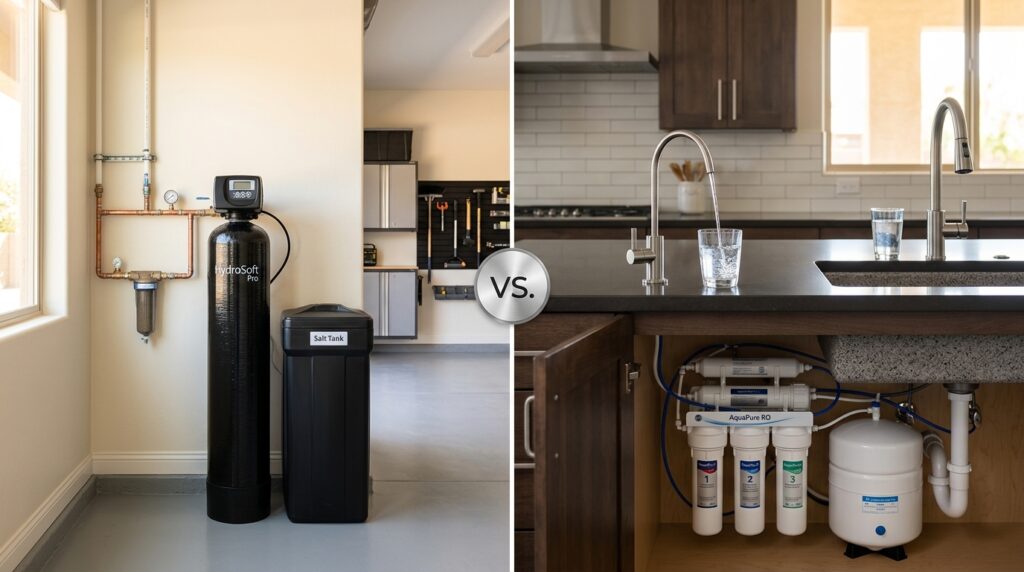
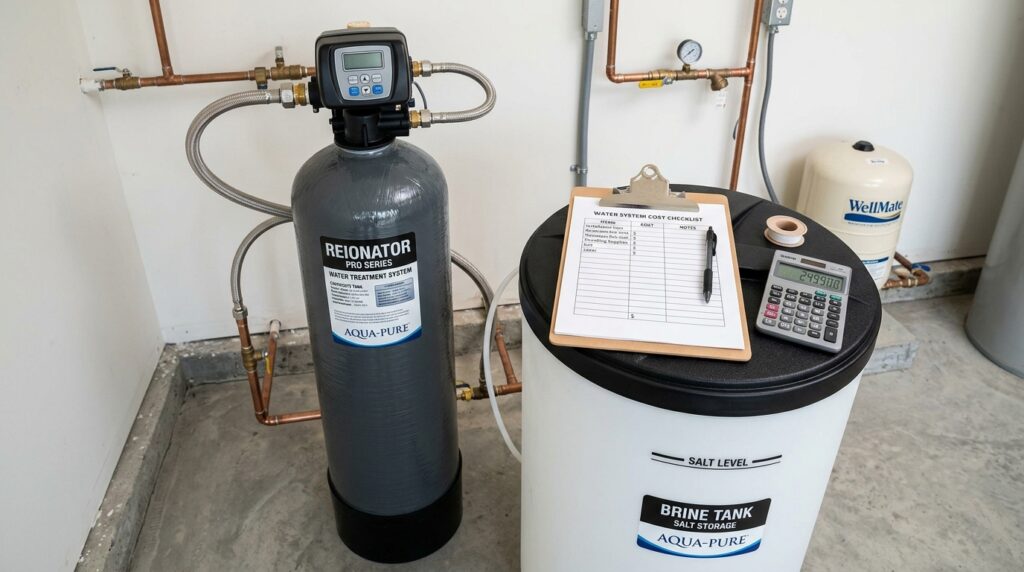
Every drop of water entering your home passes through the softener’s control valve and then down through a tank filled with resin beads. The resin grabs calcium and magnesium, the minerals that make Tucson water hard, and swaps them for a small amount of sodium or potassium. Pushing water through a packed bed of beads creates some resistance.
A properly sized system is designed so that resistance stays small. You shouldn’t feel a real difference at the tap. When a low water pressure water softener complaint comes up, it usually means the system is working harder than it should, or something is physically restricting the flow.
Step One: Do the Bypass Test
This test takes about two minutes and tells you where to look.
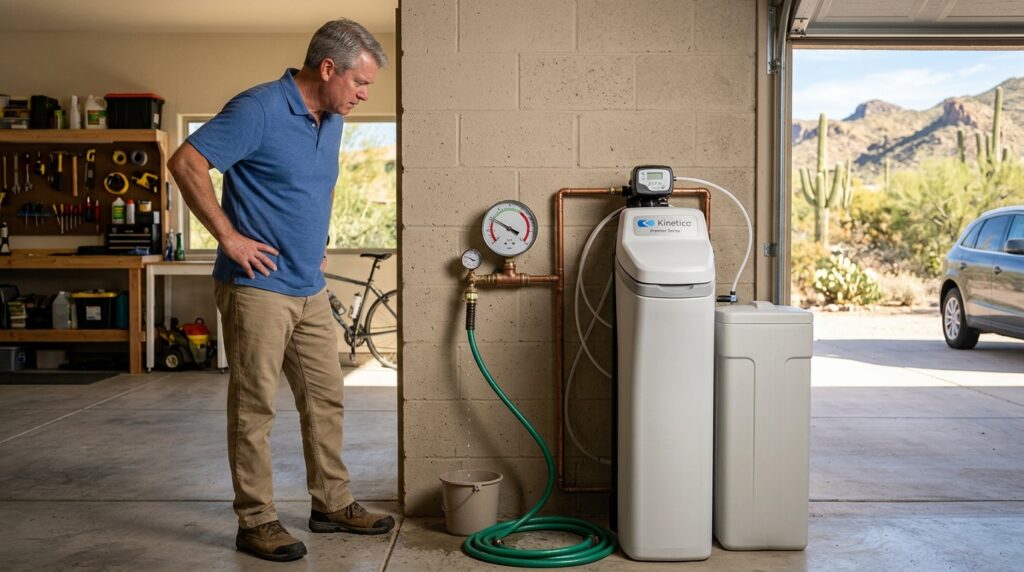
Find the bypass valve on your softener. It’s usually a knob, lever, or push button on the back of the control valve. Switch it to bypass, which sends water around the softener instead of through it. Then open a faucet or shower.
If the pressure comes back strong, the restriction is inside the softener or its connections. If the pressure is still weak, the softener is likely not the cause. Your issue may be the pressure regulator, main shutoff, old pipes, or the city supply.
Remember to switch back to service mode after the test, or you’ll be using hard water.
Sudden Drop vs. Gradual Drop
When the pressure changed tells you a lot.
A sudden drop right after installation usually points to setup issues. The bypass may not be fully open, the system may be undersized, or debris from the install may be stuck in the valve.
A gradual drop over months or years usually points to wear. Resin breaks down, sediment builds up, or a prefilter slowly clogs.
Keep this in mind as you read through the causes below.
The Most Common Causes
A Partly Closed Bypass Valve
This is the easiest fix and one of the most common. If the bypass knob sits halfway between service and bypass, water squeezes through a smaller opening. Turn it fully to the service position and check again.
A System That’s Too Small for Your Home
Water softeners are rated for a flow rate in gallons per minute. A home with three bathrooms, a busy kitchen, and laundry running at the same time can easily go past what a small unit handles. When that happens, pressure drops the moment two or three fixtures are on together.
The valve size matters as well. A smaller valve on a large home limits how much water can pass through at once. Proper sizing looks at hardness, household size, the number of bathrooms, and your peak water use, not just the number of people living there.
A Clogged Sediment Filter
Many softener installations include a sediment prefilter that catches sand and grit before it reaches the resin. That’s a good thing, but the filter slowly fills up. Once it’s loaded, it chokes the flow to the whole house. A low water pressure water softener problem is often solved by replacing a cartridge that costs far less than a service call.
Resin Breakdown
Resin beads don’t last forever. Chlorine and chloramine, used to disinfect city water, slowly weaken the beads. Over time they swell, crack, and break into fine pieces. Those fines pack together at the bottom of the tank and act like a plug. Sediment and iron can also coat the resin and restrict flow.
This type of pressure loss creeps in slowly. You may not notice until someone asks why the shower feels weak.
Regeneration at the Wrong Time
Softeners clean themselves through a process called regeneration. During that cycle, the system rinses the resin with brine and flushes it. While it’s running, water flow to the house can be reduced. Most systems are set to regenerate at night for this reason.
If your pressure drops at the same hour every few days, check the clock on the control valve. A power outage can reset it, and then the system may start regenerating in the middle of your morning routine.
Installation Restrictions
Undersized fittings, sharp bends, flexible connectors that are too narrow, or pipe smaller than your main line can all cause a low water pressure water softener issue from day one. Bits of pipe shavings or tape can also get lodged in the valve during installation.
Worn Valve Parts
Inside the control valve are seals, spacers, and a piston that move during each cycle. When these wear out or stick, the valve may not open fully or may get stuck partway through a cycle. You may also hear water running to the drain when it shouldn’t.
When the Softener Isn’t the Problem
If your bypass test showed weak pressure even with the softener out of the loop, look elsewhere. Common culprits include a failing pressure reducing valve near the main line, a main shutoff valve that isn’t fully open after plumbing work, older galvanized pipes with internal buildup, and clogged faucet aerators or showerheads.
That last one is very common in Tucson. Years of hard water leave mineral deposits inside aerators and showerheads. A new softener will stop new scale from forming, but it won’t instantly clear old deposits. Soaking aerators and showerheads in white vinegar often brings the flow back.
Why Tucson Homes Face This More Often
Tucson Water blends local groundwater with Colorado River water delivered through the Central Arizona Project, and the city notes that hardness rises as more CAP water enters the mix. Hard water means your softener regenerates more often, which puts more wear on the resin and valve. City water also contains disinfectants that break down resin over time.
Put those together, and a softener in Tucson works harder than the same unit in a soft water region. Regular water system maintenance in Tucson helps keep pressure problems from building up quietly.
Simple Checks Before You Call
Walk through this list first:
Make sure the bypass is fully in service mode. Run the bypass test. Replace the sediment prefilter if your system has one. Look at the control valve display for error codes and confirm the time is correct. Clean aerators and showerheads. Check whether your main shutoff and pressure regulator are working properly. Ask a neighbor if they’ve noticed low pressure too.
If the problem is still there, it’s time for a professional look.
What Happens During a Service Call
A technician will usually measure pressure before and after the softener to see exactly how much it’s costing you. They’ll check whether the unit and valve are sized for your home, inspect the valve internals, look at the resin bed, and review the regeneration settings.
Depending on what they find, the fix may be simple, like cleaning or replacing a valve part. If the resin is fouled or broken down, a resin rebed replaces the old media with fresh resin. If the system was undersized from the start, a larger unit or valve may be the real answer. Adding carbon filtration ahead of the softener can also protect the new resin from chlorine damage.
Preventing Pressure Problems Going Forward
Most low water pressure water softener complaints are preventable. Start with a proper water test and correct sizing. Change prefilters on schedule. Keep the regeneration clock accurate. Book yearly water system maintenance in Tucson so small issues get caught before they affect your showers.
Still dealing with weak water flow? Schedule Service Call and let a local technician find the cause and get your water pressure back where it should be.
Frequently Asked Questions
1. Is it normal to lose pressure after installing a water softener?
A slight drop is normal, but you shouldn’t really notice it. If you can clearly feel weaker flow, something is restricting the water.
2. How can I tell if my softener is the cause?
Put the system in bypass mode and run a faucet. If pressure returns, the softener or its connections are the source.
3. Why is my pressure low only at certain times of day?
Your softener may be regenerating while you use water. Check the clock on the control valve, especially after a power outage.
4. Can a water softener be too small for my home?
Yes. If the flow rating or valve size is too small for your household, pressure drops when several fixtures run at once.
5. How does resin cause low water pressure?
Old or chlorine damaged resin breaks into fine particles that pack together and restrict flow through the tank.
6. How often should I replace the sediment prefilter?
Many homes replace it every 3 to 6 months, but check your filter’s guidance. Replace it sooner if pressure drops.
7. What is a resin rebed?
A rebed removes worn resin from the softener tank and replaces it with new media. It can restore both softening and water flow.
8. Can hard water deposits in fixtures cause low pressure?
Yes. Mineral buildup in aerators and showerheads is common in Tucson. Cleaning them often improves flow right away.
9. Will a bigger softener fix my pressure problem?
Only if undersizing is the cause. A technician should measure flow and pressure first so you don’t replace a system unnecessarily.
10. How can I prevent low water pressure from my softener?
Size the system correctly, change filters on schedule, keep the clock accurate, and schedule yearly maintenance.