Water softener vs reverse osmosis Tucson comparisons come up constantly because both systems improve water, but they do very different jobs. One protects your whole house from hard water. The other gives you cleaner drinking water at a single tap. Many homeowners assume they need to pick one. In reality, a lot of Tucson homes benefit from both, and the reason comes down to local water.
Let’s break down what each system does, where they overlap, and how to decide what your home actually needs.
What a Water Softener Does
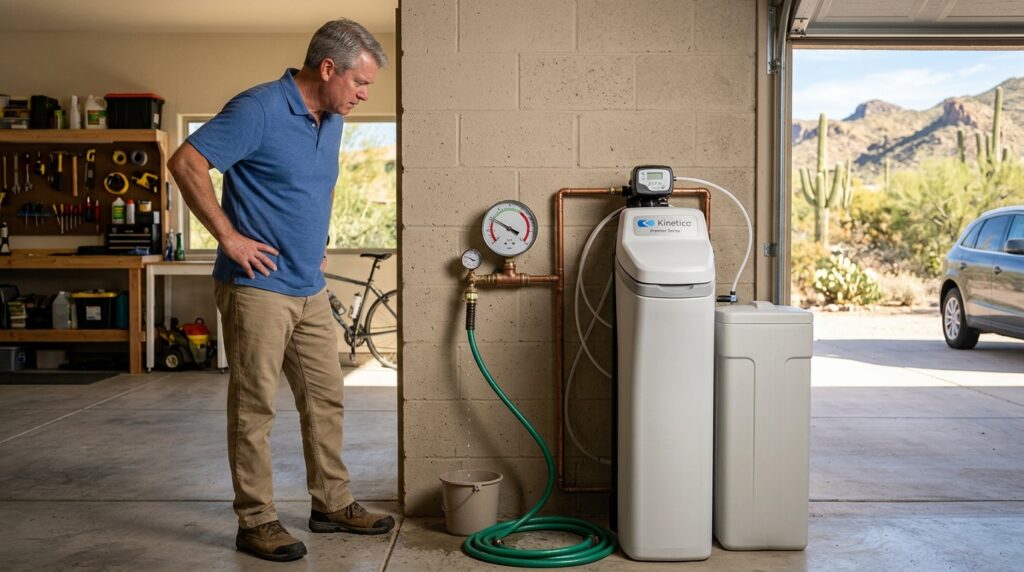
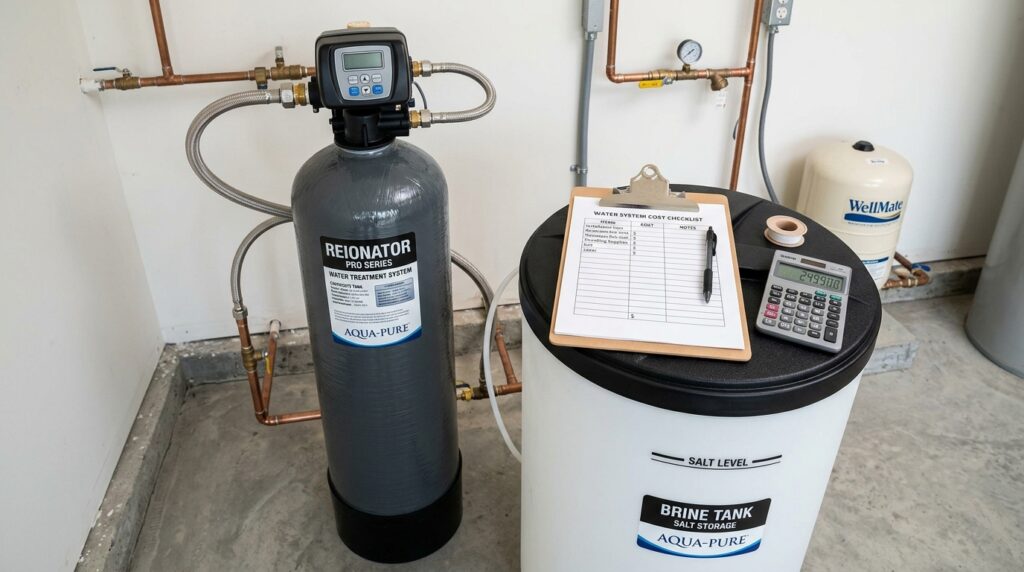
A water softener uses a process called ion exchange. Water flows through a tank of resin beads that capture calcium and magnesium, the minerals responsible for hardness. In exchange, the resin releases a small amount of sodium or potassium. When the resin fills up, the system regenerates by rinsing it with brine from the salt tank.
The result is soft water at every tap in the house. That means less scale in pipes and water heaters, fewer spots on dishes and glass, and better lathering soap.
What a softener doesn’t do is purify drinking water. It removes hardness, but it isn’t designed to lower overall dissolved solids or remove most other contaminants.
What Reverse Osmosis Does
Reverse osmosis pushes water through a very fine membrane that blocks a wide range of dissolved substances. Most home RO systems are point-of-use units installed under the kitchen sink with a separate faucet. They usually include a sediment prefilter, carbon filters, the membrane, and a final carbon polishing filter.
RO significantly lowers total dissolved solids and reduces many contaminants, depending on the system’s certification. Look for systems certified to NSF/ANSI Standard 58, which covers reverse osmosis drinking water systems.
RO does produce wastewater during filtration, and it works slower than an open tap, which is why it’s typically used only for drinking and cooking water.
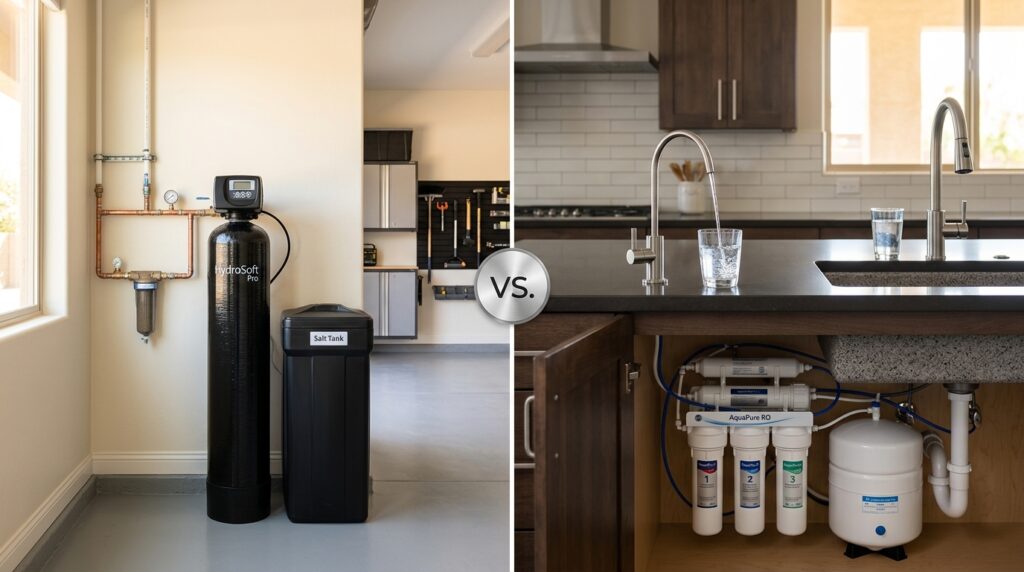
Water Softener vs Reverse Osmosis: Key Differences
Coverage: A softener treats the whole house. RO usually treats one faucet.
Purpose: A softener protects plumbing and appliances from hardness. RO improves drinking water quality.
What they remove: A softener targets calcium and magnesium. RO reduces a broad range of dissolved solids and contaminants.
Maintenance: A softener needs salt and yearly service. RO needs filter changes every 6 to 12 months and a membrane every few years.
When people compare water softener vs reverse osmosis in Tucson, they’re really comparing two tools built for different goals.
Why Tucson Water Makes This Question Important
Tucson Water blends local groundwater with Colorado River water delivered through the Central Arizona Project. Tucson Water says its groundwater is naturally hard, and hardness increases as more CAP water enters the blend. Colorado River water also carries a heavy load of dissolved minerals.
That creates two separate problems. The first is hardness, which damages water heaters, fixtures, and appliances all over the house. The second is high total dissolved solids, which affects taste. The EPA’s secondary guideline for total dissolved solids is 500 mg/L, and it’s based on taste and aesthetics rather than health. Some reports place Tucson’s TDS close to that level.
A softener handles the first problem. RO handles the second. That’s why the answer for many Tucson homes is both.
Why the Two Systems Work Better Together
Using a softener ahead of an RO system has a practical benefit. Hardness minerals can scale up an RO membrane over time, reducing output and shortening its life. When soft water feeds the RO unit, the membrane has less mineral load to deal with.
There’s also the sodium question. Softened water contains a small amount of added sodium, proportional to how much hardness was removed. People who want to limit sodium can drink RO water, since reverse osmosis reduces sodium along with other dissolved solids. Another option is using potassium chloride in the softener instead of sodium chloride.
So in a water softener vs reverse osmosis decision for Tucson, the systems aren’t competitors. They’re teammates.
When You Might Only Need One
Not every home needs both. Here are some common situations:
Softener only: You’re mainly bothered by spots, scale, and appliance wear, and you’re happy with how your tap water tastes.
RO only: You rent or can’t install whole house equipment, and your main goal is better drinking water.
Both: You want to protect plumbing and appliances throughout the home and also want cleaner, better tasting drinking water.
A water test is the best way to decide. Residential water treatment in Tucson should start with your actual results, not assumptions.
Cost Considerations
Costs vary widely depending on the brand, capacity, and installation. Softeners generally cost more upfront than under-sink RO units because they’re larger whole house systems. RO systems cost less to install but need regular filter replacements.
When you buy both at once, some installers can combine the visit, which may lower installation costs. Ask for a single quote covering both so you can compare.
Making the Right Choice for Your Home
Start with a water test. Ask what your hardness level is, what your TDS reading is, and whether anything else shows up. Then think about your goals. Do you want to protect your home, improve your drinking water, or both?
A good residential water treatment provider in Tucson will explain your results clearly and recommend only what your water needs.
Not sure which system fits? Free Water Assessment and get a clear answer on water softener vs reverse osmosis for your Tucson home.
Frequently Asked Questions
1. What’s the main difference between a softener and RO?
A softener removes hardness minerals throughout the house. RO reduces a broad range of dissolved solids and contaminants, usually at one drinking tap.
2. Do Tucson homes need both systems?
Many do, because Tucson water is both hard and high in dissolved solids. A softener protects the home, and RO improves drinking water.
3. Can a water softener replace reverse osmosis?
No. A softener removes hardness but doesn’t purify drinking water the way RO does.
4. Can reverse osmosis replace a water softener?
Not for the whole house. Most RO systems treat one faucet and don’t protect water heaters or plumbing.
5. Does softened water taste salty?
Most people can’t taste it. Softened water contains a small amount of added sodium based on how much hardness was removed.
6. Does a softener help an RO system last longer?
Yes. Soft water reduces mineral scaling on the RO membrane, which can help it last longer.
7. Is RO water safe to drink every day?
Yes. RO water is widely used for drinking and cooking. Choose a system certified to NSF/ANSI Standard 58.
8. Does reverse osmosis waste water?
RO systems send some water to the drain during filtration. Newer designs are more efficient than older ones.
9. Which should I install first?
If you’re installing both, the softener goes on the main line first, and the RO unit is installed under the sink after it.
10. How do I know which system I need?
Get your water tested. Hardness and TDS results show which system, or combination, fits your home.