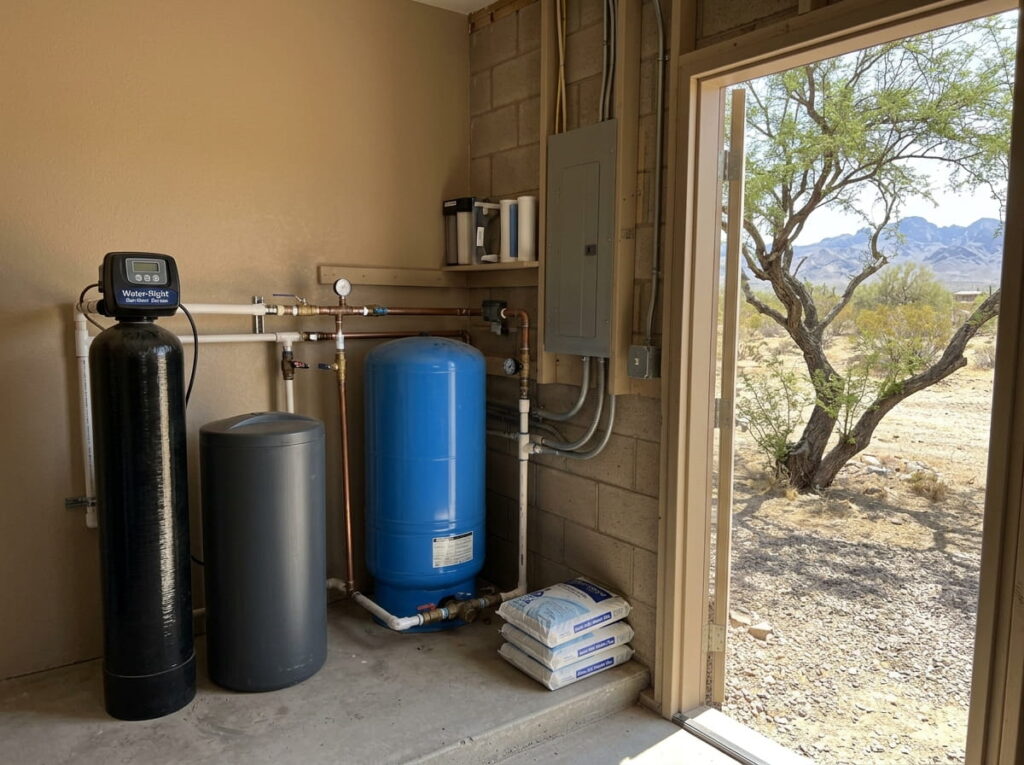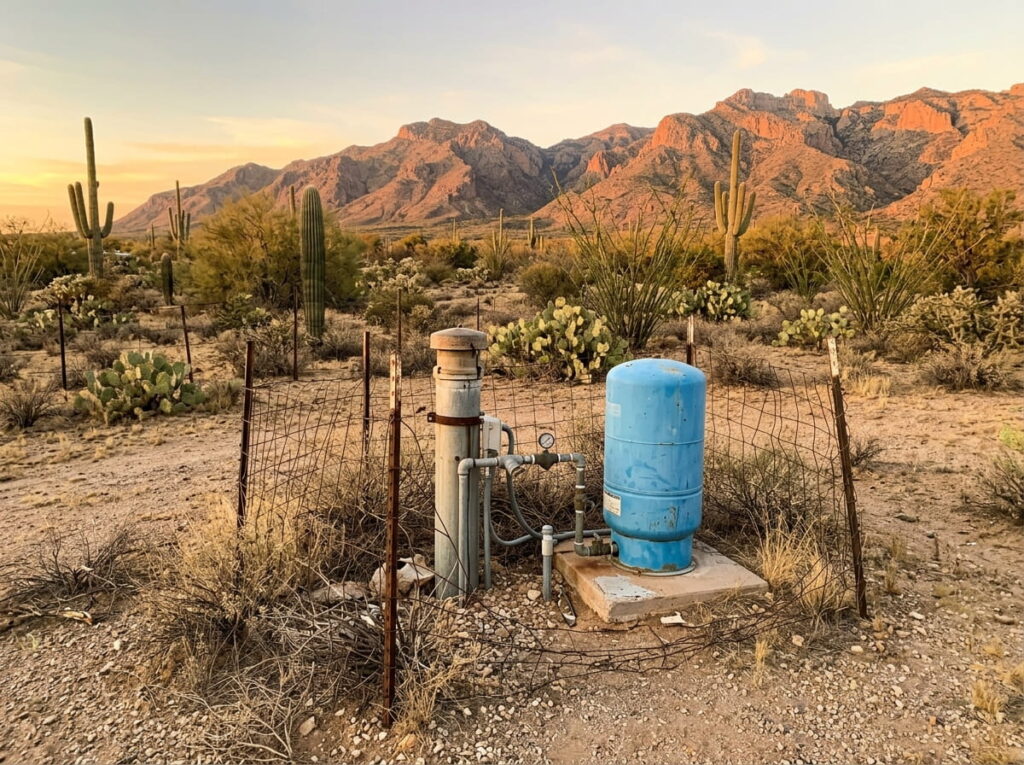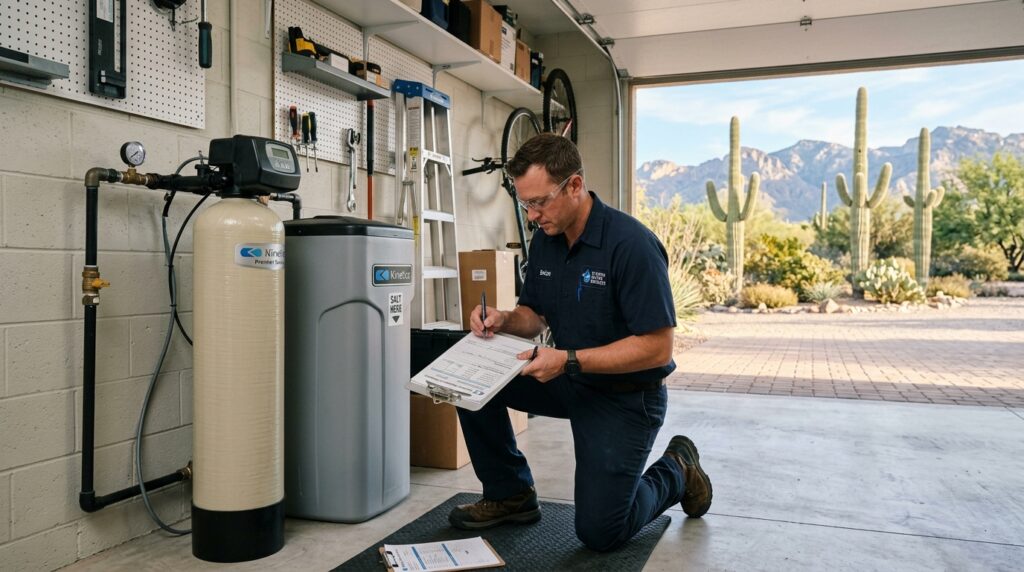
Water treatment service frequency Tucson homeowners should follow is different from what you might read on a generic product label written for cities with soft water. Tucson’s supply is a blend of local groundwater and Colorado River water delivered through the Central Arizona Project. That blend is safe to drink, but it carries a high load of calcium and magnesium, and those minerals put real wear on softeners, filters, and reverse osmosis units. If you want your equipment to last, you need a schedule that matches local conditions.
This guide breaks down how often each type of system needs attention, what you can handle yourself, and when it makes sense to call a professional.
Why Tucson Water Is Hard on Treatment Equipment
Hard water is measured in grains per gallon. Anything above about 7 grains per gallon is considered hard, and many Tucson neighborhoods test well above that. Hardness also shifts depending on where you live and how much CAP water your area receives, which is why two homes a few miles apart can see very different results.
For your equipment, this means more work. A softener regenerates more often when hardness is high. Reverse osmosis membranes are exposed to more dissolved solids. Filters load up faster. So the right water treatment service frequency in Tucson tends to be tighter than the minimum intervals printed in national owner’s manuals.
Recommended Service Schedule by System Type
Water Softeners
Your softener needs two kinds of care. The first is simple and happens at home. Check the salt level in the brine tank about once a month and keep it at least a third full. The second is a professional inspection once a year. During that visit, a technician checks the control valve, confirms the regeneration settings still match your water hardness, cleans the brine tank if needed, and looks for signs of resin wear.
Softener resin usually lasts many years, but chlorine and chloramine in city water slowly break it down. If your system has no carbon stage protecting the resin, a yearly check becomes even more important.
Reverse Osmosis Drinking Water Systems
RO systems have several stages, and each one has its own timeline. Sediment and carbon prefilters are commonly replaced every 6 to 12 months. The membrane itself often lasts 2 to 3 years, though hard water and high dissolved solids can shorten that. The carbon polishing filter that improves taste is usually changed once a year. Always follow the manufacturer’s guidance for your specific model, since stage designs vary.
Whole House Filters and Carbon Systems
Whole house carbon systems reduce chlorine and improve taste and odor throughout the home. Some use cartridges that need replacement every few months, while larger tank systems can go several years before the media needs replacing. A yearly check keeps you ahead of problems.
Sediment Filters
Cartridge sediment filters are the simplest part of the setup. Many homes change them every 3 to 6 months. If you notice a drop in pressure, look at the sediment filter first.
Monthly Checks You Can Do Yourself
A few minutes each month goes a long way. Here’s what to look at:
Check the salt level in your brine tank and top it off with the salt type your system is designed for. Look for a salt bridge, which is a hard crust that forms across the tank and stops salt from dissolving. You can break it up gently with a broom handle. Glance at the control valve display to make sure the time is correct, especially after a power outage. Taste your RO water now and then. A flat or off taste can mean a filter is due.
These habits don’t replace professional water system maintenance in Tucson, but they help you catch small issues early.
What Happens During a Professional Maintenance Visit
A proper service visit is more than a salt refill. A trained technician will usually test your incoming and treated water for hardness, check regeneration settings and adjust them to your household’s actual usage, inspect the valve, seals, and bypass, clean the brine tank and the brine line, sanitize the system when needed, and replace RO filters that are due.
Water testing during the visit is the key part. Hardness in Tucson can change as the city’s source blend shifts, and settings that were right three years ago may not be right today. That’s one reason water treatment service frequency matters more here than in places with steady water sources.
Signs Your System Needs Service Sooner
Sometimes your system tells you it needs help before the calendar does. Watch for these signs:
Spots and white film returning on dishes and shower glass. Soap that won’t lather the way it used to. Salt level that hasn’t dropped in weeks, which can mean the softener isn’t regenerating. Salt disappearing much faster than normal. Water in the brine tank sitting higher than usual. Low water pressure throughout the house. RO water that tastes off or a faucet that fills slowly.
If you see any of these, don’t wait for your annual visit.
How Household Size and Usage Change the Schedule
A retired couple and a family of six will not wear out equipment at the same rate. More people means more water flows through the softener, more regenerations happen, and filters load up faster. Homes with pools, large landscapes on the same line, or frequent guests may need checks twice a year.
A good rule is to start with the standard schedule above, then let your technician adjust it after the first year based on real results. The best water treatment service frequency for Tucson homes is the one built around your actual water and your actual household.
The Real Cost of Skipping Maintenance
Skipping service rarely saves money in the long run. A neglected softener can let hard water through without you noticing until scale builds up inside your water heater. Scale acts as insulation between the burner or element and the water, which reduces efficiency. Tankless water heaters, faucets, dishwashers, and evaporative coolers all suffer when scale builds.
On the RO side, a clogged prefilter lets chlorine reach the membrane, and chlorine damages many common membrane types. Replacing a membrane costs more than replacing a prefilter on time.
Regular water system maintenance in Tucson protects the equipment you’ve already paid for and the plumbing it’s meant to protect.
Build a Schedule That Fits Your Home
If you’re not sure when your system was last serviced, that’s your answer. It’s time for a checkup. A technician can test your water, record the current settings, and give you a clear calendar for salt, filters, and inspections going forward.
Ready to get on a schedule? Book Maintenance Visit and let a local technician check your system, test your water, and set a service plan that fits your household.
Frequently Asked Questions
1. How often should a water softener be serviced in Tucson?
Most homes do well with a professional inspection once a year, plus monthly salt checks at home. Larger households or homes with very hard water may benefit from a check every six months.
2. How often do I need to add salt to my softener?
Check the level monthly. Many households add salt every 4 to 8 weeks, but it depends on hardness, household size, and how efficient your system is.
3. How often should RO filters be replaced?
Prefilters are commonly replaced every 6 to 12 months. The membrane often lasts 2 to 3 years, and the post filter is usually changed yearly. Your system’s manual has the exact intervals.
4. Does Tucson’s hard water shorten equipment life?
Yes, when equipment is not maintained. High mineral content means more regeneration cycles and faster filter loading, which is why water treatment service frequency in Tucson tends to be tighter than national averages.
5. Can I service my water softener myself?
You can handle salt refills, breaking salt bridges, and checking the clock. Valve inspection, resin assessment, sanitizing, and setting adjustments are better left to a trained technician.
6. What is a salt bridge?
It’s a hard layer of salt that forms across the brine tank, leaving an empty space underneath. The softener can’t make brine, so it stops softening properly even though the tank looks full.
7. How long does softener resin last?
Resin often lasts many years, but chlorine and chloramine in city water break it down over time. A carbon stage in front of the resin helps extend its life.
8. Should I test my water after installing a new system?
Yes. Testing after installation confirms the system is set correctly. Retesting during annual service is also smart, since Tucson’s source blend can shift.
9. What happens if I skip annual maintenance?
Problems can build without warning. Hard water may slip through, scale can form in water heaters and fixtures, and small repairs can turn into bigger ones.
10. How long does a maintenance visit take?
A standard visit usually takes about an hour, depending on how many systems you have and whether filters or parts need replacing.