Most Tucson homeowners start their water treatment search the same way. Something tastes off, the coffee tastes flat, or there is white crust building on the faucet aerator. Home water treatment systems in Tucson come in two very different forms, and a quick search brings up both. Install a filter under the kitchen sink, or treat the water where it enters the house. Both work. They solve different problems, and choosing the wrong one usually means paying twice.
Desert Water Services, LLC has spent years working with Tucson wells, city connections, and everything in between. Here is a practical breakdown of how the two approaches differ and how to decide which one belongs in your home.
What an Under-Sink Filter Actually Does
An under-sink filter treats water at one location. It sits in the cabinet below your kitchen sink and feeds either a dedicated drinking tap or, in some setups, the cold side of your main faucet.
The most common style in Tucson is reverse osmosis. Water passes through a sediment stage, a carbon stage, then a semi permeable membrane that rejects dissolved solids. What comes out is very clean drinking water, often reduced by ninety percent or more in total dissolved solids. For a city with high mineral content, that difference is easy to taste.
Simpler carbon cartridge units also exist. They improve taste and odor and cut chlorine, but they do not touch hardness minerals, sodium, nitrates, or most dissolved metals.
The appeal of an under-sink unit is obvious. It is compact, affordable up front, and delivers excellent water exactly where you drink and cook. The limitation is equally obvious. Every other tap in the house still runs untreated water.
What Whole-House Filtration Does Differently
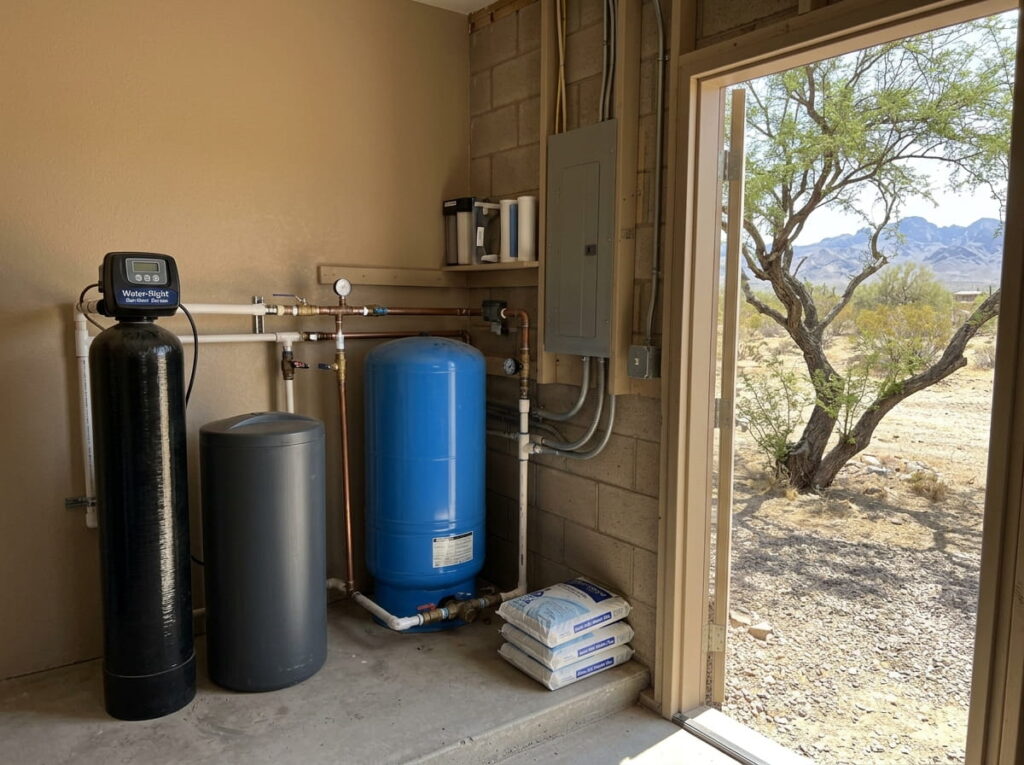
A whole-house system installs where the supply line enters your property, before it splits toward bathrooms, laundry, and the water heater. Every drop reaching a fixture has already passed through treatment.
Depending on what your water contains, a whole-house setup might include a sediment prefilter, a carbon tank for chlorine, an iron and manganese filter, a pH correction stage, or a softener for hardness. These stages get stacked in a specific order based on lab results, which is why properly designed home water treatment systems in Tucson are never a single product pulled off a shelf.
The benefit shows up in places people do not expect. Shower water stops stripping skin and hair. Soap scum on glass doors thins out dramatically. Towels come out of the dryer softer. Water heaters stop packing scale on the heating element, which protects efficiency and extends service life.
The Tucson Water Situation
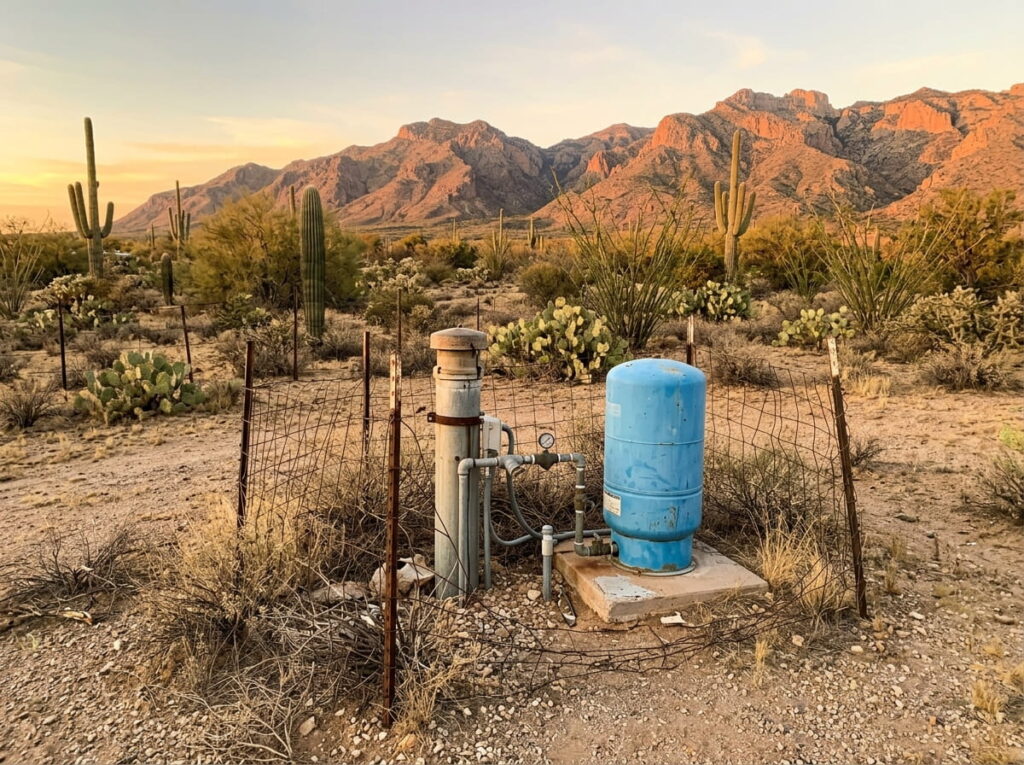
Tucson sits on groundwater that moves through mineral rich desert geology, and hardness levels commonly land in the moderately hard to very hard range. Homes on private wells face a wider list, including iron, hydrogen sulfide, elevated nitrates in agricultural pockets, and occasional bacterial concerns.
That geology matters when comparing options. Hardness is not a drinking water safety issue, so an under-sink RO unit handles taste while doing nothing about the scale slowly coating your plumbing. If your primary complaint is chalky buildup, falling water pressure, or appliances failing early, an under-sink filter will not fix it no matter how good the membrane is.
If your only complaint is that tap water tastes mineral heavy, an under-sink unit may be all you need. This is where an honest assessment saves money, and it is why the team at Desert Water Services, LLC tests before recommending anything.
Cost Over Time, Not Just Up Front
Under-sink reverse osmosis typically runs a few hundred dollars installed, with filter replacements once or twice a year and a membrane every two to five years. Very manageable.
Whole-house treatment costs more at installation, since it involves plumbing modifications, a bypass loop, drain access, and sometimes electrical. Maintenance depends on the media. Carbon tanks get changed every few years. Softeners need salt. Sediment filters need periodic swaps.
The math changes when you factor in what untreated water costs you. Scale reduces water heater efficiency measurably. Fixtures corrode. Appliances that should last a decade fail in six or seven years. Homeowners who have replaced two water heaters in eight years reach a different conclusion about value than someone comparing sticker prices alone. Well designed home water treatment systems in Tucson are best judged over a ten year window rather than a single invoice.

The Combination Most Homes Actually Need
The two options are not really competitors. In a large share of Tucson homes, the right answer is both.
A whole-house system removes chlorine, sediment, iron, and hardness so every fixture and appliance benefits. An under-sink reverse osmosis unit then polishes drinking and cooking water, pulling out remaining dissolved solids and trace contaminants that whole-house media is not designed to capture.
There is a practical bonus to pairing them. Pretreated water extends RO membrane life significantly, because the membrane no longer fights hardness and chlorine on its own. Households running RO on untreated hard water replace membranes far more often. This layered approach is standard practice in professionally engineered home water treatment systems in Tucson, and it is usually less expensive than people assume once equipment is sized correctly.
How to Decide for Your Home
Start with three questions.
What is actually in your water? A lab test answers this. Guessing leads to buying equipment that treats a problem you do not have while ignoring the one you do.
What is bothering you? Taste and odor complaints point toward point of use filtration. Scale, staining, dry skin, appliance failures, and plumbing issues point toward whole-house treatment.
Do you own or rent? Renters generally cannot modify the main supply line. An under-sink unit travels with you and installs without permanent changes.
Household size matters too. A family of five going through five gallons of drinking water daily will find a small storage tank runs dry at inconvenient moments. Larger tanks or higher output systems solve this, but it needs planning rather than discovery.
Installation Realities Worth Knowing
Under-sink installation is straightforward in most kitchens. The requirements are cabinet space, a cold water connection, a drain saddle for RO reject water, and a hole in the countertop for the dedicated faucet. Granite and quartz counters need proper drilling, which is worth leaving to a professional.
Whole-house installation requires more planning. The unit sits after the main shutoff and before any branch lines, with room for service access. Tucson homes often have the main line entering through an exterior wall or garage, so sun exposure and freeze protection become part of the design. Backwashing systems need a drain and usually a dedicated outlet. Permitting varies by jurisdiction within Pima County, and a licensed installer handles that rather than leaving you to discover an issue at resale.
Frequently Asked Questions
Can I install a whole-house filter and an under-sink RO at the same time?
Yes, and it is the most common configuration Desert Water Services, LLC installs. The whole-house unit handles hardness, chlorine, sediment, and iron. The under-sink RO polishes drinking water. Running both extends RO membrane life because the membrane receives pretreated water.
Does a whole-house filter remove hardness?
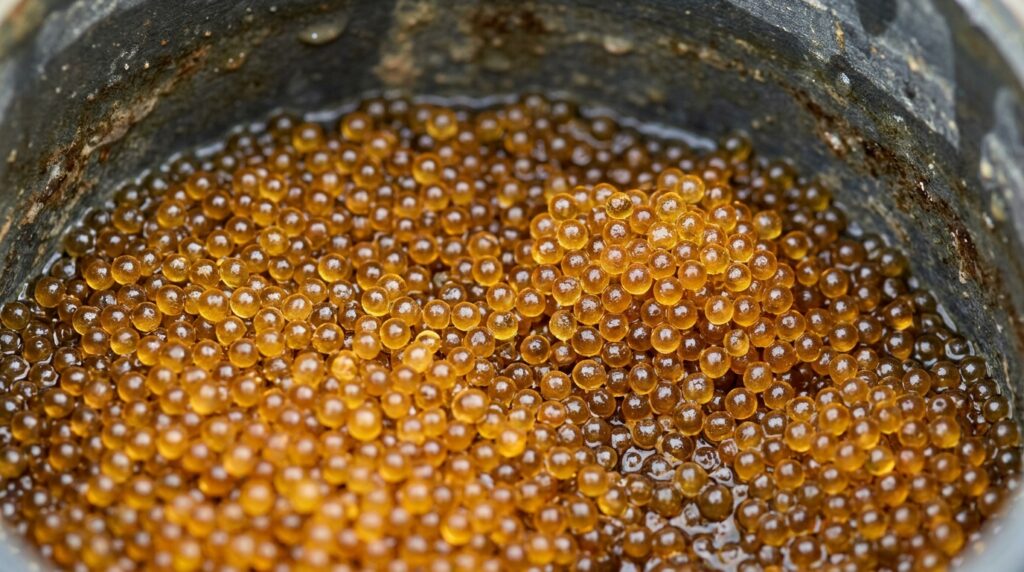
Not by itself. Carbon and sediment filtration address taste, odor, chlorine and particles. Hardness removal requires an ion exchange softener or a conditioning system.
How much water pressure will I lose with a whole-house system?
A correctly sized system causes minimal noticeable drop, generally within a few PSI. Pressure complaints almost always trace back to undersized equipment or an overdue filter change rather than the concept itself.
Is under-sink reverse osmosis wasteful?
Older units sent several gallons to drain per gallon produced. Modern permeate pump and high efficiency designs bring that ratio down substantially. Ask about the recovery rate before purchasing.
How often does each system need service?
Under-sink filters need cartridge changes every six to twelve months and membrane replacement every two to five years. Whole-house media typically lasts three to six years depending on type and water volume. Softeners need salt on a regular schedule.
Which option adds more value if I sell my home?
Whole-house treatment generally carries more weight with buyers, particularly on well properties, because it is a permanent improvement to the home rather than an appliance.