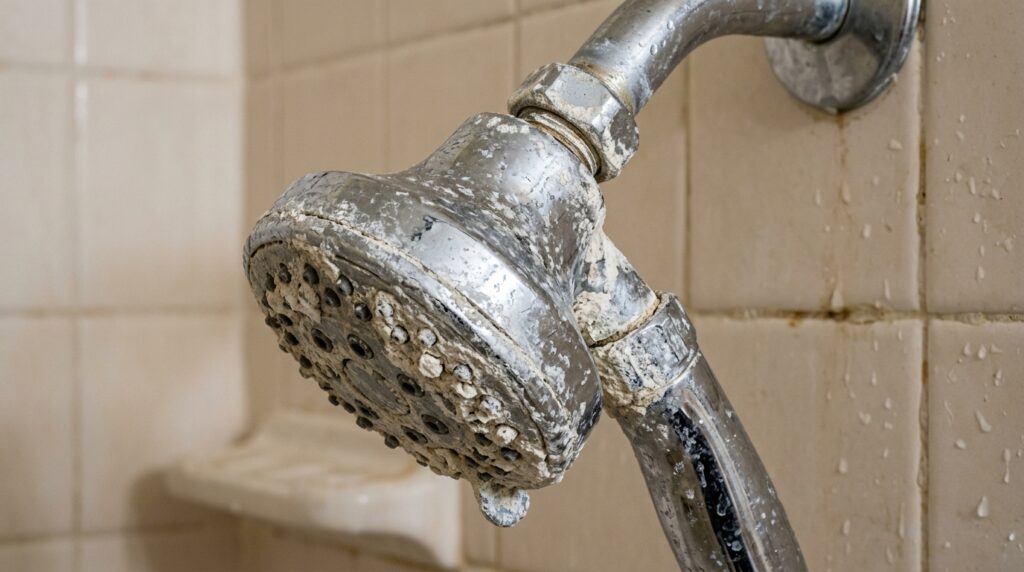
If you’re a homeowner in Tucson, there’s a good chance you’ve noticed the white crusty buildup around your faucets, the filmy residue on your shower doors, or that distinct chlorine taste every time you fill a glass from the tap. You’re not imagining things and you’re definitely not alone.
Tucson consistently ranks among the hardest water cities in the country, with hardness levels averaging around 11.4 grains per gallon well into the “very hard” category. But hardness is only part of the story. Multiple independent water quality analyses have identified contaminants in Tucson’s municipal water that exceed health-based guidelines, even when they technically meet federal legal limits.
The simplest way to find out exactly what’s in your water? A free water test. Here’s what that involves, what it covers, and why it matters more than most Tucson homeowners realize.
Learn more about our water treatment solutions.
What Does a Free Water Test in Tucson Actually Cover?
A free in-home water test gives you a snapshot of the most common water quality issues affecting Tucson households. While the exact parameters vary by provider, a standard free water test typically measures the following.
Water Hardness is measured in grains per gallon (GPG) and tells you how much calcium and magnesium is dissolved in your water. Hard water is the main culprit behind limescale buildup, spotty dishes, stiff laundry, and shortened appliance lifespans. In Tucson, readings above 10 GPG are the norm not the exception.
Total Dissolved Solids (TDS) is a broad measurement of all inorganic salts, minerals, and metals dissolved in your water. Tucson’s TDS levels often land around 490 parts per million, which can affect taste, cooking quality, and the performance of water-using appliances.
Chlorine and Chloramine Levels are measured because the city uses chlorine-based disinfectants to treat the municipal water supply. While these chemicals do their job killing bacteria, they can leave behind an unpleasant taste and odor, dry out skin and hair, and even aggravate conditions like eczema.
pH Balance indicates whether your water leans acidic or alkaline. Water that’s too far in either direction can corrode pipes, affect taste, and reduce the effectiveness of soaps and detergents.
Iron Content is particularly relevant for homes drawing from certain parts of Tucson’s water system. Dissolved or particulate iron can cause reddish-orange stains in sinks, tubs, and toilets that are notoriously difficult to remove.
Some providers also test for additional factors like nitrates, copper, and visible sediment depending on your specific concerns and water source.
Why Free Water Testing in Tucson Is More Important Than You Think
There’s a common misconception that if your water comes from the city, it must be safe and clean. While Tucson Water does meet EPA minimum standards, “legal” and “optimal” are two very different things.
Tucson’s Water Has a Unique Contaminant Profile
Tucson’s water supply comes from a combination of groundwater pumped from local aquifers and surface water delivered via the Central Arizona Project canal from the Colorado River. Each source carries its own set of potential issues.
The desert geology contributes naturally occurring arsenic, which has been detected at levels that — while within federal legal limits — exceed the more stringent health-based goals recommended by environmental health organizations. Hexavalent chromium (chromium-6), the carcinogenic compound made famous by the Erin Brockovich case, has also been detected in Tucson’s water supply.
Additionally, PFAS contamination — often called “forever chemicals” — has been linked to areas near Davis-Monthan Air Force Base and Tucson International Airport, where firefighting foam was historically used. Tucson Water has taken proactive steps to shut down wells with detectable PFAS levels, but ongoing monitoring remains essential.
Hard Water Is Costing You Money Every Month
Hard water isn’t just an annoyance — it’s an ongoing financial drain. The mineral deposits that accumulate inside your water heater force the unit to work harder, consuming more energy and reducing its lifespan. The same scaling happens inside dishwashers, washing machines, and coffee makers.
Estimates suggest that hard water damage costs Tucson homeowners anywhere from $1,300 to over $2,200 per year when you factor in higher energy bills, increased soap and detergent use, more frequent appliance repairs, and premature replacements. Over a decade, that adds up to $13,000 to $22,000 in preventable losses.
Your Home’s Plumbing May Be Adding to the Problem
Even if the water leaving the treatment plant is clean, what happens between there and your faucet matters. Older homes in Tucson may still have copper pipes with lead solder joints, galvanized steel pipes prone to corrosion, or aging connections that introduce trace metals into your water. A free water test measures what’s actually coming out of your tap — not what’s in the city’s report.
See whole-house filtration systems.
Who Should Get Their Water Tested in Tucson?
The short answer: every homeowner. But certain situations make testing especially urgent.
You just moved into a new home. Whether it’s new construction or an older property, you have no baseline for what’s in your water. The previous owner’s experience tells you nothing about current conditions.
You’ve noticed changes in your water. A sudden shift in taste, color, smell, or pressure can signal pipe corrosion, a change in the city’s source water, or a developing contamination issue.
You have young children or are expecting. Infants and developing children are disproportionately sensitive to contaminants like lead, nitrates, and arsenic. Knowing your water quality is a basic step in protecting their health.
You’re dealing with skin or hair issues. Dry, itchy skin, eczema flare-ups, and brittle or thinning hair are commonly linked to chlorine exposure and hard water minerals. Testing confirms whether your water is a contributing factor.
Your home is older than 1990. Lead solder in copper pipes wasn’t banned until 1986, and many homes installed before the early 1990s still contain plumbing materials that can leach trace metals.
You have a private well. The EPA recommends annual testing for well water, since it isn’t treated or monitored by the city.
What Happens During a Free In-Home Water Test?
The process is quick, simple, and non-invasive. Here’s what to expect.
A trained water quality specialist visits your home at a scheduled time that works for you. The entire visit typically takes 25 to 40 minutes. They’ll collect water samples directly from your tap — usually the kitchen sink — and run on-the-spot tests using professional-grade testing equipment.
Within minutes, you’ll receive a detailed breakdown of your results, including exact measurements for hardness, TDS, chlorine, pH, and iron. The specialist will walk you through what each number means, how your results compare to Tucson averages, and whether any readings fall into concerning ranges.
There’s no obligation, no pressure, and no cost. You walk away with a clear picture of what’s in your water and the information you need to decide whether treatment makes sense for your household.
Schedule your free water test today.
What a Free Test Doesn’t Cover (And When You Need More)
A standard free water test is an excellent starting point, but it focuses on the most common issues. If you have specific concerns about contaminants like arsenic, PFAS, lead, bacteria, or nitrates, you may need a more comprehensive laboratory analysis.
Lab-based tests can screen for dozens of additional contaminants and provide certified results. They’re especially recommended if you rely on well water, live near an industrial site or military installation, or have a household member with a compromised immune system.
Your water specialist can advise you on whether an advanced test is warranted based on your initial results and your home’s location within Tucson’s water distribution system.
How to Book Your Free Water Test in Tucson
Getting started takes less than a minute. You can book your free water test online or by phone, and most appointments can be scheduled within just a few days. Here’s how the process works:
- Request your test — Fill out the online form or call to pick a date and time.
- Meet your specialist — A trained water quality professional arrives at your home with all the equipment needed.
- Get your results — On-the-spot testing delivers clear, actionable results in about 30 minutes.
- Review your options — Your specialist explains what the numbers mean and discusses solutions tailored to your home’s specific water profile.
No commitment. No hidden fees. Just honest answers about the water your family uses every single day.
Book Your Free Water test Now.
FAQ’s
Is Tucson tap water safe to drink?
Tucson’s municipal water meets federal EPA minimum standards, so it is considered legally safe. However, independent analyses have found multiple contaminants present above health-based guidelines recommended by environmental health organizations. Testing your home’s water gives you a clear picture of what you’re actually consuming, since quality can vary depending on your location within the distribution system and the age of your home’s plumbing.
What contaminants are commonly found in Tucson water?
The most commonly reported concerns include very hard water (high calcium and magnesium levels), chlorine disinfectants, naturally occurring arsenic from desert geology, hexavalent chromium, and in certain areas, PFAS contamination linked to historical military and airport operations. Iron, nitrates, and elevated total dissolved solids are also frequently detected.
How long does a free water test take?
Most free in-home water tests take between 25 and 40 minutes from start to finish. The actual testing is done on-site with results available in minutes, so you leave the appointment with a complete understanding of your water quality the same day.
How often should I test my water in Tucson?
It’s a good idea to test your water at least once a year, or anytime you notice a change in taste, smell, or appearance. If you have a private well, annual testing is strongly recommended by the EPA. You should also test after any major plumbing work, if you’re moving into a new home, or if there’s a reported issue with your neighborhood’s water supply.
Is the free water test really free with no obligation?
Yes. A free water test is exactly that — no cost and no obligation. You’ll receive your test results and a professional analysis of what they mean for your household. Whether you decide to explore treatment options or simply file the information away for future reference is entirely up to you.