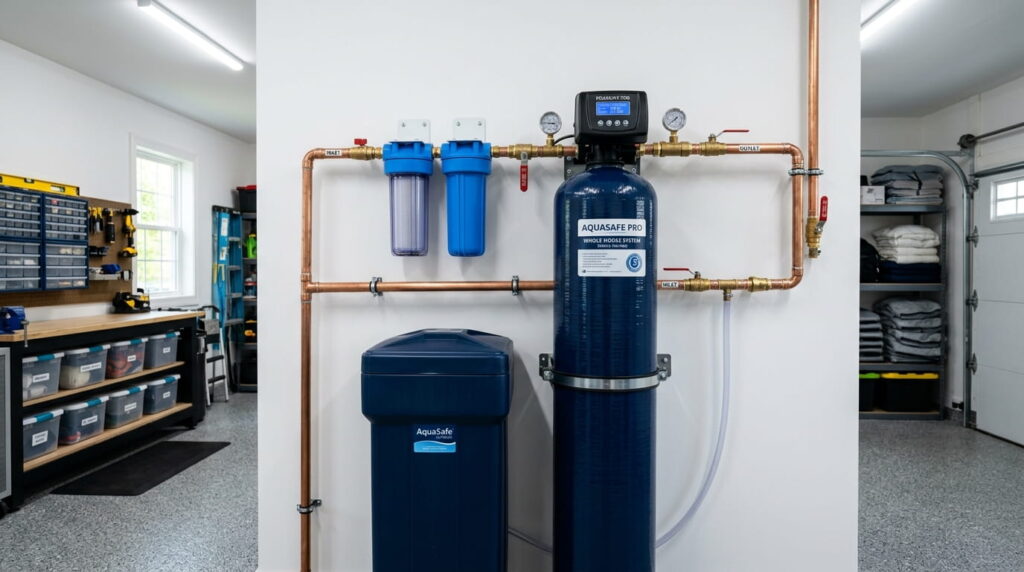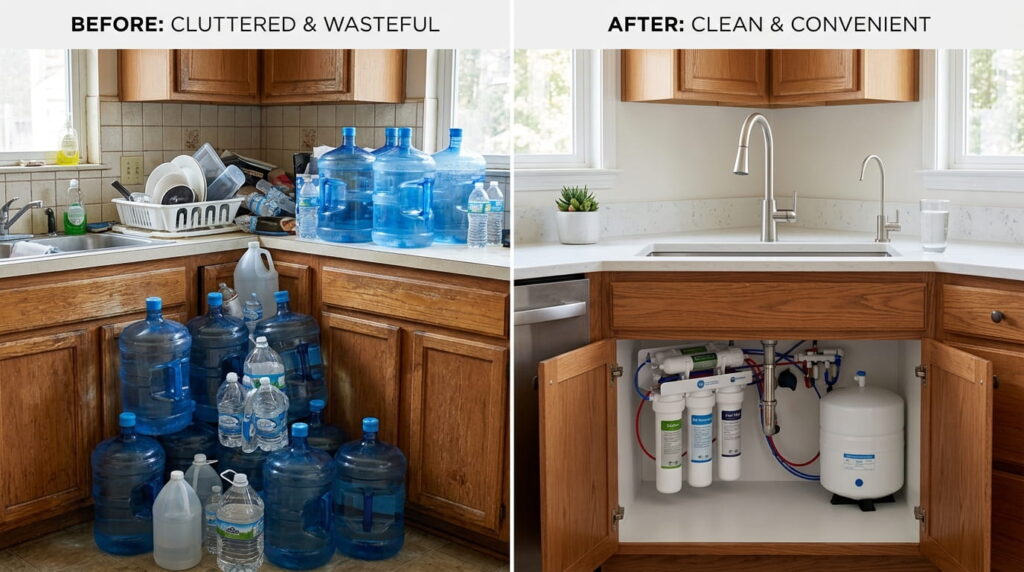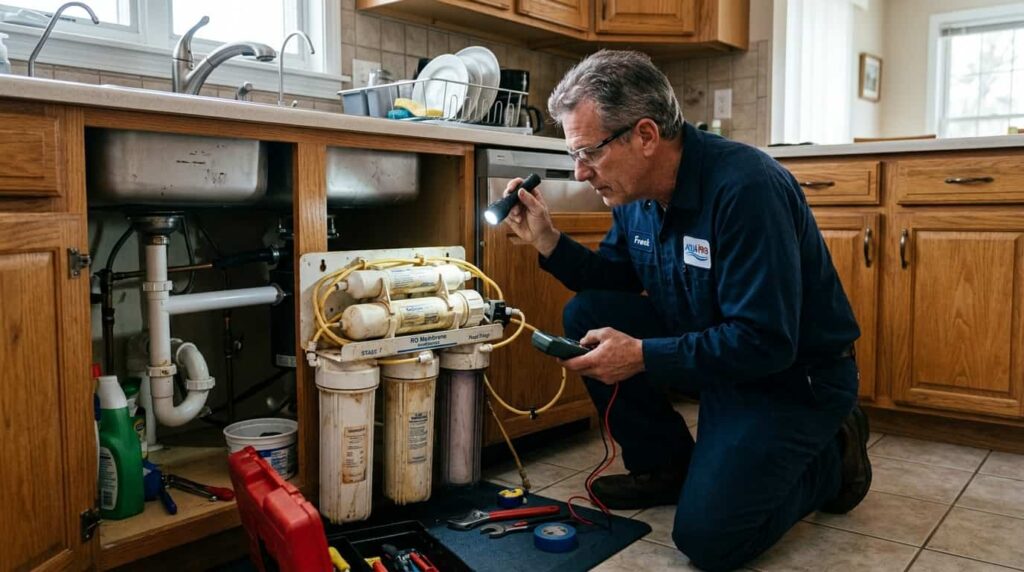
Most homeowners think about their water system exactly twice: the day it gets installed, and the day it stops working. In between, it sits in the basement or the garage doing its job quietly, which makes it very easy to forget.
That silence is the problem. A water softener does not fail loudly. It fails slowly, over months and years, and by the time you notice crusty faucets or a water heater that groans, the damage has already spread through your plumbing. This guide breaks down what actually happens when water system maintenance gets skipped, what it costs, and how to get back on track.
What Water System Maintenance Actually Involves
Before looking at the damage, it helps to know what is being skipped. Routine water softener maintenance is not complicated:
- Checking and refilling the salt in the brine tank
- Breaking up salt bridges and cleaning out salt mush
- Cleaning the brine tank once a year or so
- Sanitizing the resin bed
- Testing water hardness a few times a year
- Replacing sediment and carbon filters on the schedule the manufacturer recommends
- Having a technician inspect the control valve, injector, and seals
None of this takes long. Skipping it, though, sets off a chain reaction.
The First Six Months: Small Signs Most People Ignore
Neglect does not announce itself right away. In the first few months, the symptoms are subtle enough to explain away.
Soap stops lathering the way it used to. Hard water minerals react with soap and shampoo, so you end up using more product for less result.
Spots appear on glassware. Those white specks on dishes coming out of the dishwasher are calcium and magnesium left behind after the water evaporates.
Skin and hair feel different. Dry skin, itchy scalp, and hair that feels coated are all classic early hard water complaints.
Laundry looks dingy. Fabrics washed in hard water hold onto mineral residue, which dulls colors and stiffens towels.
At this stage nothing is broken. The softener is simply passing hard water through untreated, and your home is getting the full mineral load again.
Year One to Three: Scale Takes Over
This is where skipping water system maintenance starts costing real money.
Scale Buildup Inside Pipes
Calcium and magnesium precipitate out of hard water and bond to the inside of pipes. The layer is thin at first, then it thickens. Narrower pipes mean lower water pressure, higher strain on your pump, and eventually blockages that require a plumber.
Scale also insulates. A layer of it inside a water heater tank forces the unit to burn more energy to hit the same temperature. Studies on scale and heating efficiency consistently show meaningful energy losses once buildup reaches even a few millimeters.
Water Heater Damage
The water heater is usually the first appliance to go. Sediment and scale collect at the bottom of the tank, where they trap heat against the metal and cause overheating, popping and rumbling noises, and premature tank failure. A water heater that should last 10 to 12 years can fail in half that time on untreated hard water.
Appliance Wear
Dishwashers, washing machines, coffee makers, ice makers, and humidifiers all suffer. Heating elements scale over, valves stick, and small internal passages clog. Manufacturers frequently note that mineral damage is not covered under warranty, which means you absorb the full replacement cost.
Fixture and Faucet Corrosion
Chrome and brass fixtures develop crusty deposits around aerators and spray heads. Once mineral scale sets in around seals, faucets start to drip and showerheads spray unevenly. Cleaning helps for a while, but the underlying deposits keep coming back until the water itself is treated.
The Softener Itself Starts to Fail
While your plumbing takes a beating, the neglected softener is quietly destroying itself.
Salt Bridges
When salt sits too long in a humid brine tank, it hardens into a solid crust that spans the tank. Underneath is an empty gap. The system looks full, but no brine is being made, so no regeneration is happening. This is one of the most common and most misdiagnosed water softener problems.
Salt Mush
At the opposite extreme, salt recrystallizes into a thick sludge at the bottom of the tank. It blocks the brine draw and stops the softener from cycling properly.
Resin Bed Fouling
The resin beads are the heart of the system. They swap hardness minerals for sodium ions. Over time, and much faster without maintenance, they get coated with iron, manganese, silt, and chlorine damage. Fouled resin loses capacity permanently. Chlorine in particular breaks down the resin structure, which is why a neglected carbon prefilter shortens softener life dramatically.
Resin that should last 10 to 15 years can be exhausted in five or six.
Control Valve and Injector Problems
Sediment and salt residue clog the injector and venturi that pull brine into the resin tank. Seals dry out. The control valve motor strains against buildup. Repairs at this stage often approach the cost of a new unit.
Bacterial Growth
Brine tanks that never get cleaned accumulate biofilm and sludge. In some cases, this contributes to unpleasant odors and taste issues coming out of the tap.
Year Five and Beyond: The Expensive Consequences
Push the neglect far enough and the bill arrives all at once.
- Full water softener replacement instead of a simple resin or valve repair
- Water heater replacement years ahead of schedule
- Repiping sections of the home where scale has restricted flow
- Appliance replacement across the kitchen and laundry room
- Higher utility bills every month from reduced heating efficiency
- Lower home value if an inspection flags plumbing scale or a dead treatment system
The math is uncomfortable. Basic annual maintenance is a small recurring expense. The cumulative cost of skipping it runs into the thousands.
Well Water Makes Everything Worse
Homes on private wells face a steeper version of the same problem. Iron, manganese, sulfur, sediment, and bacteria all accelerate resin fouling and equipment corrosion. Well systems also need pressure tank checks, annual water testing, and more frequent filter changes. Skipping maintenance on a well setup can move you from equipment damage into genuine water quality concerns.
How to Recover a Neglected System
If your softener has been ignored for a while, do not assume it is dead.
- Test your water. A hardness test tells you immediately whether the unit is still working.
- Inspect the brine tank. Push a broom handle gently into the salt to check for a bridge. Break it up if you find one.
- Clean the tank. Empty it, scrub it out, rinse it, and refill with clean, high quality salt.
- Run a manual regeneration. See whether the cycle completes normally.
- Use a resin cleaner. Iron and mineral cleaners can restore partial capacity if the resin is not too far gone.
- Call a technician. If hardness stays high after all of the above, the resin or valve likely needs professional attention.
A Simple Maintenance Schedule
Monthly: Check salt level, look for bridging, keep the tank at least one third full.
Every three to six months: Test water hardness. Replace sediment and carbon filters as needed.
Annually: Clean the brine tank thoroughly. Sanitize the resin bed. Test well water for bacteria and nitrates if applicable.
Every two to three years: Schedule a professional inspection of the valve, injector, seals, and timer settings.
Frequently Asked Questions
How long does a water softener last without maintenance?
A well maintained unit lasts 10 to 15 years. Without maintenance, five to eight years is more typical, and performance declines long before failure.
Can a neglected water softener be repaired?
Often yes. Salt bridges, dirty brine tanks, and clogged injectors are all fixable. Severely fouled resin usually needs replacement, but that is still cheaper than a whole new system.
Is hard water dangerous to drink?
Hard water is not a health hazard. The damage is to plumbing, appliances, skin, hair, and your energy bills.
What happens if I run out of salt?
The system keeps cycling but stops softening. Hard water flows straight through until you refill and regenerate.
The Bottom Line
Skipping water system maintenance is one of those decisions that feels free right up until it is not. Scale accumulates invisibly, resin degrades quietly, and the repair bill lands years later with interest.
Twenty minutes a month and one thorough cleaning a year is all it takes to protect your plumbing, your appliances, and the softener itself. If you cannot remember the last time you checked your brine tank, that is your answer. Go look at it today.