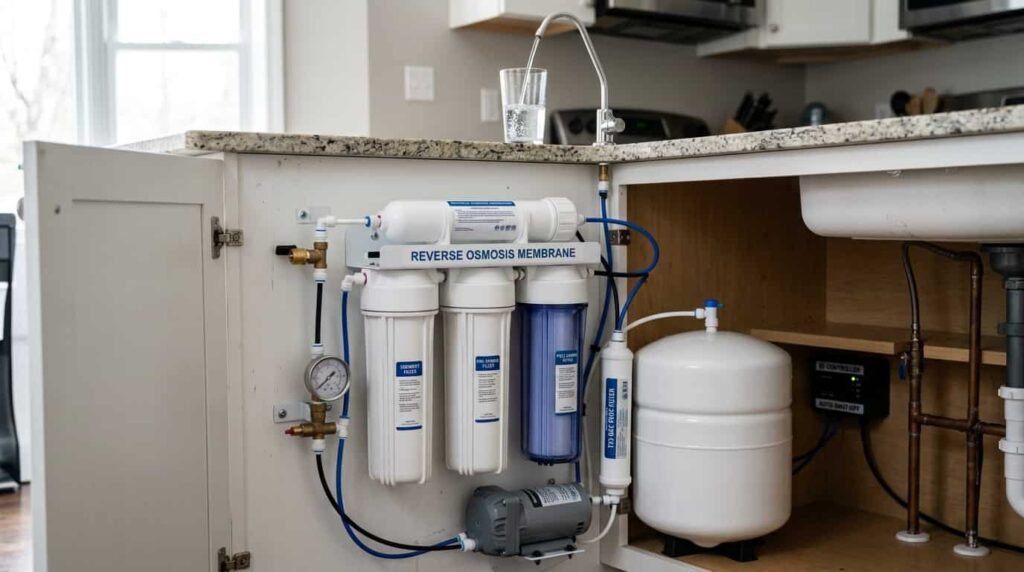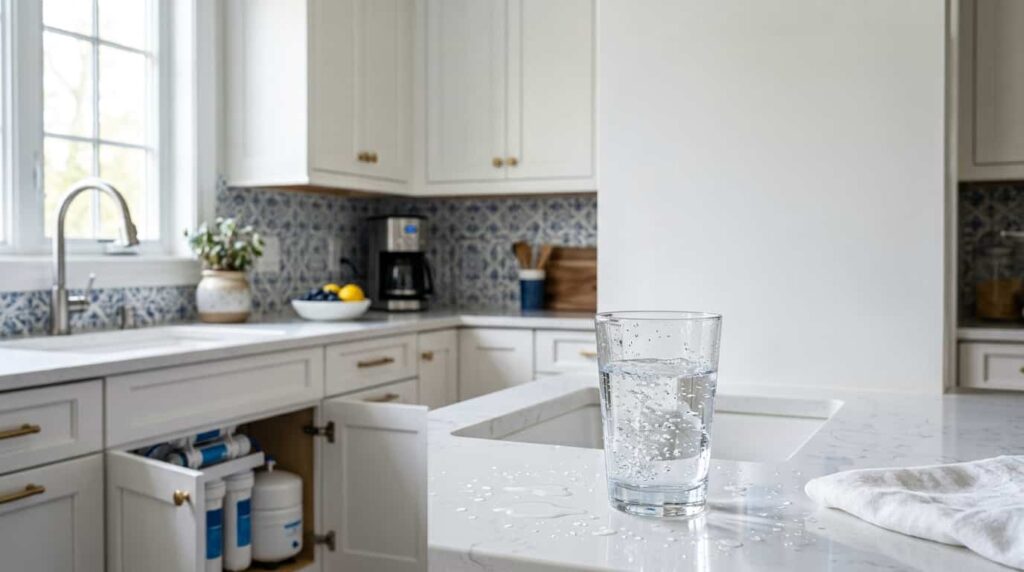
No, a water treatment system and a water softener are not exactly the same thing. A water softener is one specific type of water treatment equipment designed mainly to reduce hardness caused by calcium and magnesium. A broader Whole House Water Treatment System Services approach may address several water-quality concerns, including hardness, chlorine, sediment, odors, iron, and other contaminants, depending on the equipment installed. For homeowners in Tucson, understanding this difference can help you choose the right solution instead of paying for a system that does not address your actual water problems.
What Is a Water Treatment System?
A water treatment system is a general term for equipment used to improve the quality, appearance, taste, or usability of household water. The exact treatment depends on what is present in the incoming water.
For example, a whole-house system may include a sediment filter, carbon filtration, water softener, iron filter, reverse osmosis system, ultraviolet treatment, or a combination of different technologies.
The important point is that there is no single water treatment system that removes every possible contaminant. The correct system should be selected after identifying the specific water-quality problem.
For Tucson homeowners, this can be especially important because water characteristics can vary by location and water source. Testing the water first can help determine whether the primary concern is hardness, dissolved minerals, sediment, chlorine, taste, odor, or another issue.
What Is a Water Softener?
A water softener is designed specifically to address hard water. Hardness is primarily caused by dissolved calcium and magnesium.
The U.S. Geological Survey classifies water with hardness of 0–60 mg/L as calcium carbonate as soft, 61–120 mg/L as moderately hard, 121–180 mg/L as hard, and more than 180 mg/L as very hard.
| Water hardness | Classification | Common concern |
|---|---|---|
| 0–60 mg/L | Soft | Usually little scaling |
| 61–120 mg/L | Moderately hard | Some mineral buildup |
| 121–180 mg/L | Hard | Scaling and soap-related problems become more noticeable |
| Over 180 mg/L | Very hard | Significant scaling may occur |
A traditional ion-exchange water softener works by exchanging calcium and magnesium ions for sodium or potassium ions. This reduces the minerals responsible for hardness and can help minimize scale formation.
Water Treatment System vs. Water Softener
The easiest way to understand the difference is to think of a water softener as one tool within the larger category of water treatment.
A water softener primarily targets hardness. A whole-house water treatment setup can contain several treatment stages, depending on the results of water testing and the homeowner’s goals.
| Feature | Water Softener | Whole-House Water Treatment System |
|---|---|---|
| Main purpose | Reduce water hardness | Address one or more water-quality concerns |
| Targets calcium and magnesium | Yes | Depending on equipment |
| Reduces scale | Yes | Depending on equipment |
| Removes sediment | Usually no | Can, with appropriate filtration |
| Reduces chlorine | Usually no | Can, with carbon filtration |
| Addresses odors | Usually no | Can, with appropriate filtration |
| Treatment options | Primarily softening | Multiple technologies |
| Best for | Hard-water problems | Broader water-quality needs |
This is why homeowners should not automatically assume that buying a water softener will solve every water-quality problem.
What Problems Can a Water Softener Help With?
Hard water can create several noticeable problems around the home. Calcium and magnesium can form mineral deposits on plumbing fixtures, pipes, water heaters, and appliances.
Hard water can also interfere with soap and detergent performance. The USGS notes that hard water can cause mineral buildup and reduce the effectiveness of soaps and detergents.
Common signs of hard water include:
- White or chalky deposits around faucets
- Scale buildup inside plumbing
- Spots on glasses and dishes
- Soap that does not lather easily
- Dry-feeling skin after bathing
- Mineral buildup around showerheads
- Reduced efficiency of water heaters and appliances
A softener can be an appropriate solution when hardness is the main issue.
However, if a homeowner is experiencing unpleasant odors, sediment, discoloration, or concerns about specific contaminants, additional treatment may be necessary.
What Can a Whole-House Water Treatment System Address?
A whole-house treatment setup can be customized according to the water entering the property.
For example, sediment filtration can help reduce particles such as sand, dirt, and rust. Activated carbon filtration can be used for certain taste and odor concerns and can reduce chlorine depending on the system and operating conditions.
A water softener can be incorporated when hardness is a major concern. In other situations, additional technologies may be considered.
The EPA’s WaterSense guidance recommends identifying the water-treatment goals and selecting equipment based on the water quality and the amount of water that actually needs treatment. It also advises against unnecessarily oversizing treatment systems.
This makes professional Whole House Water Treatment System Services useful when a homeowner is unsure which equipment is appropriate.
Does Every Home Need a Water Softener?
No. Not every home needs a water softener.
The need depends largely on the hardness of the incoming water and the homeowner’s preferences. Hardness itself is generally considered a nuisance rather than a health hazard, although excessive hardness can contribute to scale and plumbing problems.
A water test can provide a much better basis for deciding whether softening is necessary.
If the water is only moderately hard and the homeowner does not experience noticeable scaling, a softener may not provide enough benefit to justify its purchase and maintenance.
On the other hand, very hard water may create enough scale and cleaning problems that softening becomes worthwhile.
Do Water Softeners Remove Contaminants?
Generally, no. A standard water softener should not be viewed as an all-purpose water purification system.
Its primary function is reducing hardness minerals. It is not designed to address every contaminant that may be present in drinking water.
For example, a softener should not automatically be expected to remove bacteria, viruses, pesticides, all chemicals, or every dissolved contaminant.
The EPA’s guidance emphasizes selecting treatment based on the specific water-quality problem rather than assuming one technology can address everything.
If your goal is broader water-quality improvement, Whole House Water Treatment System Services can help determine whether filtration, softening, disinfection, or another treatment technology is appropriate.
Real-World Water Hardness Statistics
Water hardness is not simply a theoretical concern. USGS studies have measured significant differences in hardness among groundwater sources.
For example, a USGS study of 72 domestic wells in Bradford County, Pennsylvania, found hardness ranging from 1.32 to 627 mg/L as calcium carbonate. The study classified 37.5% of the sampled wells as hard and 25% as very hard.
| Finding from the USGS study | Result |
|---|---|
| Domestic wells tested | 72 |
| Hardness range | 1.32–627 mg/L |
| Hard water samples | 37.5% |
| Very hard water samples | 25.0% |
| Moderately hard samples | 26.4% |
| Soft samples | 11.1% |
These figures come from one geographic study and should not be used to estimate the hardness of water in Tucson or another specific location. Local testing is the better way to determine your home’s water conditions.
Are Water Softeners Water-Efficient?
Water softeners require maintenance and, depending on their design, can use water and salt during regeneration.
The EPA explains that traditional cation-exchange softeners periodically regenerate by flushing the resin with saltwater.
Modern homeowners should therefore consider efficiency when selecting a softener. EPA guidance recommends looking for demand-initiated regeneration systems and efficient water and salt use.
The EPA also notes that some jurisdictions may have restrictions related to salt discharge from water softeners, so homeowners should check applicable local requirements before installation.
How to Choose the Right Water Treatment Solution
The best approach is to start with the water problem rather than the equipment.
First, identify what you are experiencing. Is there scale around faucets? Does the water smell like chlorine? Is there visible sediment? Does the water have an unusual taste or color?
Next, have the water tested when appropriate. Testing can help identify hardness and other water-quality characteristics.
After that, choose treatment equipment based on the test results and the amount of water your household uses.
A homeowner with hard water may need a water softener. Another home may benefit from sediment and carbon filtration. Some households may need a combination of treatment technologies.
Professional Whole House Water Treatment System Services can help homeowners evaluate their water, select appropriate equipment, and maintain the system after installation.
Water Softener or Whole-House Treatment: Which One Do You Need?
If your primary problem is scale, white mineral deposits, soap performance, or other symptoms associated with hard water, a water softener may be the most appropriate solution.
If you have multiple concerns, such as sediment, taste, odor, chlorine, hardness, or other water-quality issues, a broader treatment system may make more sense.
It is also possible to combine technologies. For example, a whole-house system may use filtration for sediment and chlorine while using a softener specifically for hardness.
The key is avoiding unnecessary equipment. A professional evaluation can help determine which treatment stages are actually useful for your home.
Why Professional Installation and Maintenance Matter
Water treatment equipment needs to be correctly sized, installed, configured, and maintained. An improperly sized system may fail to provide the expected results or may operate inefficiently.
The EPA recommends professional servicing of water softeners approximately once a year to help maintain performance and efficiency.
Maintenance requirements vary by technology. Filters may need replacement, softeners may require salt and resin-system maintenance, and other treatment equipment may have different service schedules.
For homeowners searching for Whole House Water Treatment System Services, working with an experienced local provider can make it easier to identify the correct equipment and keep it operating properly.
Final Thoughts
A water treatment system and a water softener are related, but they are not the same thing. A water softener is a specialized treatment device primarily designed to reduce calcium and magnesium hardness. A whole-house water treatment system is a broader setup that can combine different technologies to address multiple water-quality concerns.
If you are dealing with hard water in Tucson, start by testing the water and identifying the actual problem. You may only need a softener, or you may benefit from a more comprehensive filtration and treatment solution. Choosing equipment based on your water quality rather than simply buying the most complicated system can save money and improve long-term performance.
For homeowners who need Whole House Water Treatment System Services, professional testing, system selection, installation, and routine maintenance can provide a practical way to improve household water quality.
Frequently Asked Questions
1. Is a water softener the same as a water treatment system?
No. A water softener is one type of water treatment equipment. It primarily reduces calcium and magnesium hardness, while a broader water treatment system can use filtration, softening, disinfection, or other technologies to address different water-quality concerns.
2. What does a whole-house water treatment system do?
A whole-house system treats water before it is distributed throughout the home. Depending on its design, it may reduce sediment, chlorine, odors, hardness, or other specific water-quality concerns.
3. Do I need a water softener in Tucson?
It depends on the hardness of your home’s water. A water test is the best way to determine whether your water is hard enough to justify installing a softener. Local water conditions can vary, so homeowners should avoid relying only on general regional assumptions.
4. Does a water softener make drinking water safe?
A water softener is not a complete drinking-water purification system. Its primary purpose is reducing hardness minerals. If you have concerns about microorganisms, chemicals, metals, or other contaminants, appropriate testing and treatment should be considered.
5. How do I know if my home has hard water?
Common signs include white scale around faucets, spots on dishes, reduced soap lather, mineral deposits on showerheads, and buildup inside plumbing or water-using appliances. A water-hardness test can provide a more reliable answer.
6. Can a whole-house system include a water softener?
Yes. A whole-house treatment setup can include a water softener along with other treatment equipment when the water analysis shows that multiple treatment needs exist.
7. Does a water softener remove chlorine?
A standard ion-exchange water softener is not primarily designed to remove chlorine. If chlorine reduction is needed, a properly selected filtration system, such as activated carbon filtration, may be used as part of a broader treatment setup.
8. How often should a water softener be serviced?
Maintenance depends on the equipment and household water use. The EPA recommends professional servicing about once a year to help keep water softeners operating effectively and efficiently.
9. Can hard water damage household plumbing?
Hard water can contribute to mineral scale inside plumbing, fixtures, water heaters, and appliances. Over time, scale can reduce water flow and affect the performance of water-using equipment.
10. How can I choose the right whole-house water treatment system?
Start with a water-quality test and identify your main concerns. Then select treatment equipment based on those results, household water demand, installation requirements, maintenance needs, and efficiency. Professional Whole House Water Treatment System Services can help you choose a system that matches your home’s actual water-quality needs.